Carnation, King County
Creosote removal in Carnation is priced from $215. Flaky second-stage deposits come off near that figure. Third-stage glaze, the shiny black coating that a brush slides over, takes rotary chains or a chemical treatment and sometimes two visits, and the price rises with the work. A camera shows which stage you have before anyone quotes.
Typical investment
From $215
Book an inspection
Book your $99 inspection
$99 plus tax, deducted when you approve the repair
Not sure where to start
Pick what you're seeing at your Carnation home — we'll point you to the right fix.
What we do
The same crew, the same written quote — for Carnation homes.
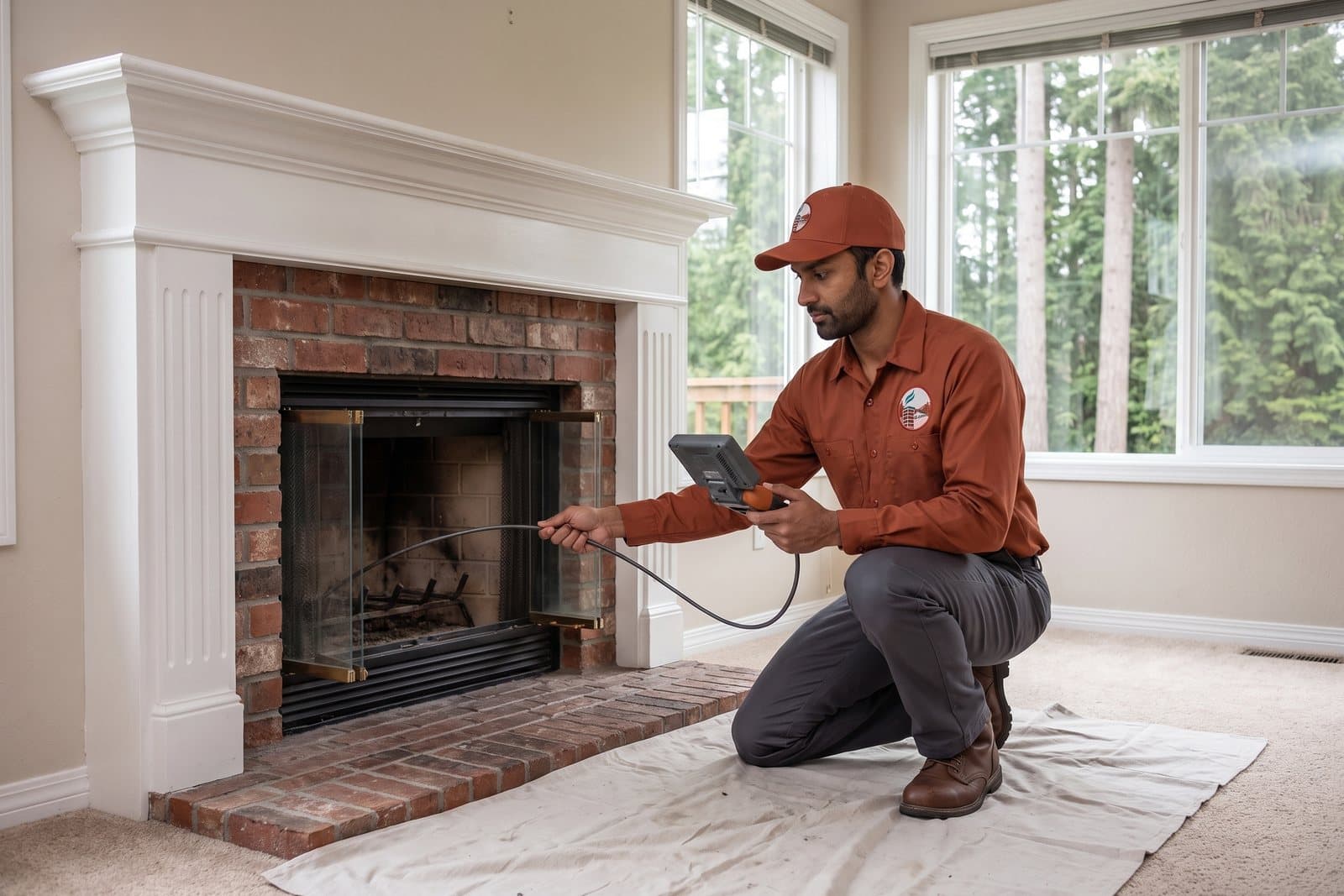
A Level 1 check, or a Level 2 with a camera run through the flue when the visible parts are not enough
Learn more
Brushing of the whole flue, top to firebox, with brush heads sized to the liner
Learn more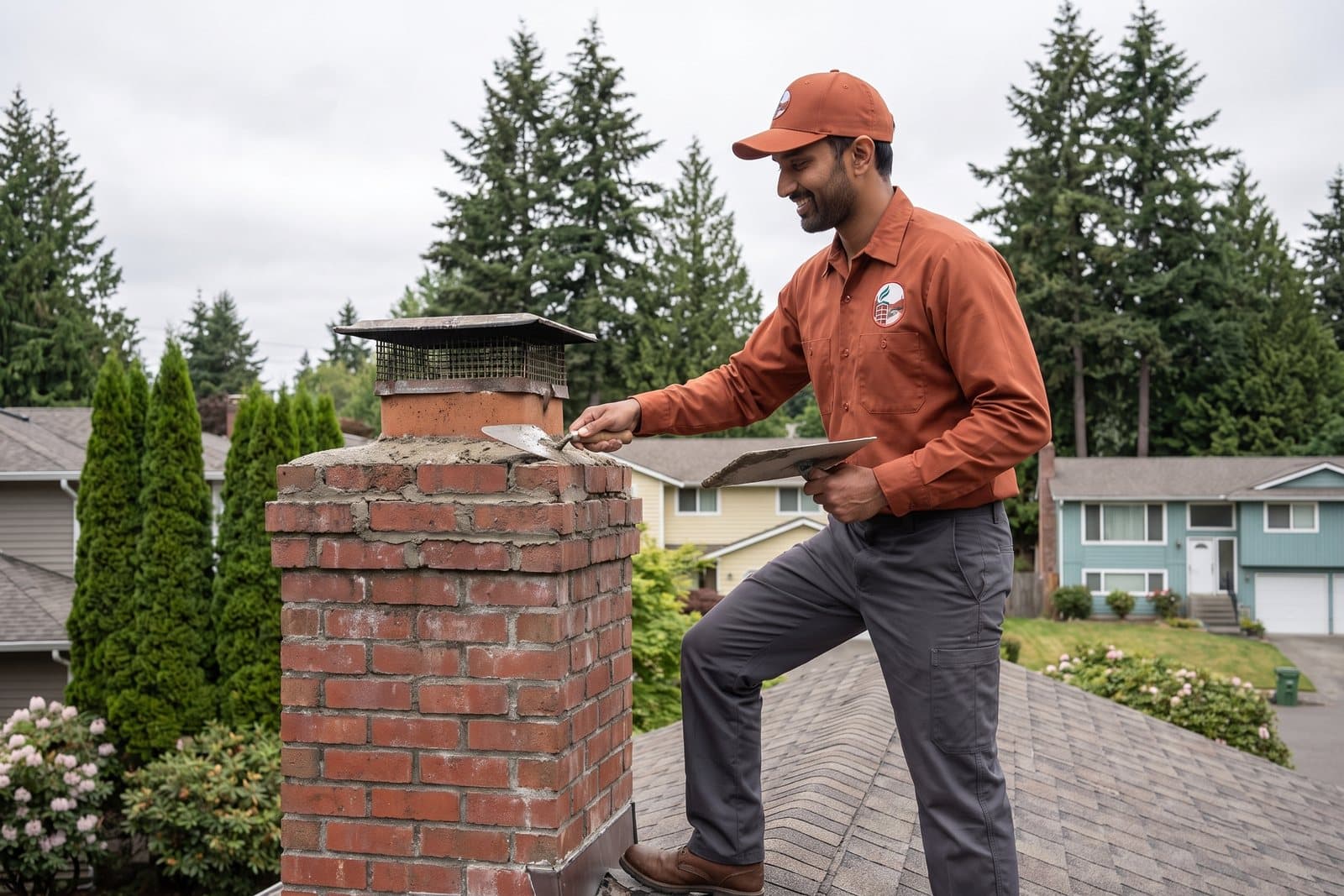
A photographed assessment that separates cosmetic wear from structural damage
Learn more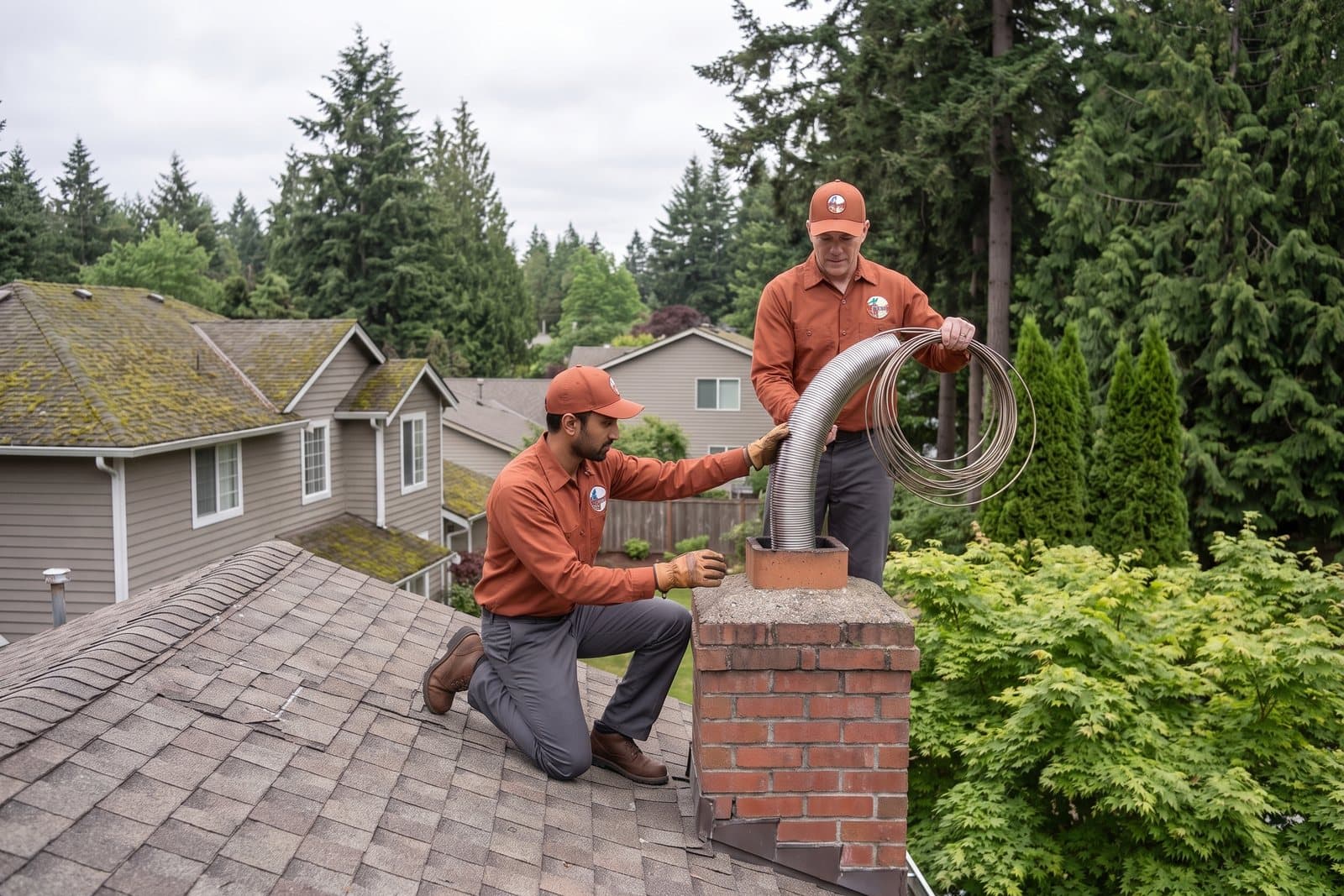
A camera run and full measurements before any liner is ordered
Learn more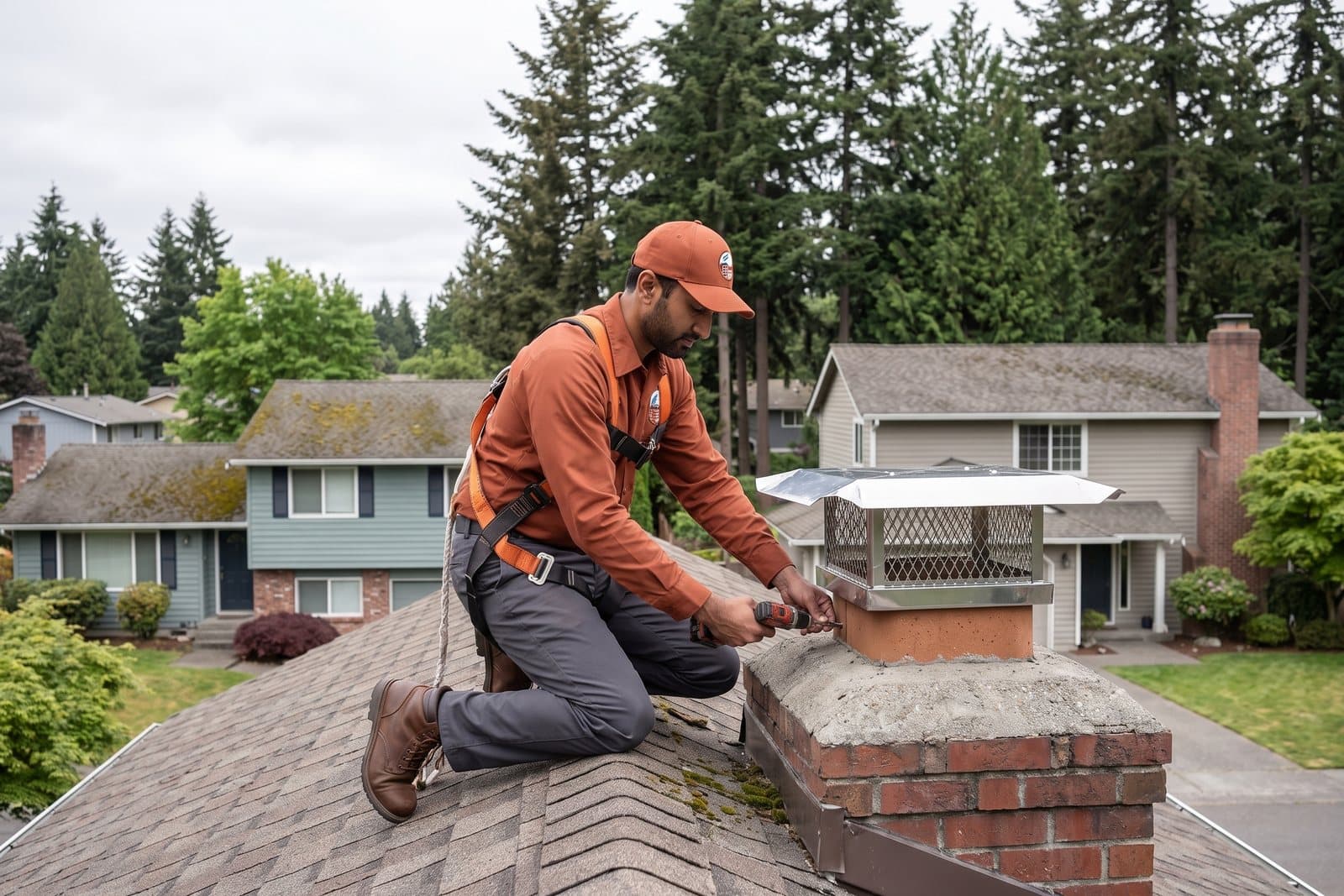
Measurement of each flue, or of the full crown for a multi-flue cap
Learn more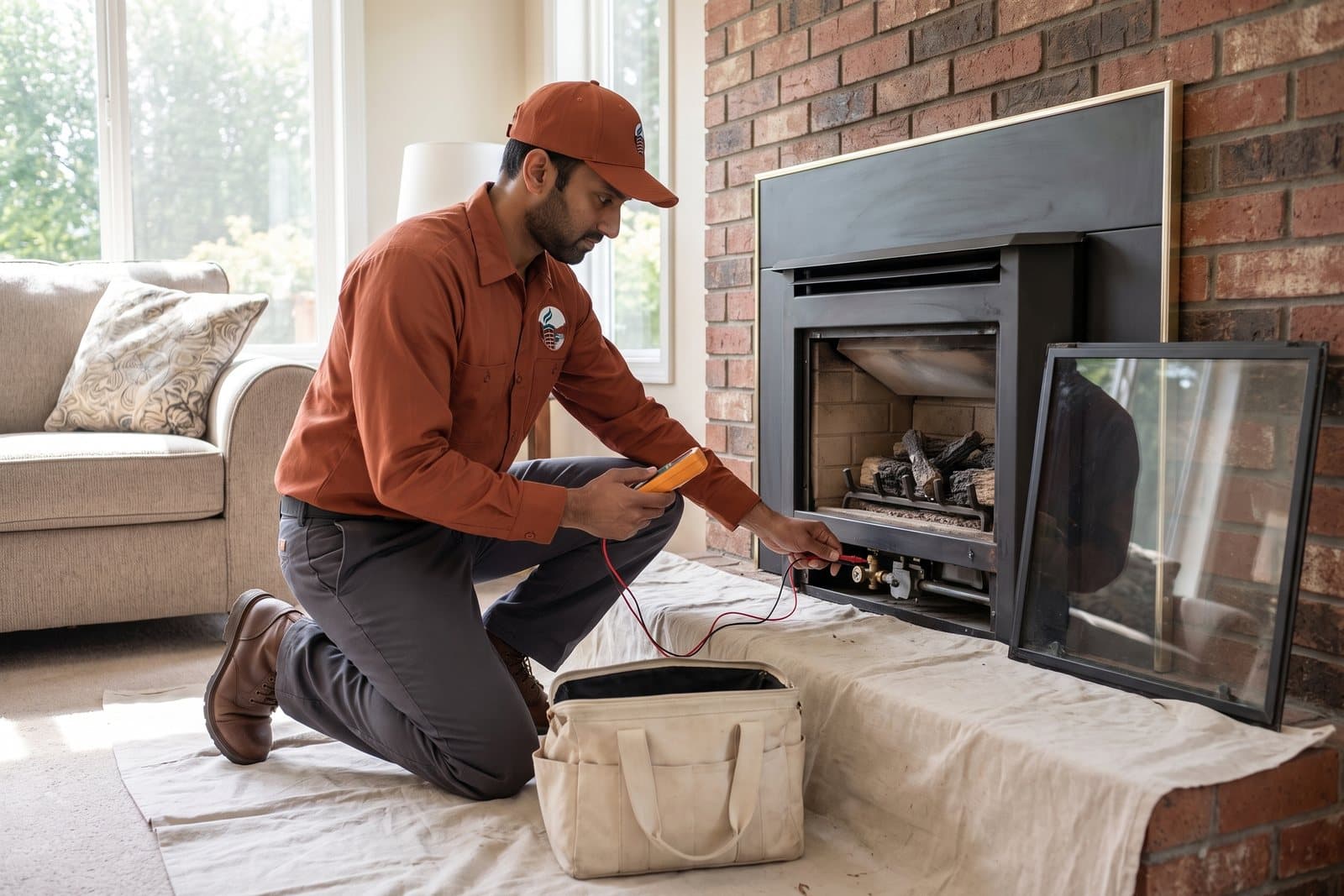
Cleaning and testing of the burner, the pilot assembly and the ignition
Learn moreRanges shown for orientation — the exact figure is written up on-site, after the inspection.
Few Carnation households heat mainly with wood: the Census survey estimates about 20 of 758, with a margin of error that large again. County-wide the share is about 0.6%, so the valley towns sit a little above it. But creosote does not ask whether wood is your main fuel. It asks how you burn. A stove damped down overnight, or a fireplace fed with wood cut the same autumn, makes more of it in a month than a hot, clean fire makes in a season.
Two gauges tell Carnation how its rivers are behaving. One sits on the Tolt, 5.5 miles to the northeast, below a drainage of 81.4 square miles. The other measures the Snoqualmie River a short way northwest of town, with 603 square miles of country above it. The town itself lies at the junction of the two.
A woodpile on that low ground has a hard time drying. Fog and wet soil keep the bottom rows damp all winter, and damp wood smolders. Smoldering is where glaze comes from. Stack on rails or pallets, under a roof with open sides, on the highest spot of the lot, and bring only a few days' supply near the house.
Every creosote removal we do in Carnation includes:
Smoke coming back into the room, or a smell that won't go? Book the inspection first.
Book nowCreosote is unburned wood gas that condensed on a cool flue wall. CSIA's threshold for brushing a masonry fireplace is soot 1/8 inch deep, and no waiting at all once glaze appears, because glaze is the form that feeds a chimney fire. Fuel is half the cure. The state Department of Ecology's rule of thumb: split the wood, keep it covered, and leave the stack alone for twelve months or more. The law points the same way: the regional clean air agency accepts just two fuels, manufactured logs and wood both dry and seasoned, and its opacity ceiling for chimney smoke is 20 percent, judged across six straight minutes inside any one-hour period.
From the second week of October to the middle of May, more than one Carnation day in three is a wet day in WeatherSpark's figures. Wood split in that period gains nothing by sitting outside uncovered. The drying happens in the short clear season, late June through early October, and one such season is rarely enough for dense wood.
Cold flue walls finish what wet fuel starts. January lows at the upstream station with the long record averaged 32.7°F, and smoke that meets a liner at that temperature condenses on contact. An exterior chimney on a north wall is the worst case. Where glaze keeps coming back despite good wood, we look at insulating the liner so the gas stays hot until it exits.
Stage one is loose soot. Stage two is crunchy flakes. Stage three is hard glaze. The camera footage tells us which tools to bring and how long the job will take.
Flakes yield to a rotary whip. For glaze, a product is applied that makes the coating brittle across several days of small, ordinary fires, or direct mechanical removal where the liner can take it.
Loosened material is brushed down, gathered at the bottom and vacuumed out through a filtered machine.
With the deposits gone, cracks hidden beneath them become visible. The final camera pass is as much an examination of the flue as a proof of cleaning.
What this work is quoted at for Carnation homes — the exact figure comes from the $99 on-site inspection, credited toward the work.
| Service | Price in Carnation | What that covers |
|---|---|---|
| Creosote Removal | From $215 | Priced by creosote stage — glazed stage 3 is the heavy end |
| Chimney Sweep | $189–$449 | Full flue swept, Level 1 inspection included |
| Chimney Inspection | $99 plus tax | Level 1 visual; Level 2 adds a full camera scan |
| Chimney Relining | From $1,900 | Full-length stainless liner, sized to the appliance |
| Chimney Repair | From $425 | Masonry repair — brick and mortar, scoped after diagnosis |
Ranges are what these jobs are quoted at in Carnation. The exact figure is set on site after a $99 inspection (credited toward the job if you go ahead), and you approve it before any work starts.
Carnation is a small town platted as Tolt in 1902, where the Tolt River meets the Snoqualmie River, with homes with a median build year of 1993, though about one in seven dates from before 1960.
CarnationKing County, WA · 47.648, -121.914
Before and after
Illustrations of what each repair changes on a typical chimney — not photos of a specific job.
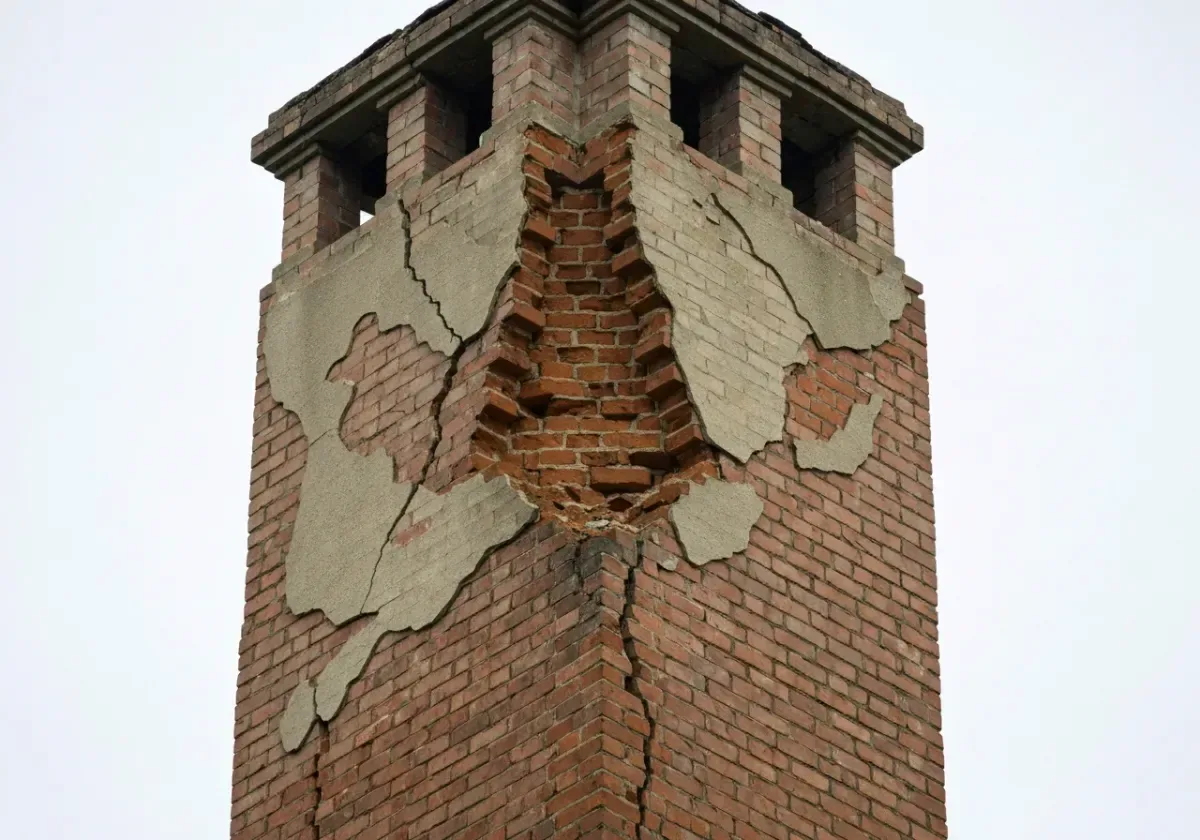 Before
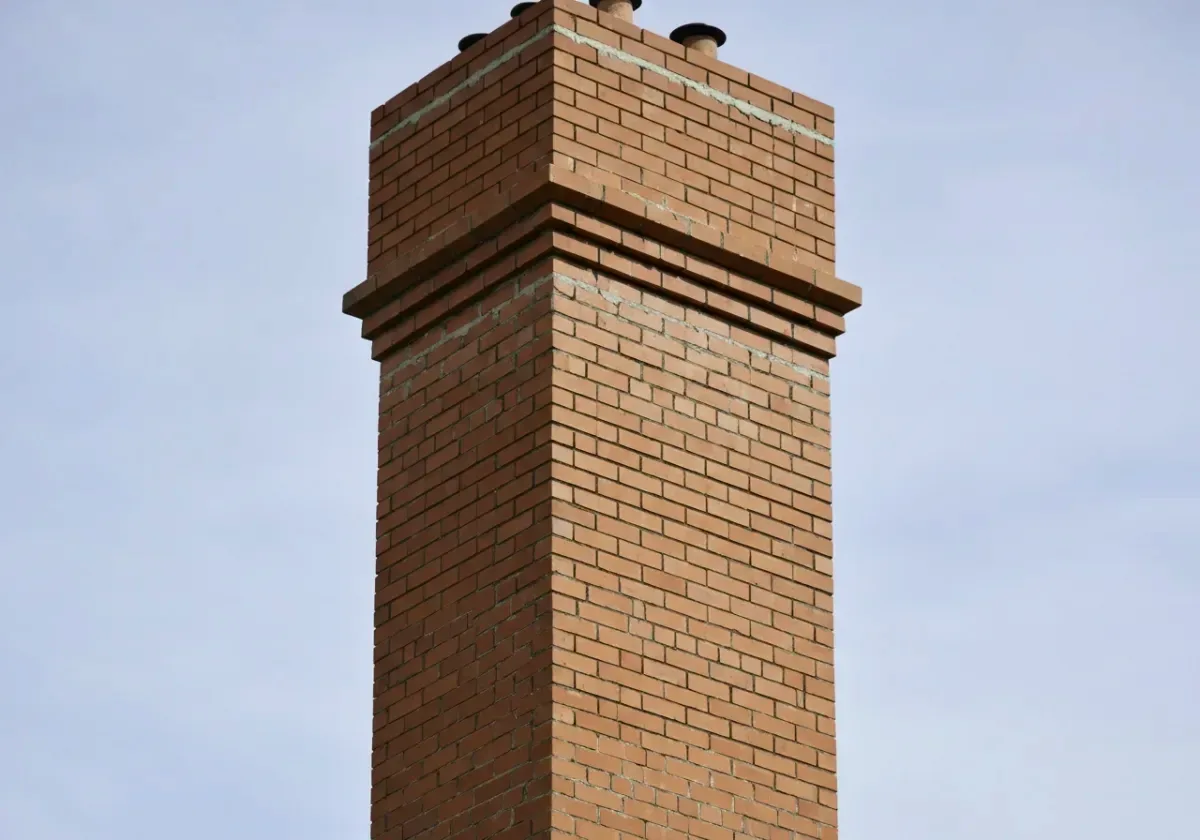 After
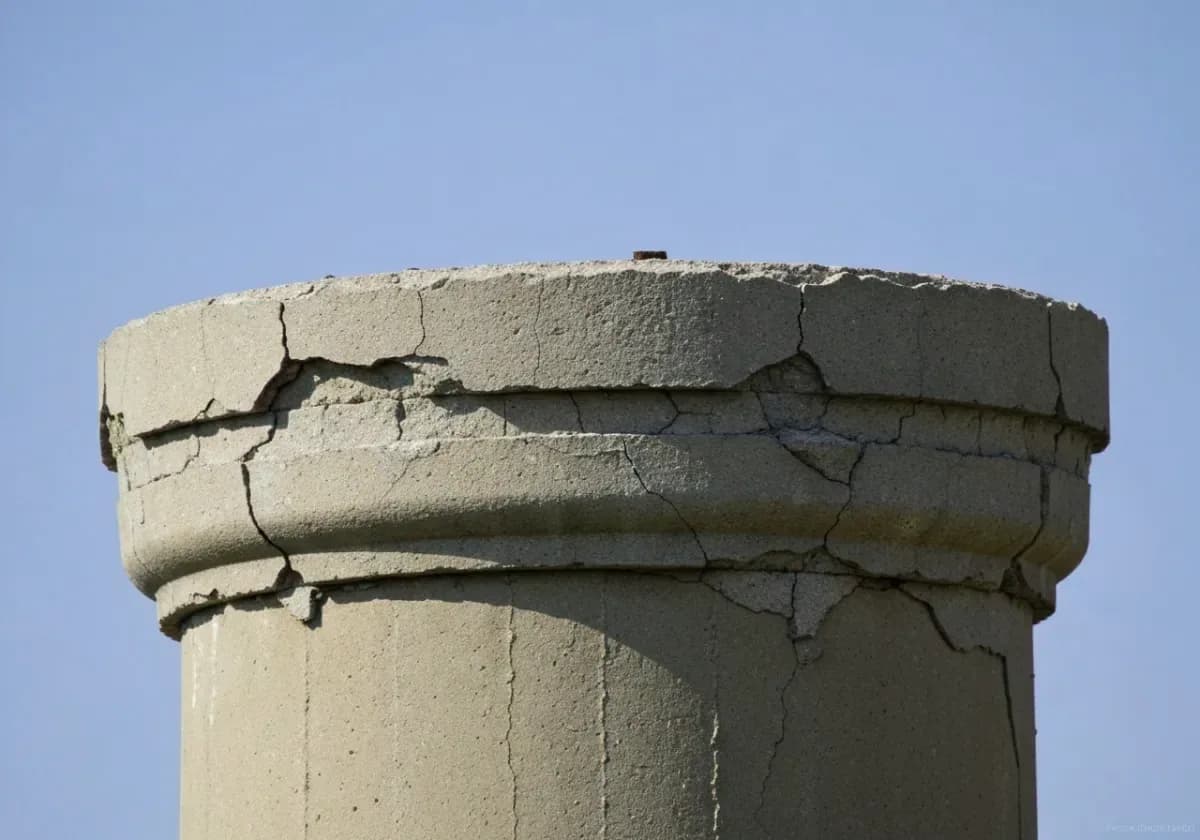 Before
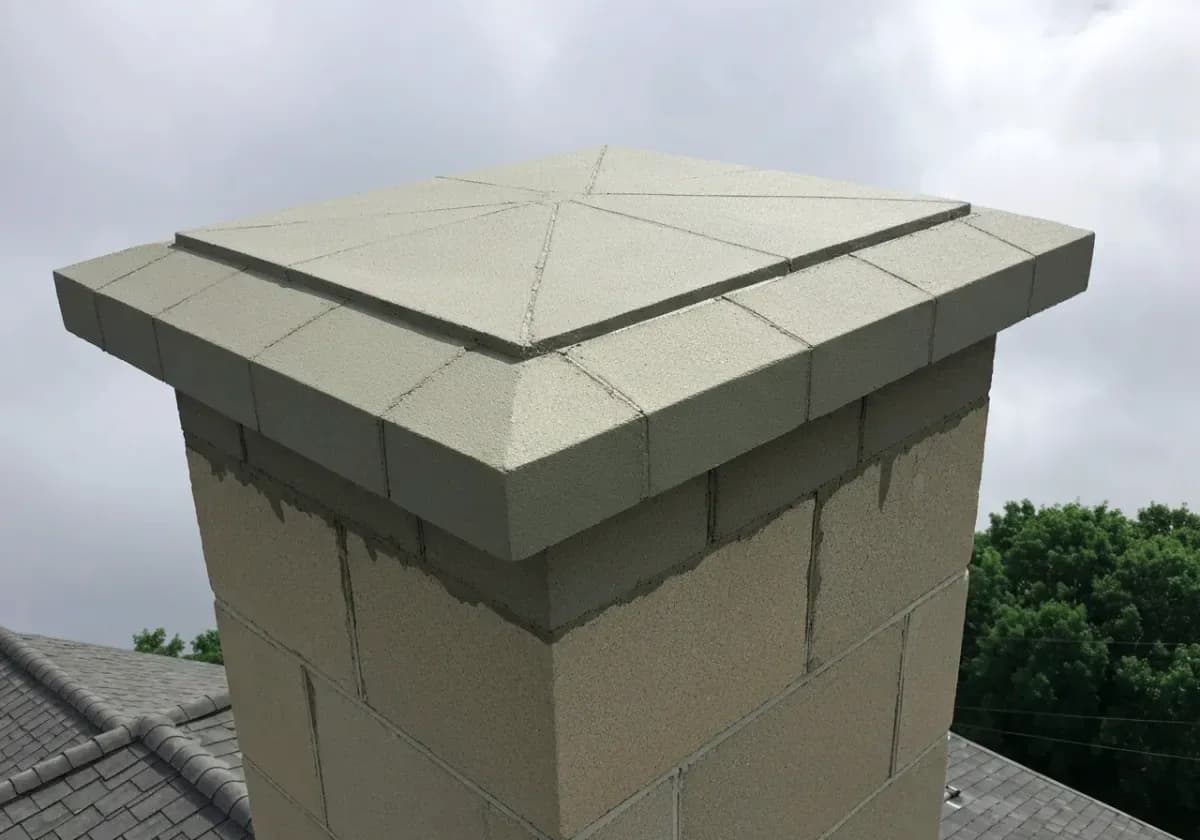 After
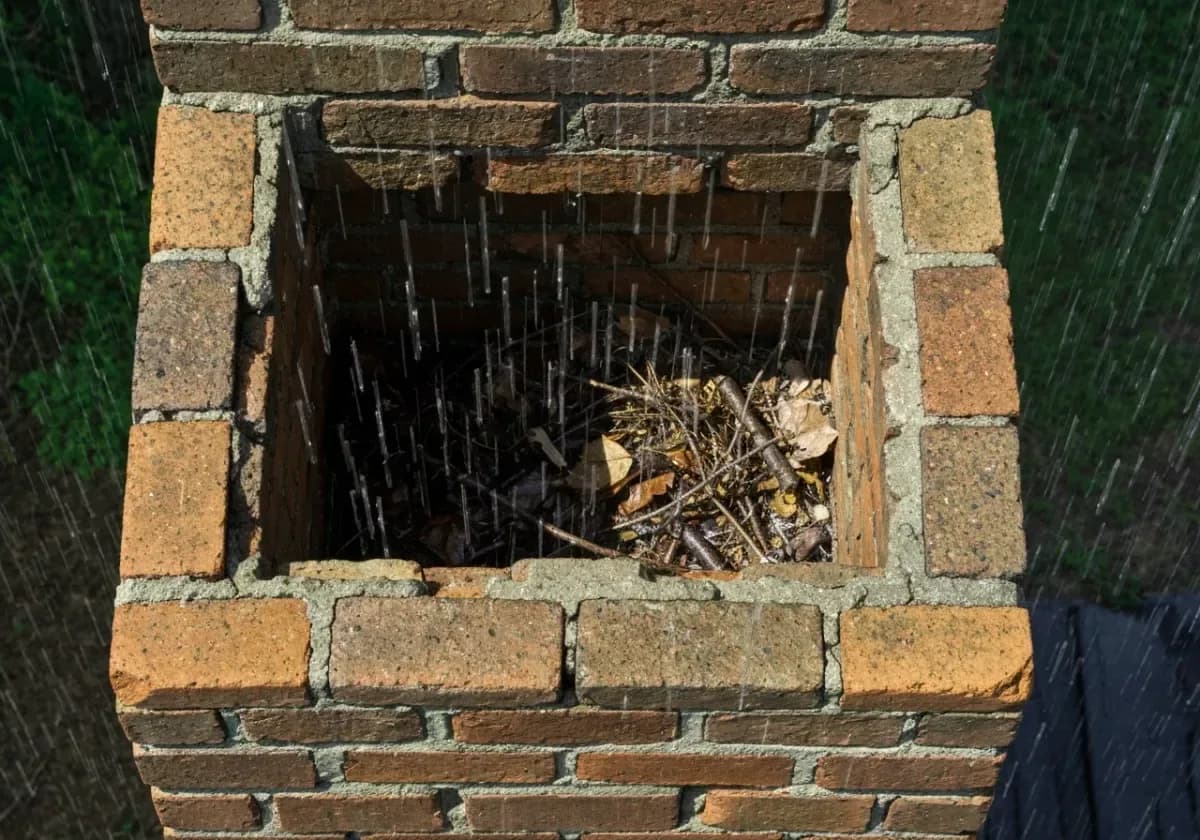 Before
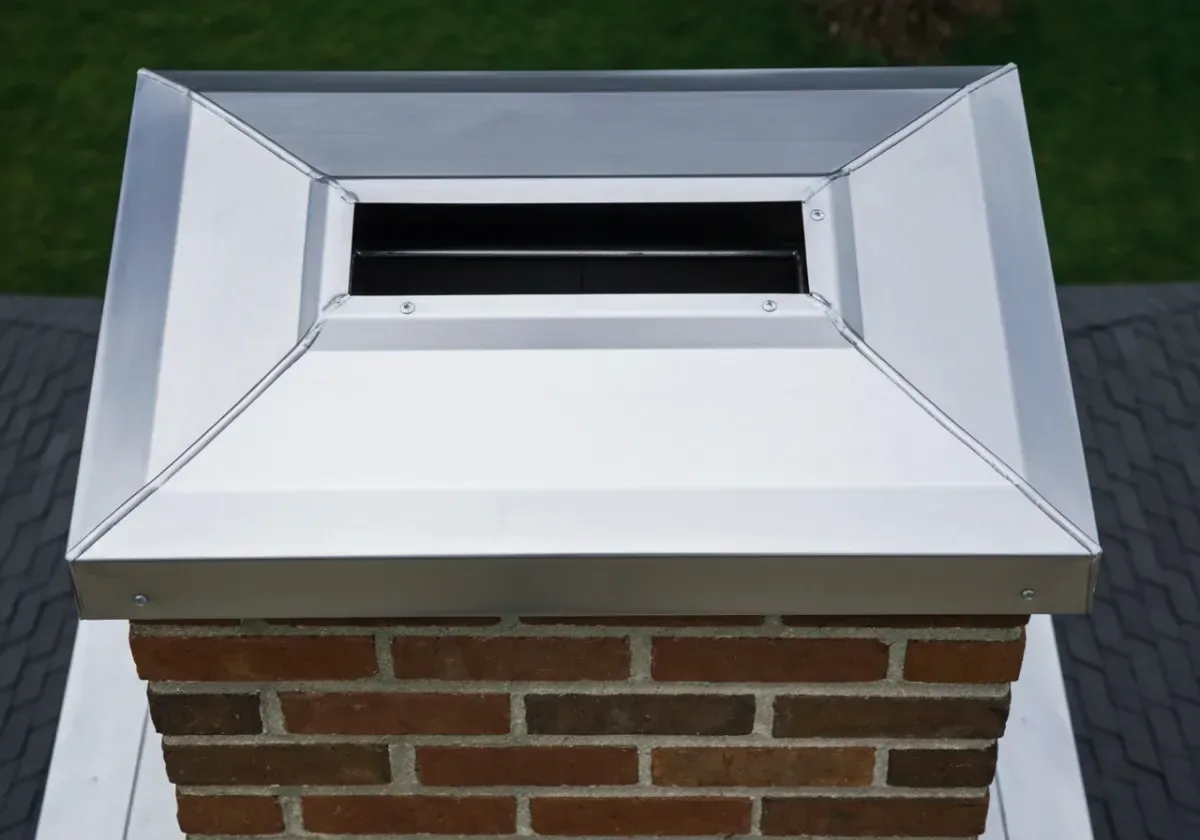 After

Four steps, each one on paper — so you always know what happens next.
Choose a genuine opening on the crew's calendar. Confirmation is immediate.
Liner, crown, cap, flashing and masonry examined in order — each finding photographed.
One document, plain numbers, covering only the work your chimney genuinely needs.
The repair is completed, then handed over with before-and-after photos of every item.
From $215. Heavy glaze over a full-height flue costs more, and the quote states the stage found and the method chosen.
Only if the clean air agency has already approved your exemption, the one reserved for houses lacking any other adequate heat, and even then no smoke may be visible. Finding other heat too expensive does not qualify.
They can dry out light deposits so a brush removes them more easily. They do not replace mechanical cleaning, and they do nothing useful against thick glaze.
A $99 on-site inspection, a written quote before any work, and photos of every item we touch.