Redmond, King County
Chimney work in Redmond is shaped by three things you can check for yourself: when the house was built, where it sits between the valley floor and the hills, and which permit office answers for the address. This page sets out those facts, with their sources, for the city and the unincorporated land just east of it. Every job we take on here starts the same way, with a look at the chimney and a written price.
Book an inspection
Book your $99 inspection
$99 plus tax, deducted when you approve the repair
Not sure where to start
Pick what you're seeing at your Redmond home — we'll point you to the right fix.
What we do
The same crew, the same written quote — for Redmond homes.
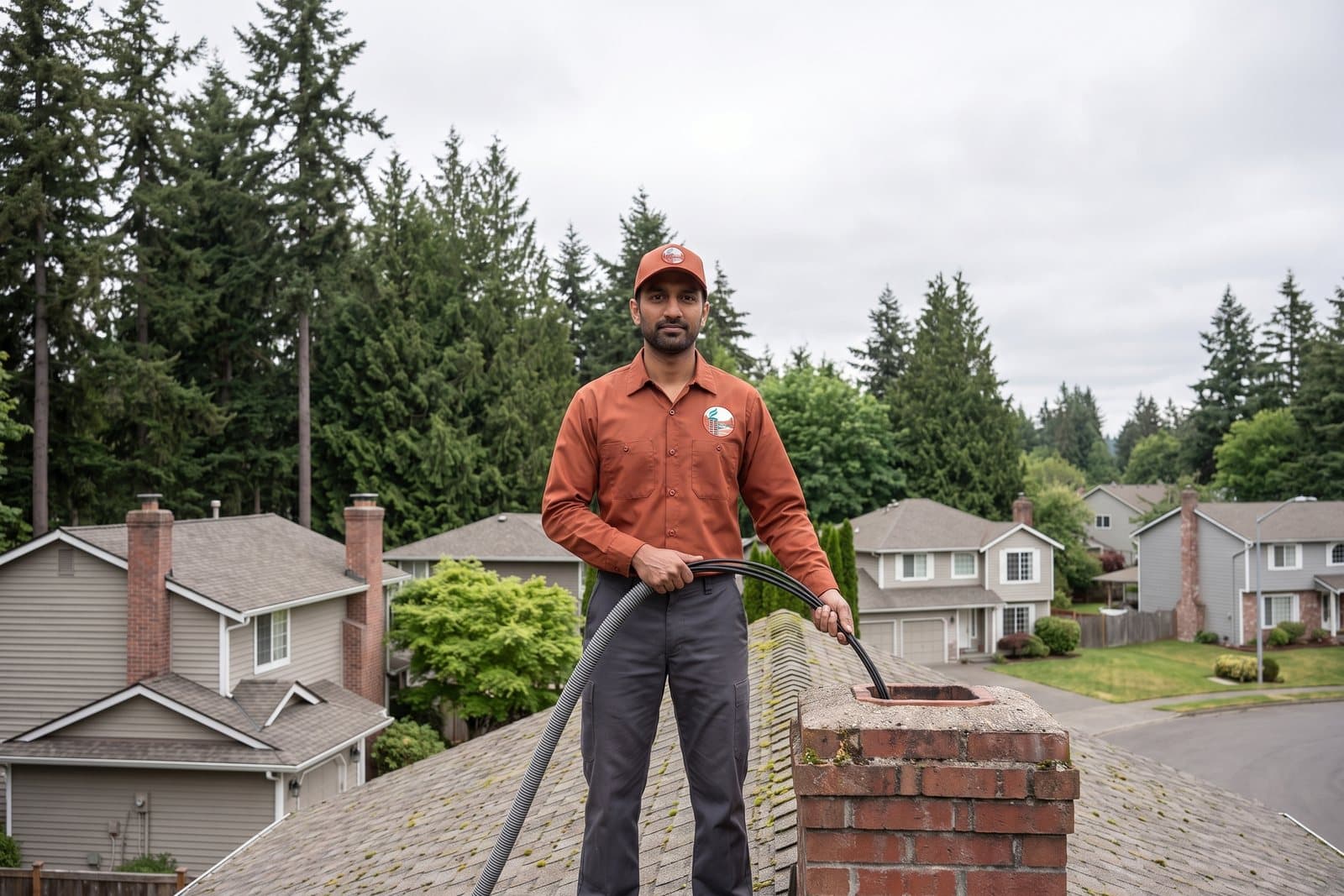
Brushing of the whole flue, top to firebox, with brush heads sized to the liner
Learn more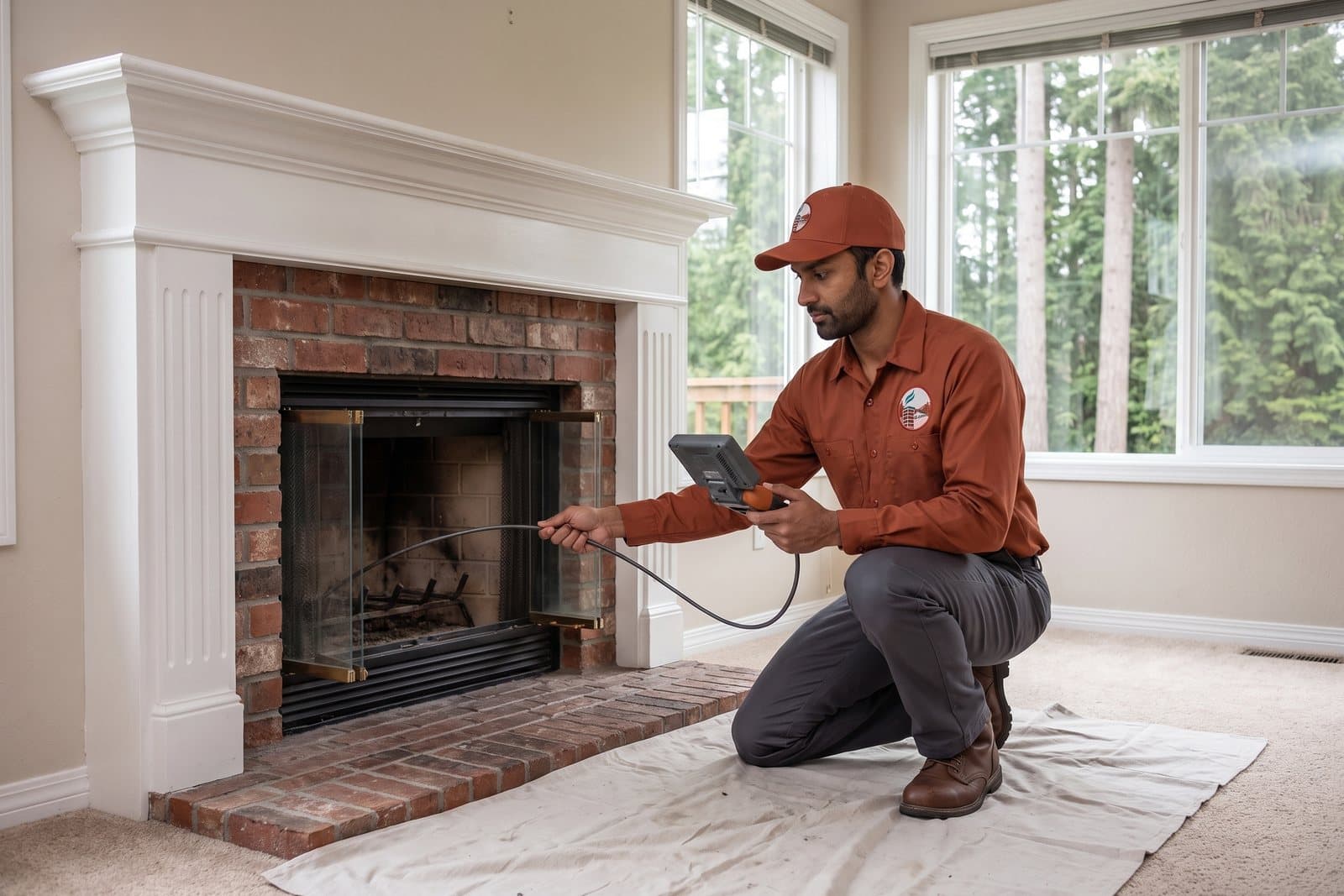
A Level 1 check, or a Level 2 with a camera run through the flue when the visible parts are not enough
Learn more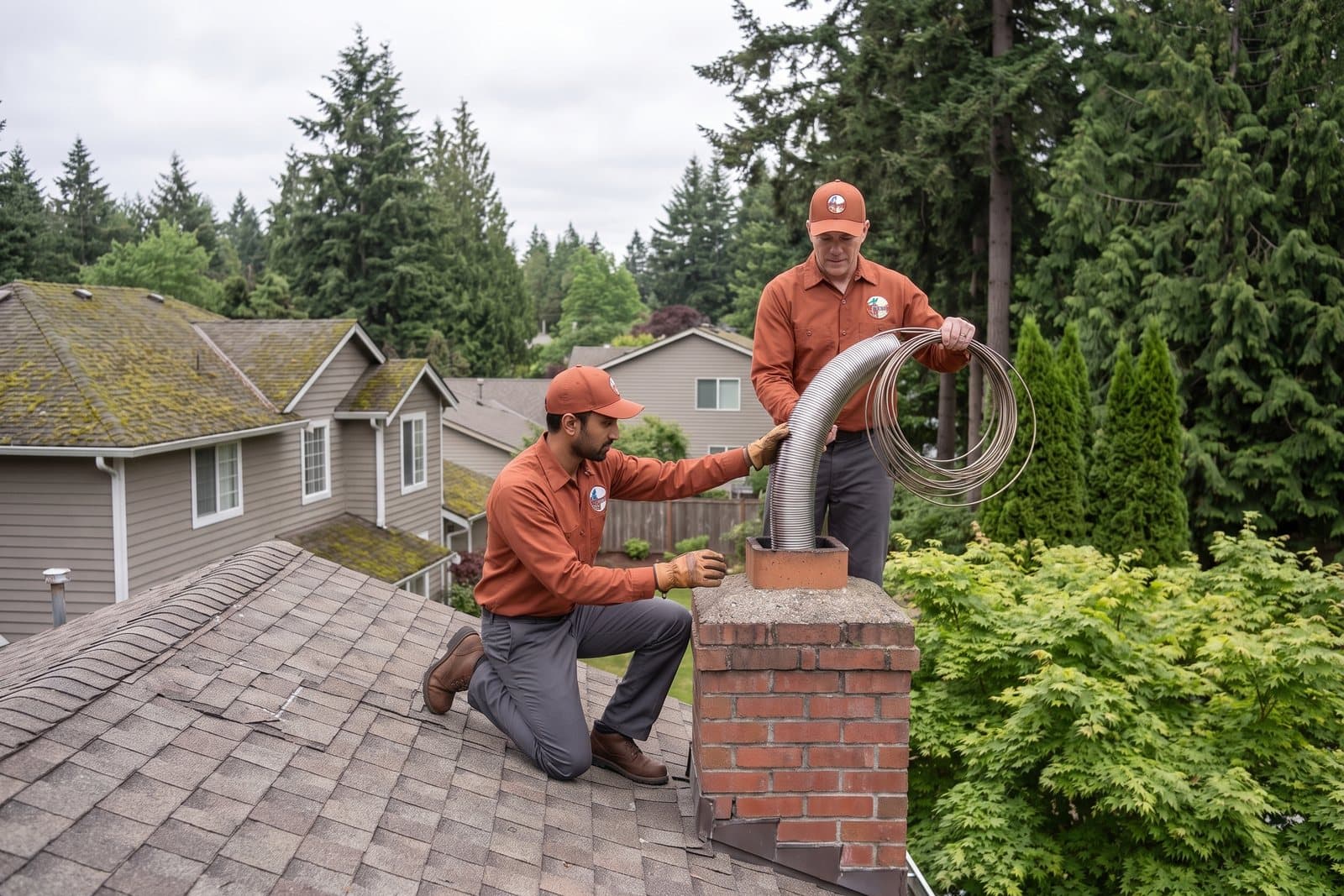
A camera run and full measurements before any liner is ordered
Learn more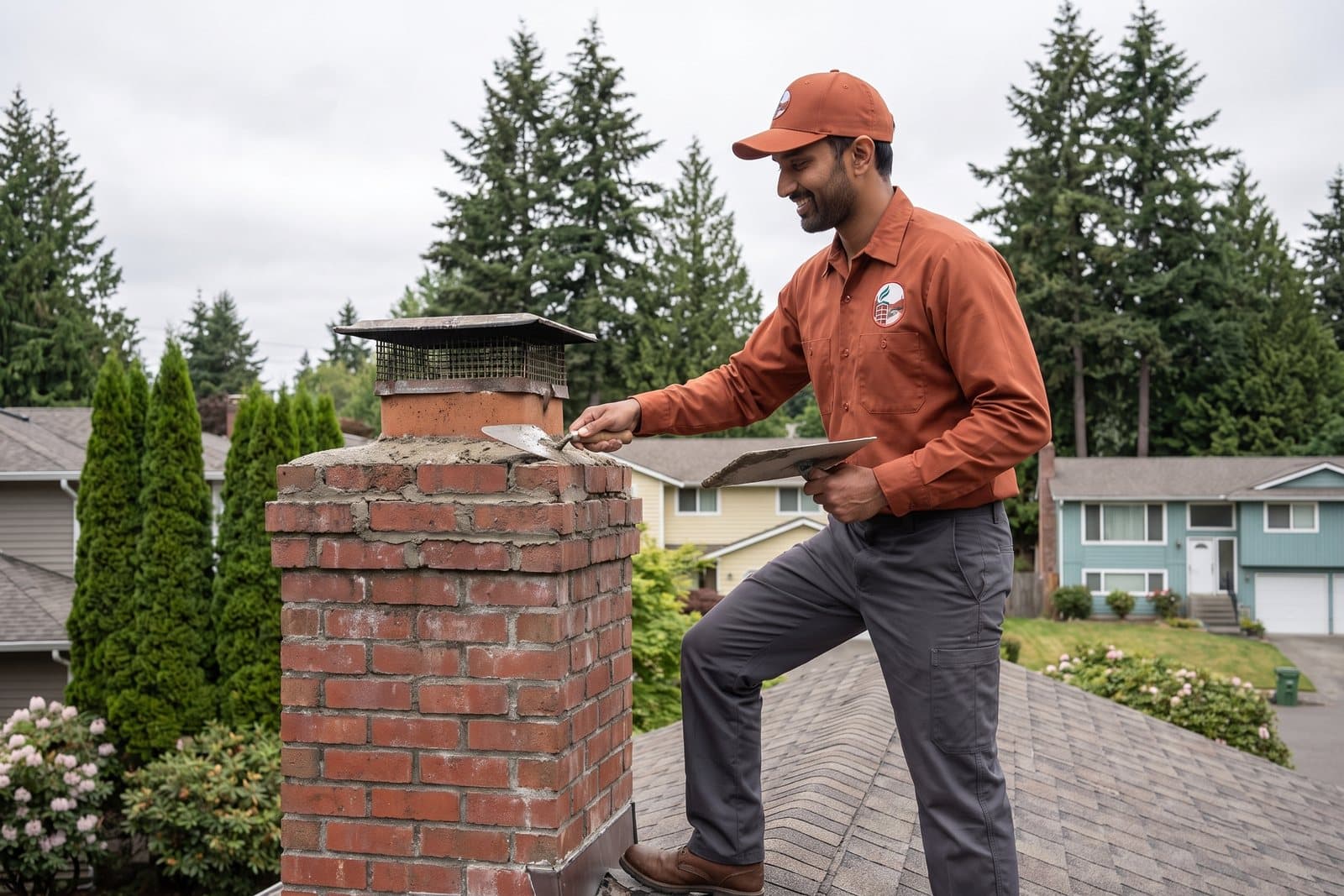
A photographed assessment that separates cosmetic wear from structural damage
Learn more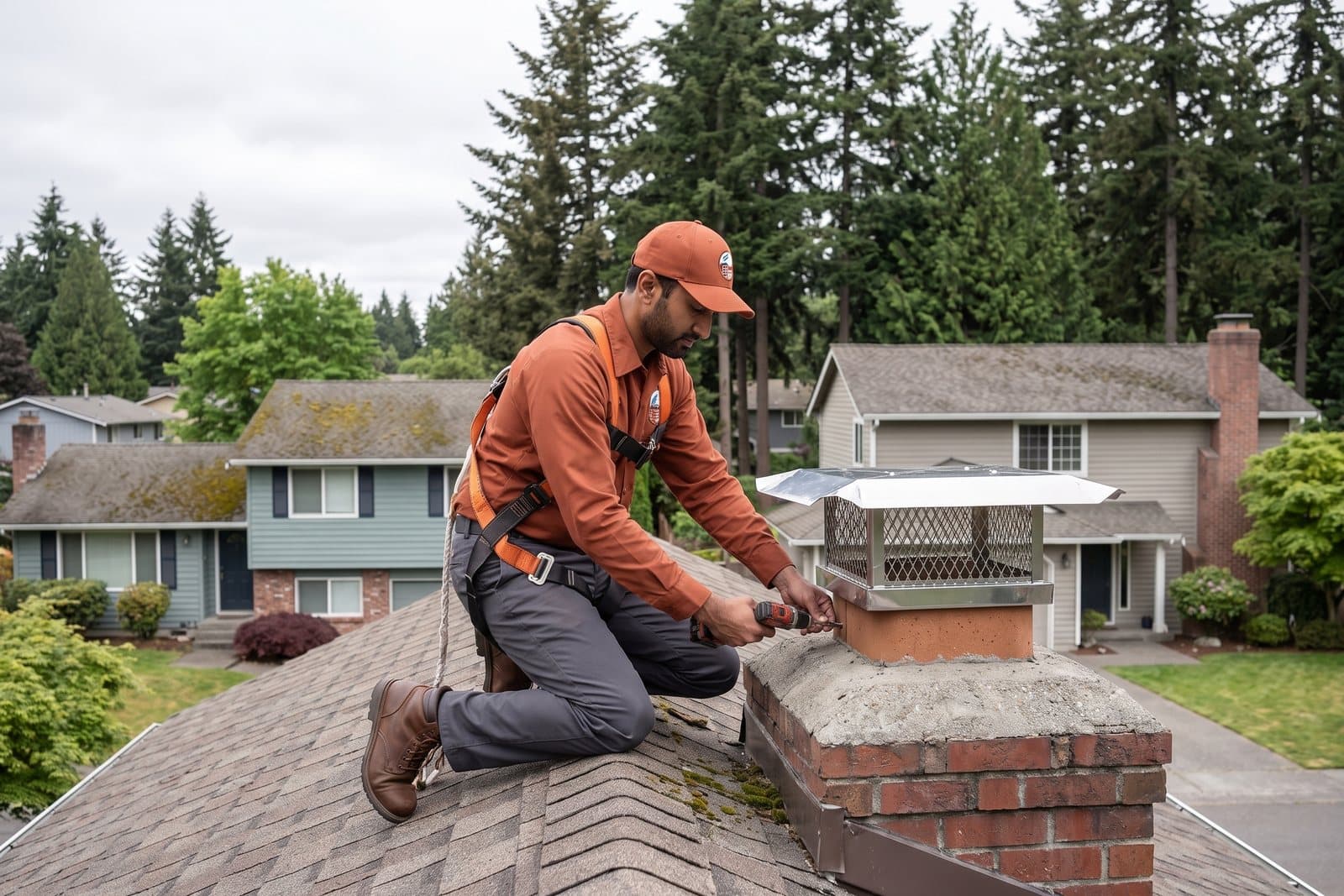
Measurement of each flue, or of the full crown for a multi-flue cap
Learn more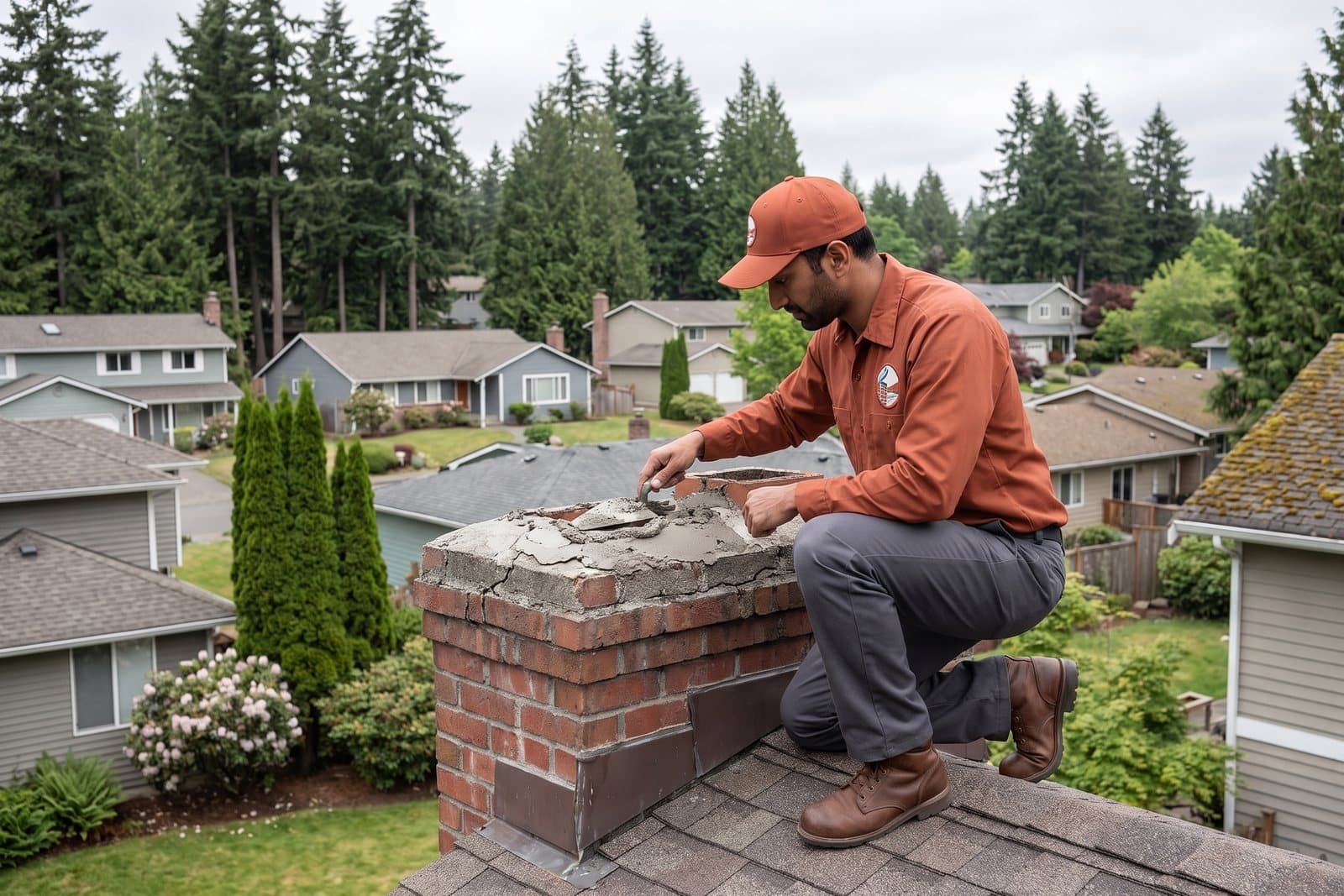
Close-up photos of the crown and of every face of the stack
Learn more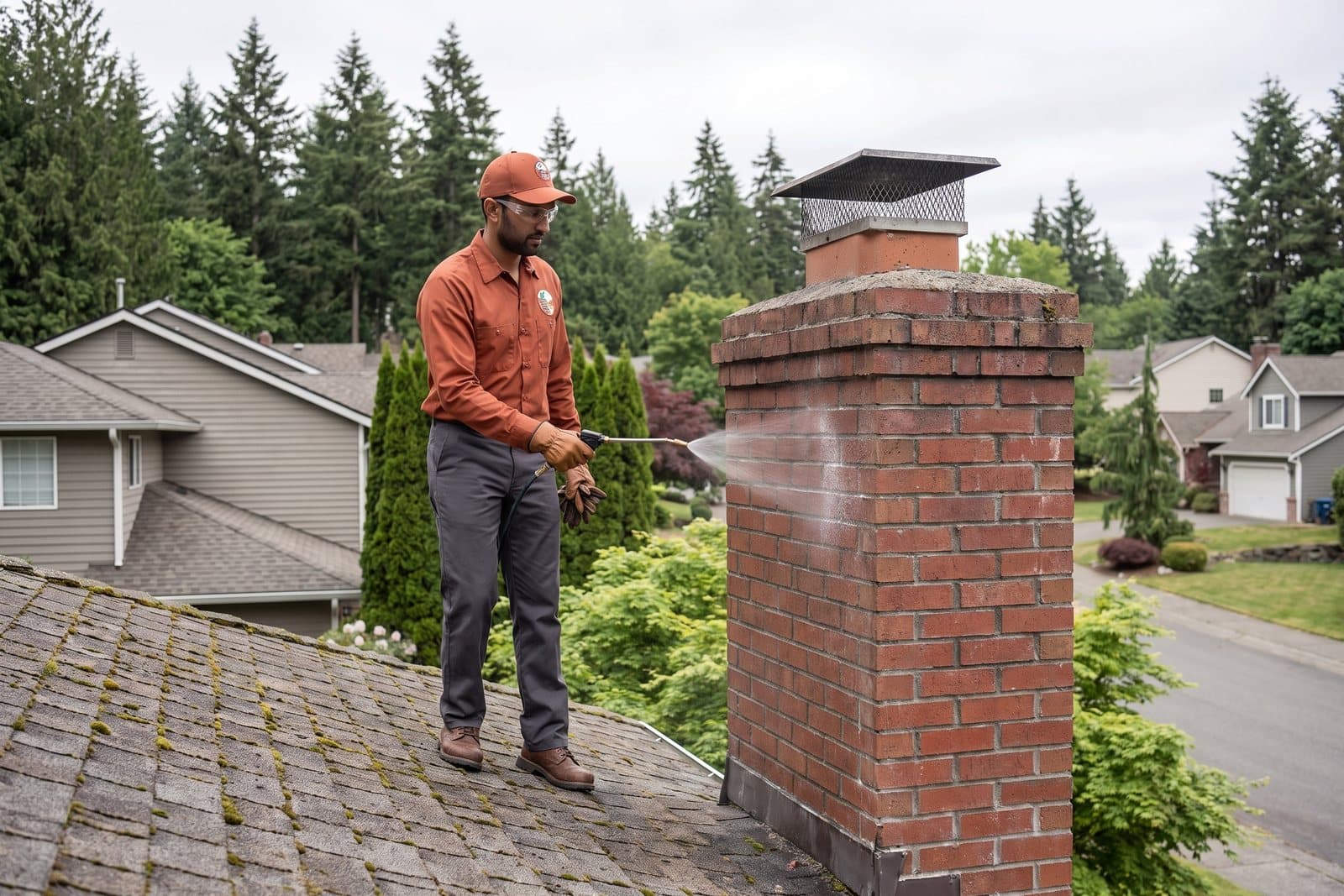
Inspection of brick, joints and crown before anything is applied
Learn more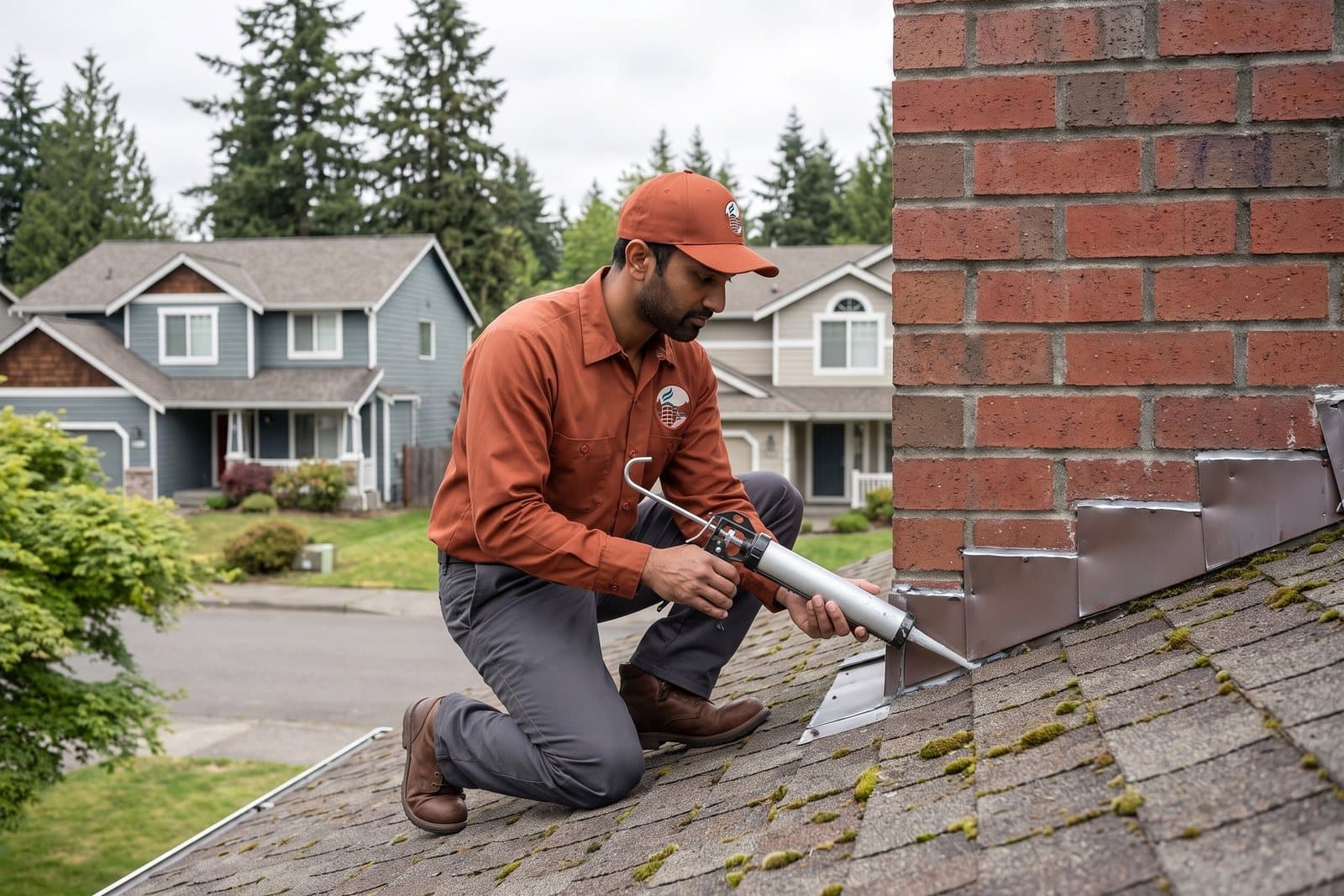
Leak tracing at the roof and, where reachable, in the attic
Learn more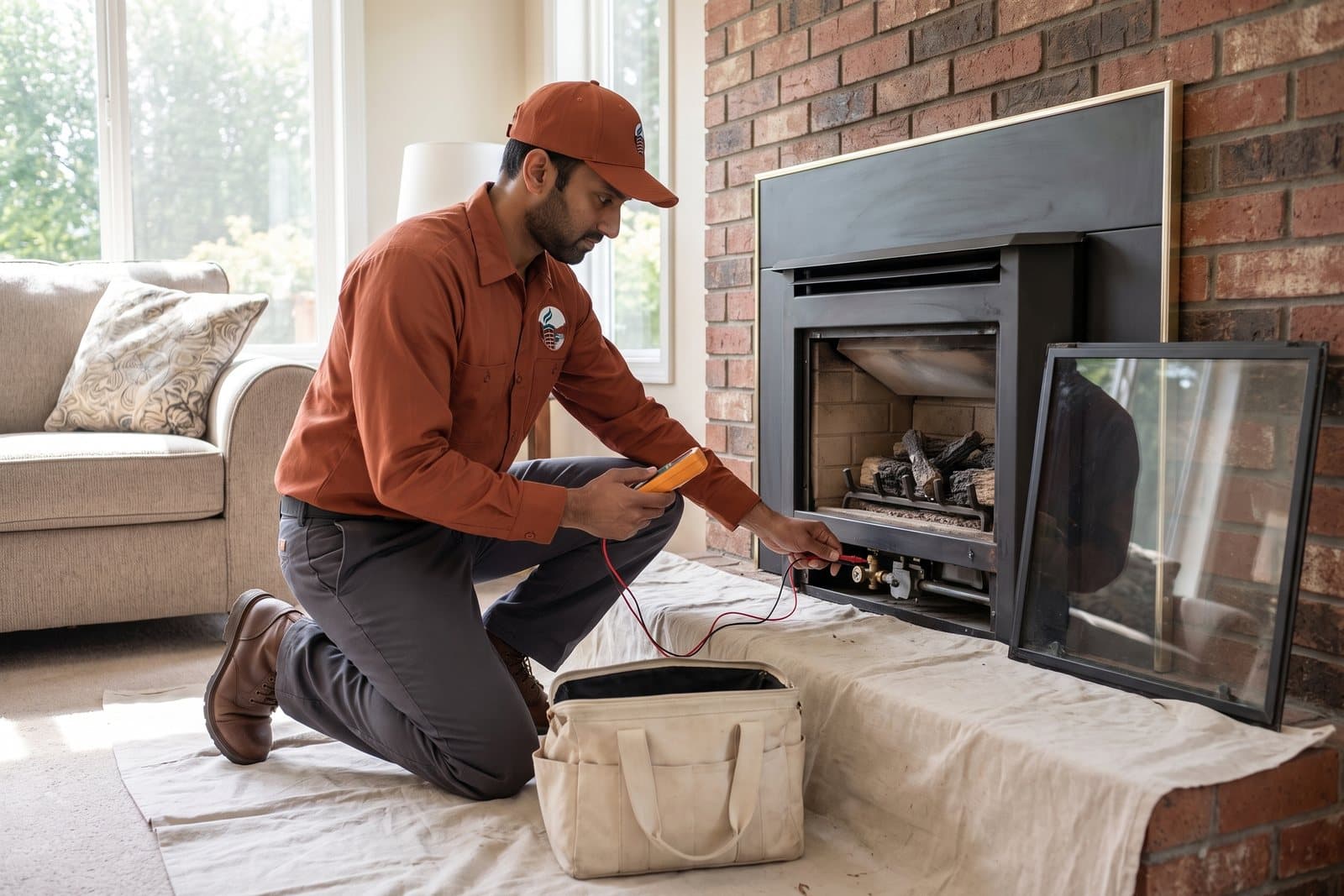
Cleaning and testing of the burner, the pilot assembly and the ignition
Learn more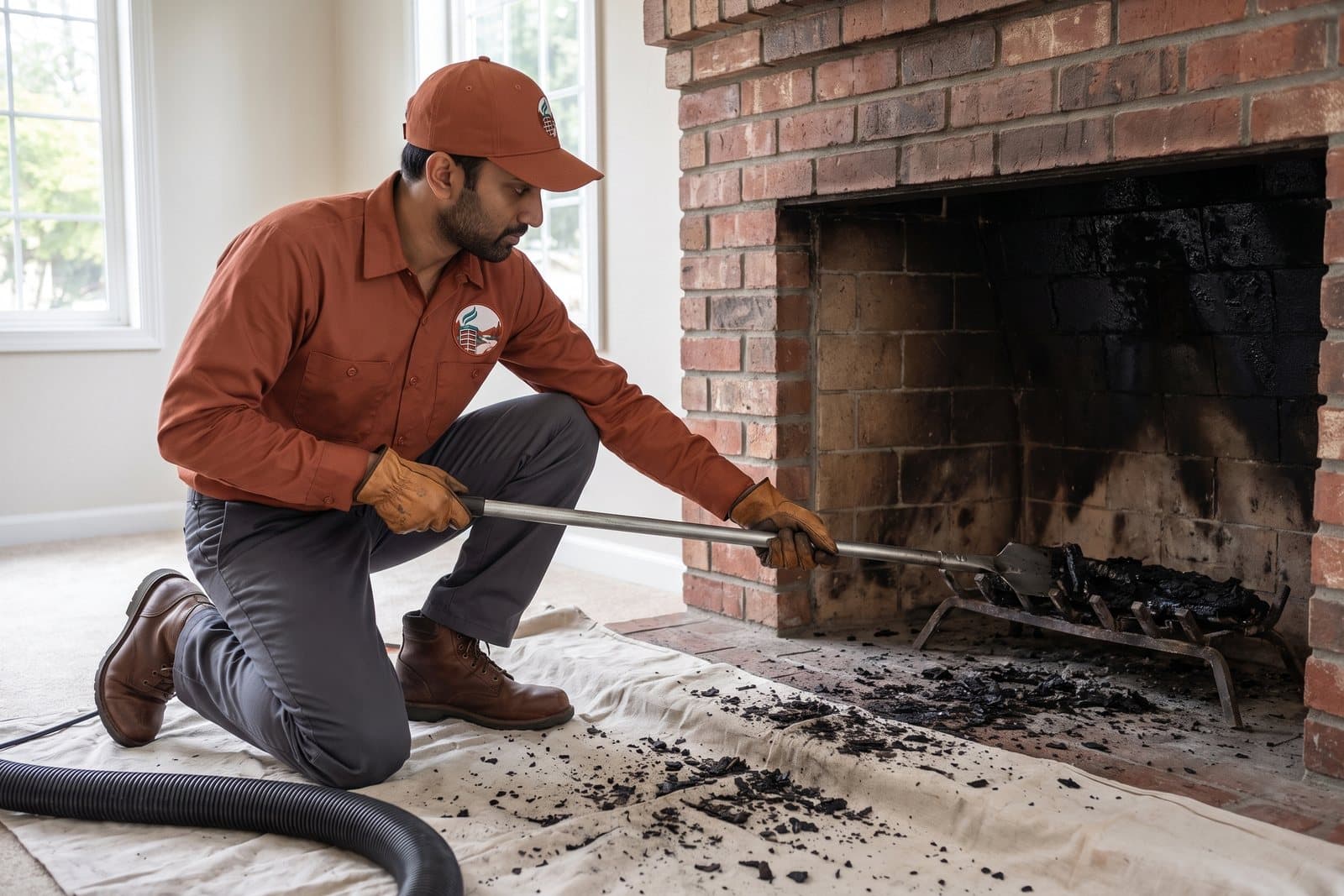
A camera scan to grade the deposits and map where they sit
Learn more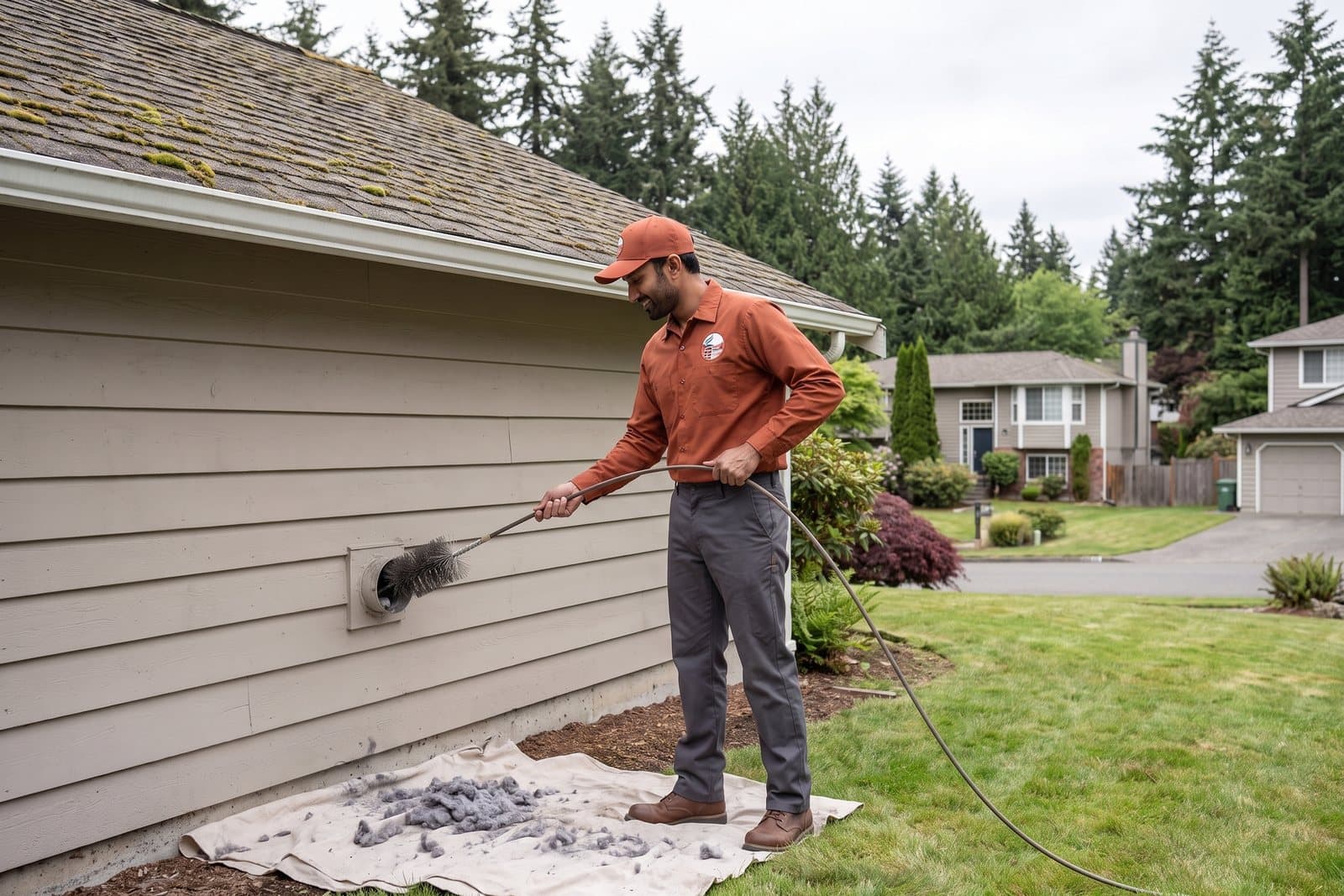
Rotary brushing and air cleaning of the full duct length
Learn more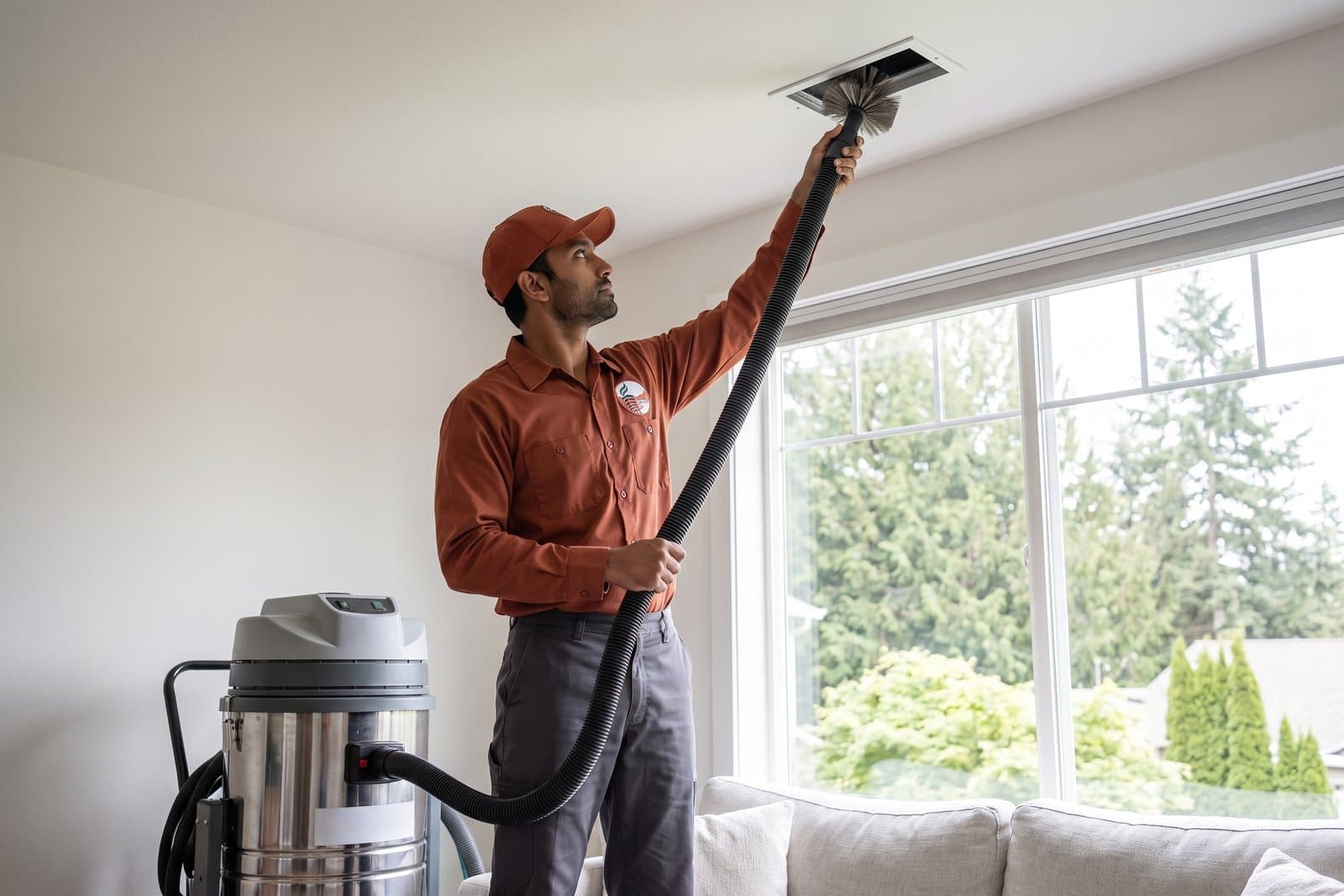
Every supply and return run cleaned with agitation tools under negative pressure
Learn moreRanges shown for orientation — the exact figure is written up on-site, after the inspection.
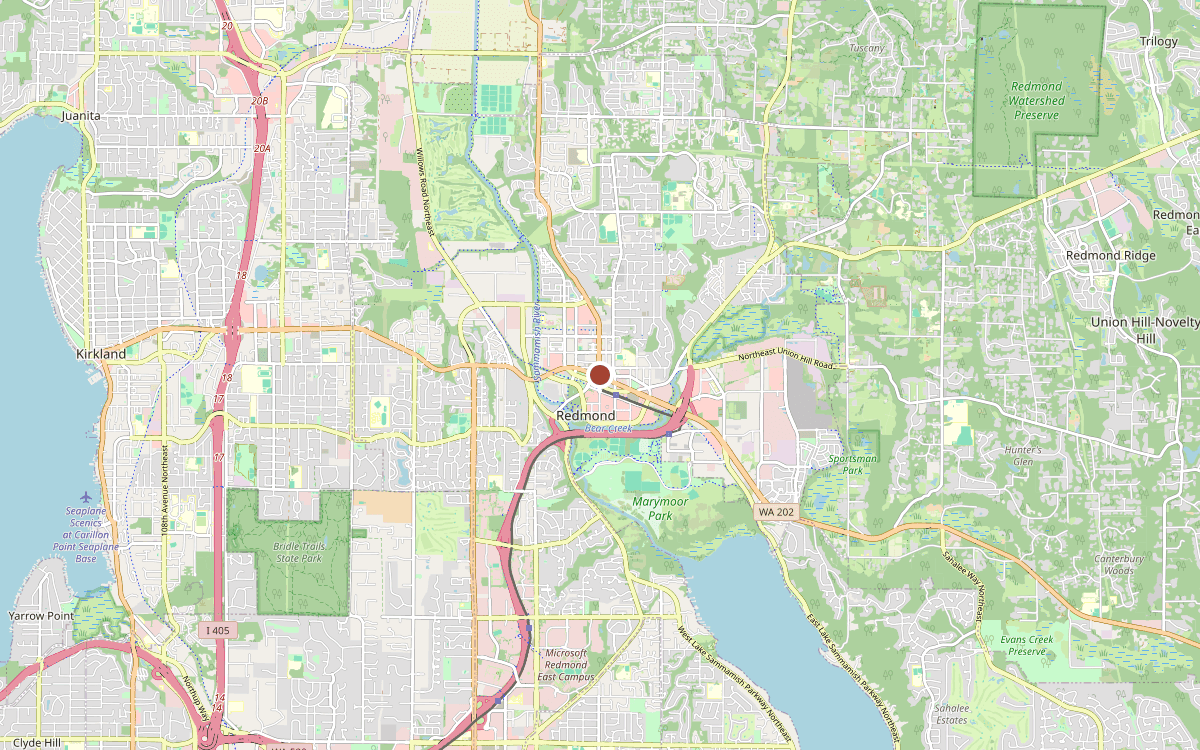
Service-area map — Redmond, WA. Map data © OpenStreetMap contributors.
Redmond occupies a little over 17 square miles. The north end of Lake Sammamish touches the city, and two streams cross it: Bear Creek and the Sammamish River. Luke and Kate McRedmond settled 80 acres here in spring 1871; the place was called Salmonberg, then Melrose, before the post office took the name Redmond in 1883. The town incorporated on the last day of 1912, once a birth that November had brought its population to the 300 required. The state's Office of Financial Management now estimates 83,320 residents and 38,216 housing units, of which 13,981 are one-unit structures. The city itself counts ten neighborhoods and describes four of them, Education Hill, Grass Lawn, Idylwood and North Redmond, as predominantly residential.
For its first half-century Redmond lived on timber. Logging picked up in the 1880s, a railway reached the village at the end of that decade, and by 1930 the logging operations around town were largely finished. What remained was a small rural town: 573 residents in the 1950 census.
The change came fast. The city's history page ties the surge in house building to the Evergreen Point floating bridge, completed in 1963, and the population passed 11,000 by 1970, 35,800 by 1990 and 45,256 by 2000. Marymoor Park, begun in 1904 as the Willowmoor estate and bought by King County in 1962 as its first park, is a reminder of the older landscape.
WeatherSpark's terrain summary finds as much as 436 feet of elevation change within 2 miles. Downtown lies in the 100-year floodplain according to the city's hazard annex, which counts 166 buildings there, 116 of them single-family. The same document puts the steep ground on Education Hill and along Willows/Rose Hill and says the hilltops are exposed to lightning.
For a chimney, position decides exposure, wind above all. The annex speaks of wind tunnels between the hills, so we note whether a stack stands on a ridge, on a slope or down on the valley floor.
Electricity is the main heating fuel in 59.2% of occupied Redmond homes and utility gas in 38.3%, by Census estimate. Wood is the primary fuel in roughly 72 households. A fireplace is therefore an extra in nearly every Redmond home that has one, which is also why it tends to be forgotten between winters.
Wood smoke is regulated all the same. The Puget Sound Clean Air Agency, whose jurisdiction covers King County, publishes burn ban status online and on a phone line, 800-595-4341. Its 2024 data summary counts up to 4 winter days when fine particles exceeded the agency's health goal, and it attributes those days to smoke from wood burned for heat. Fire-safety burn bans in summer do not come from that agency at all; the county fire marshal declares them.
Redmond's first annexation after incorporating came in 1951: 332 acres on Education Hill, north of the old town. Overlake followed in 1962, Viewpoint in 1964 and Bear Creek in 1966. The 2005 historic resources survey counts over 40 annexations across those two decades and a more than tenfold gain in acreage.
The Census still shows the result. Of 35,104 housing units, 8,224 were built from 1960 to 1979, which at 23.4% is the largest such share among the four cities we serve. Units older than 1960 are rare, about 2.5%.
Those 1960s and 1970s chimneys are the ones now reaching the age of relining and of insert conversions. One caution: no public source records what type of chimney stands in which neighborhood, so we establish it house by house with a camera, never by assumption.
Redmond's annex to the King County hazard mitigation plan is direct about earthquakes. The city is close to two faults, would be affected by the Cascadia Subduction Zone, and stands on a liquefaction zone. The annex even describes a seiche risk on Lake Sammamish, seven miles long and half a mile wide, naming Viewpoint, Southeast Redmond and Marymoor Park as the exposed shoreline.
Washington DNR supplies the odds for the wider region over 50 years: 85% that a deep earthquake reaches magnitude 6.5 or more, 17% for a shallow crustal one of that size, 15% for a magnitude 9 on the Cascadia megathrust.
Chimneys are where this becomes a household matter. FEMA's guidance after the 2014 South Napa earthquake judged brick chimneys on wood-frame houses to be extremely vulnerable and recommended metal flues or inserts in light framing when they are rebuilt. Washington's residential code requires reinforcing and anchorage for masonry chimneys in the higher Seismic Design Categories; which category a lot falls in is for the building department to say.
Redmond runs its own permitting. Electrical, mechanical and plumbing work fall under what the city calls trade permits, handed out at the counter or, for some, once plans have been reviewed, online through the Redmond ePermitting Service (REPS) or at the Development Services Center at 15670 NE 85th Street.
The mechanical permit application, published in February 2025, asks the applicant to declare fixtures that include Fireplace, Dryer Vent, Gas Piping, Gas Appliance, Gas Logs Insert and Wood Pellet Stove or Insert. Plan review is waived for IRC townhouses and for houses holding one or two families, and the form requires a City of Redmond business license of any contractor.
The codes behind those permits are the 2021 editions, enforced by the city since March 15, 2024. On that date the State Building Code Council's 2021 codes took effect across Washington. As of October 4, 2026, the council's page for the 2024 cycle still showed the adoption dates of the next residential, mechanical and fuel gas codes as to be determined.
The grid we quote from for Redmond homes — the $99 inspection comes first, the written quote before any work.
| Service | Price in Redmond | What that covers |
|---|---|---|
| Chimney Sweep | $189–$449 | Full flue swept, Level 1 inspection included |
| Chimney Inspection | $99 plus tax | Level 1 visual; Level 2 adds a full camera scan |
| Chimney Relining | From $1,900 | Full-length stainless liner, sized to the appliance |
| Chimney Repair | From $425 | Masonry repair — brick and mortar, scoped after diagnosis |
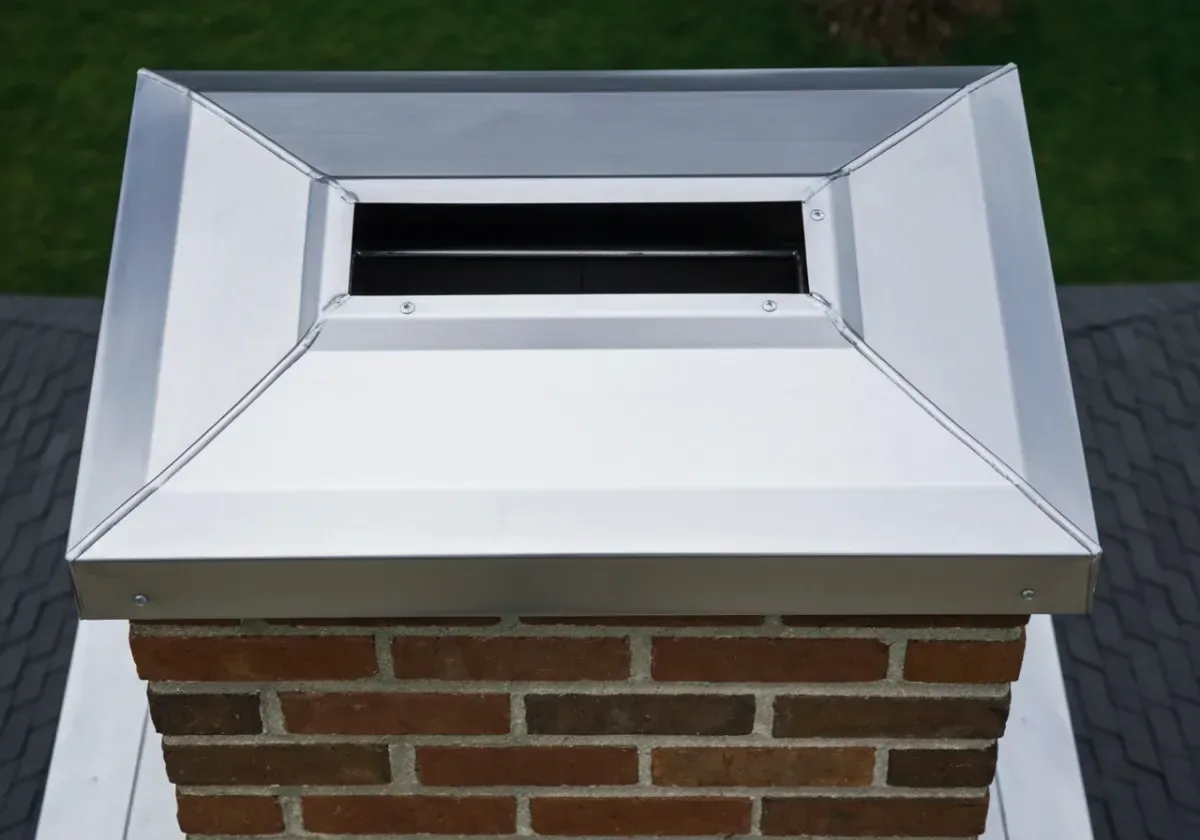
| Chimney Cap Installation | $235–$850 | Stainless cap fitted; multi-flue and custom at the top |
| Masonry Repair (Crown / Repointing) | From $475 | Crown work, repointing and tuckpointing by surface area |
| Chimney Waterproofing | $285–$790 | Breathable sealer — reapplied every 3–5 years in this climate |
| Chimney Flashing Repair | $330–$1,500 | Reseal at the low end, full flashing replacement at the high |
| Gas Fireplace Service | $189–$425 | Annual service and tune-up; repairs quoted after diagnosis |
| Creosote Removal | From $215 | Priced by creosote stage — glazed stage 3 is the heavy end |
| Dryer Vent Cleaning | $105–$265 | Full run cleaned; roof or upper-floor terminations at the top |
| Air Duct Cleaning | From $525 | Whole HVAC system — trunks, branches and every register |
Ranges are what these jobs are quoted at in Redmond. The exact figure is set on site after a $99 inspection (credited toward the job if you go ahead), and you approve it before any work starts.
Before and after
Illustrations of what each repair changes on a typical chimney — not photos of a specific job.
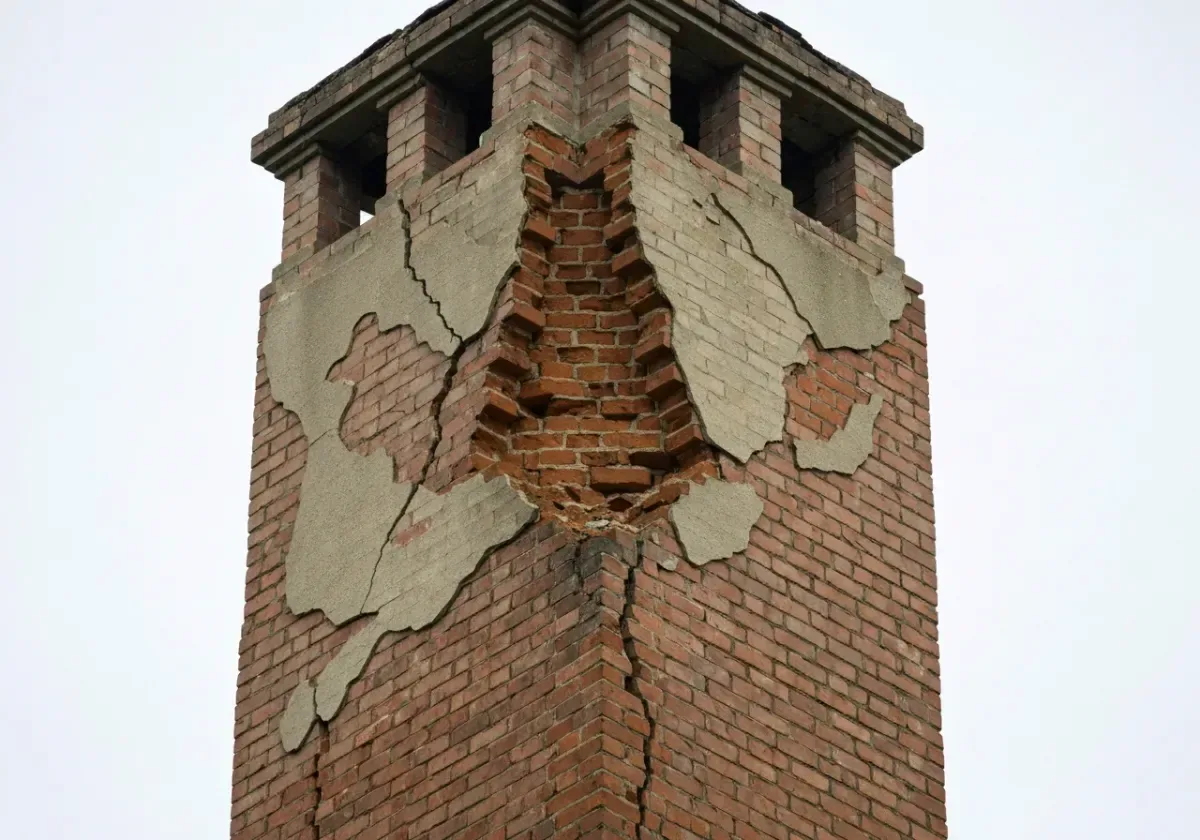 Before
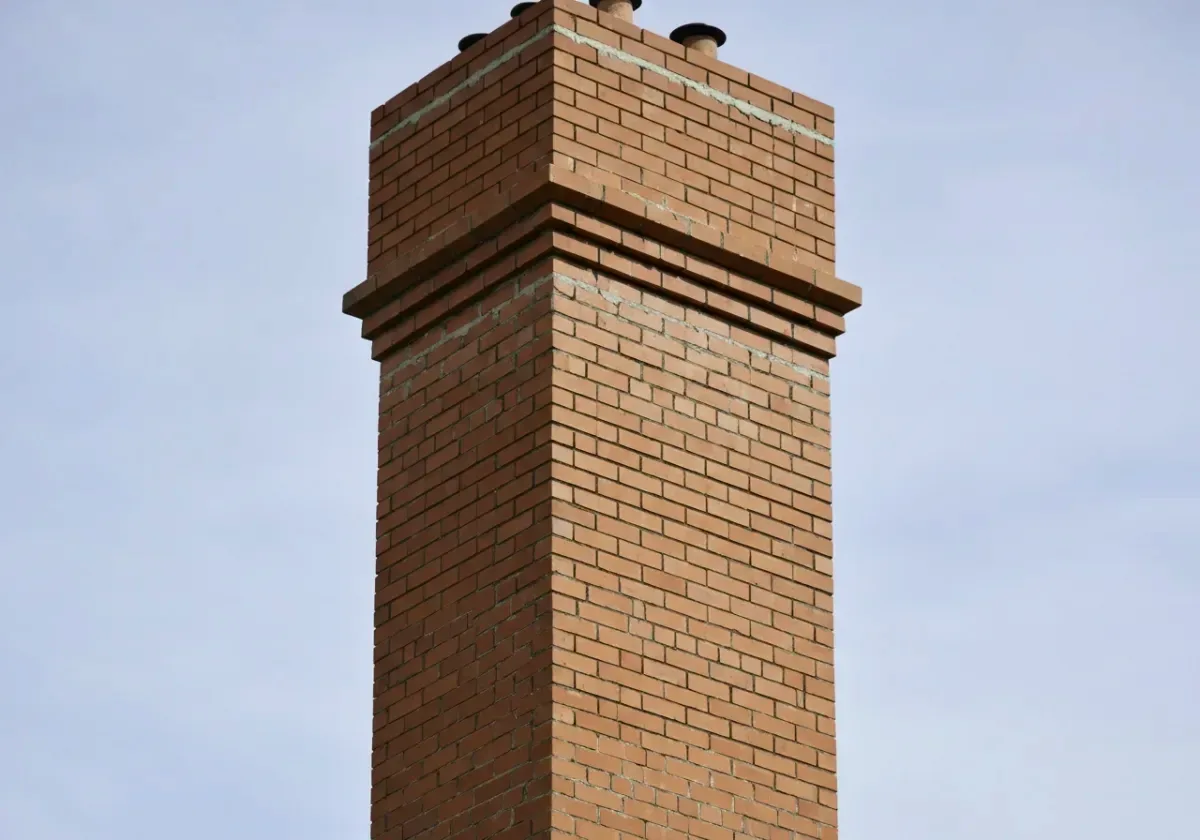 After
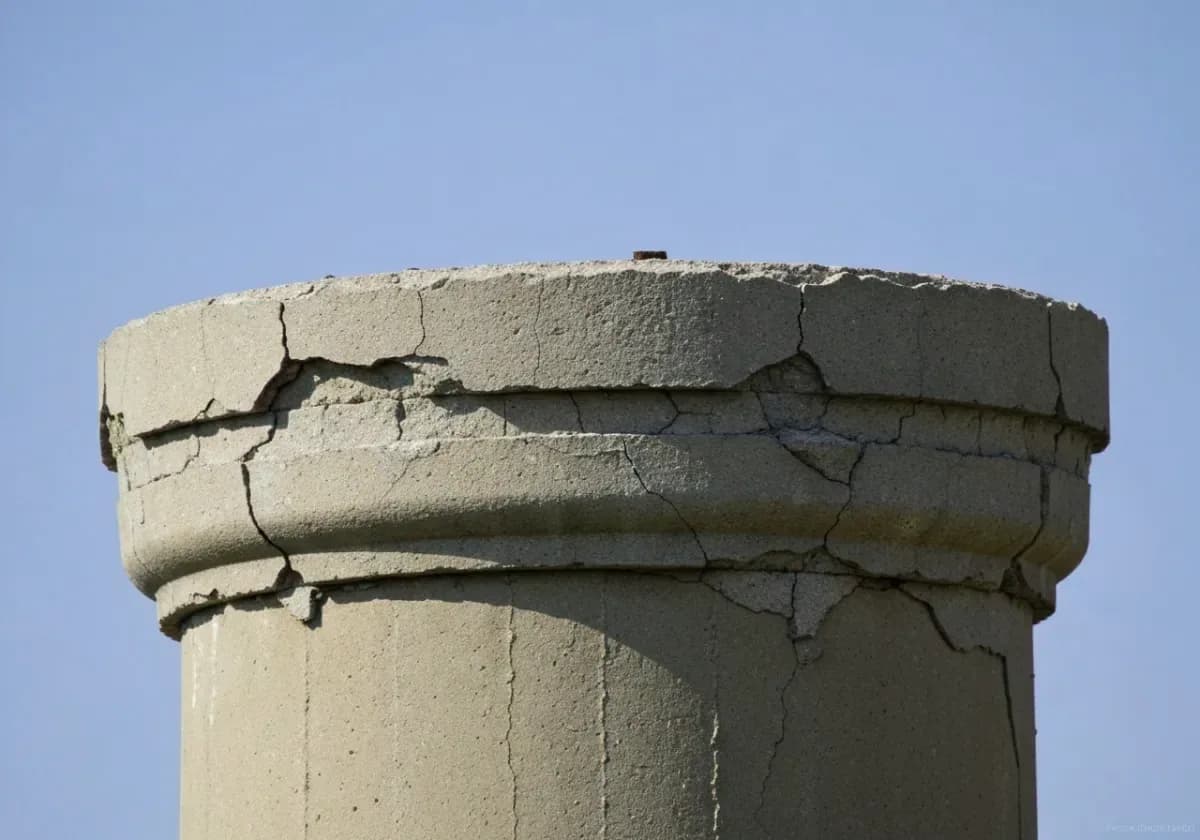 Before
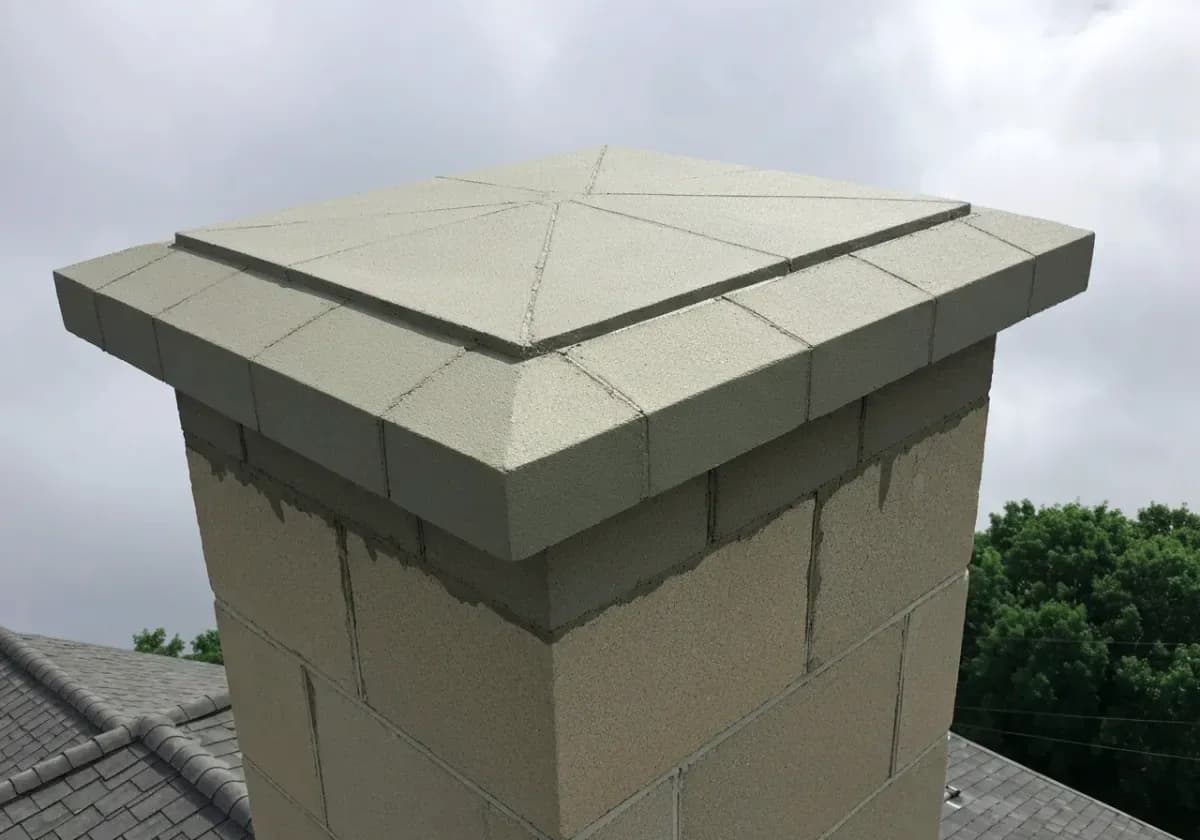 After
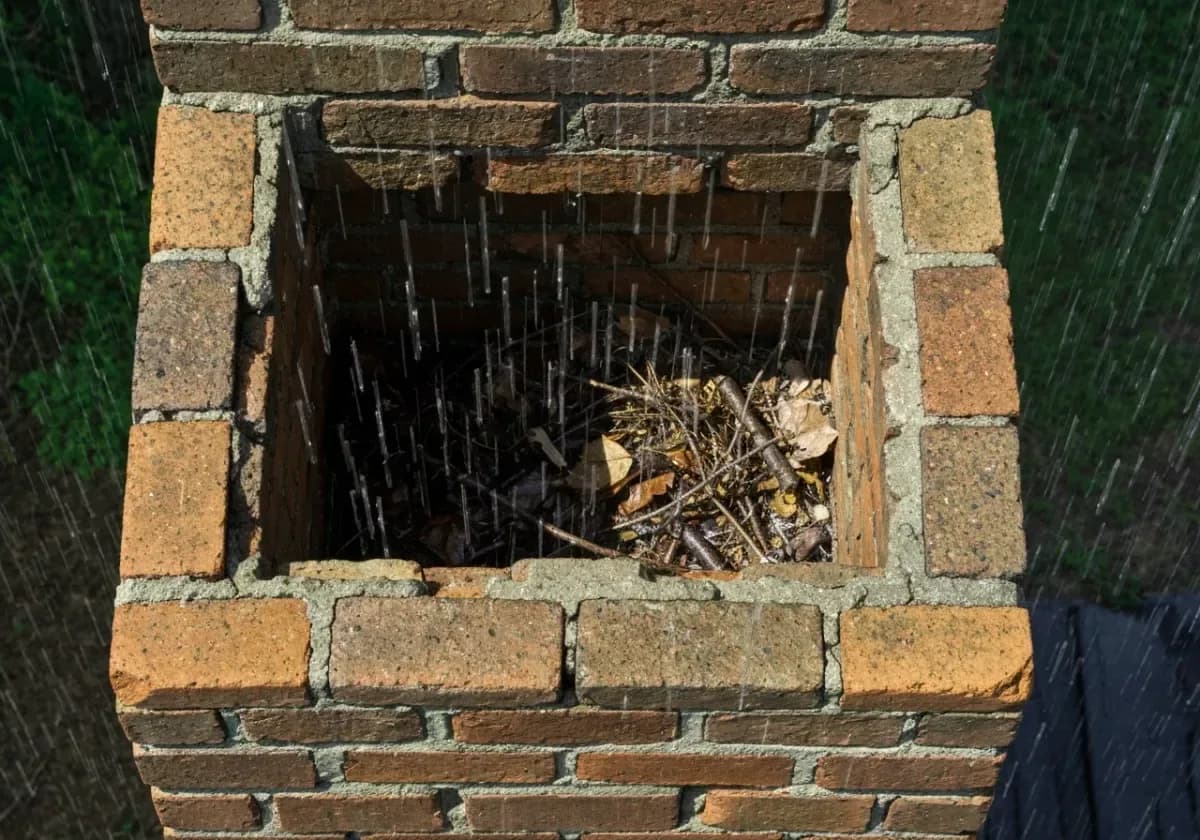 Before
 After

Four steps, each one on paper — so you always know what happens next.
Choose a genuine opening on the crew's calendar. Confirmation is immediate.
Liner, crown, cap, flashing and masonry examined in order — each finding photographed.
One document, plain numbers, covering only the work your chimney genuinely needs.
The repair is completed, then handed over with before-and-after photos of every item.
All ten city neighborhoods, from Downtown and Sammamish Valley up to Education Hill and North Redmond, plus Overlake, Idylwood, Grass Lawn, Bear Creek, Southeast Redmond and Willows/Rose Hill. We also work in the unincorporated area to the east, including Redmond Ridge.
Each chimney we look at on a first visit is billed $99 plus tax. If work follows and its written quote gets your approval, we reduce that quote by the $99.
It changes the permit office. Redmond Ridge and the Union Hill-Novelty Hill area are unincorporated, so King County's rules apply there instead of the city's. The chimney work itself is the same.
About 40.4% of the city's housing units were built in 2000 or later, per the Census. Newer does not mean exempt: vents and factory-built systems have their own listings and their own yearly check under NFPA 211.
Choose a genuine opening on the crew's calendar. We inspect, quote in writing, and hand over a photo record of every repair.