Sammamish, King County
Wood smoke that cools before reaching the chimney top leaves creosote on the flue wall. A light, sooty layer brushes out in an ordinary sweep. The harder grades, crunchy flakes and then a shiny black glaze, do not, and they are the ones that burn. Removing them starts at $215 and depends on how much of the flue is affected and how hard the deposit has become.
Typical investment
From $215
Book an inspection
Book your $99 inspection
$99 plus tax, deducted when you approve the repair
Not sure where to start
Pick what you're seeing at your Sammamish home — we'll point you to the right fix.
What we do
The same crew, the same written quote — for Sammamish homes.
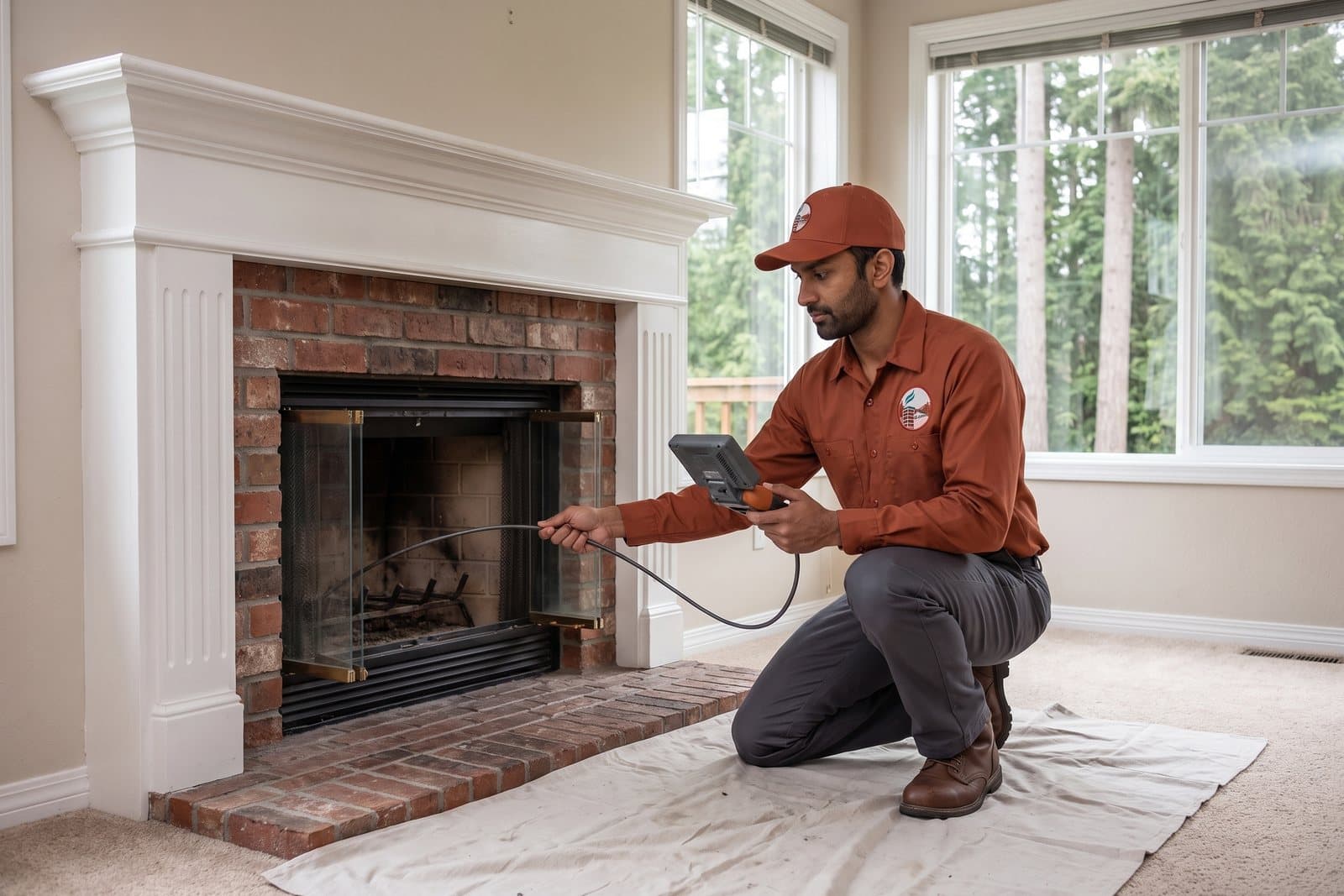
A Level 1 check, or a Level 2 with a camera run through the flue when the visible parts are not enough
Learn more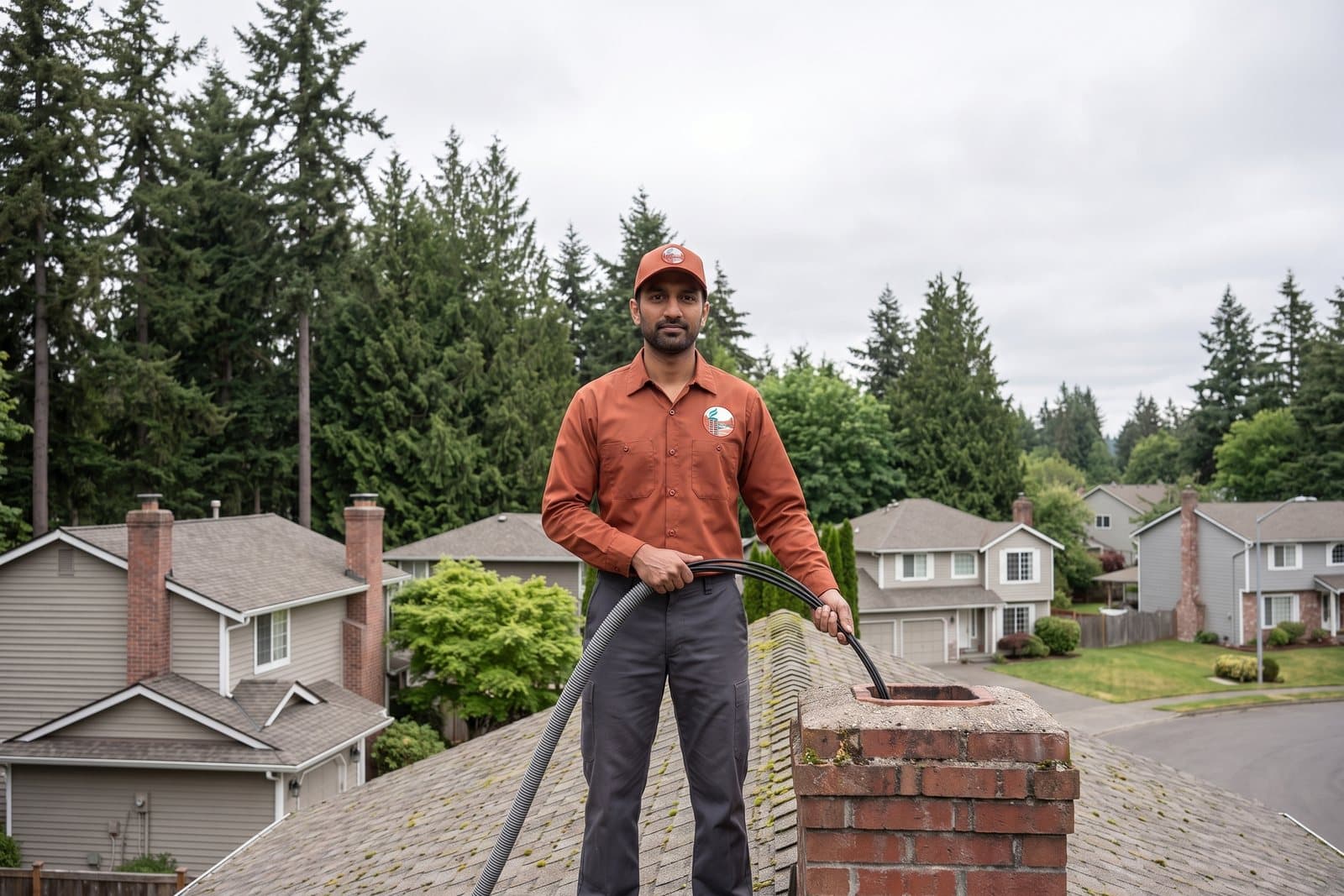
Brushing of the whole flue, top to firebox, with brush heads sized to the liner
Learn more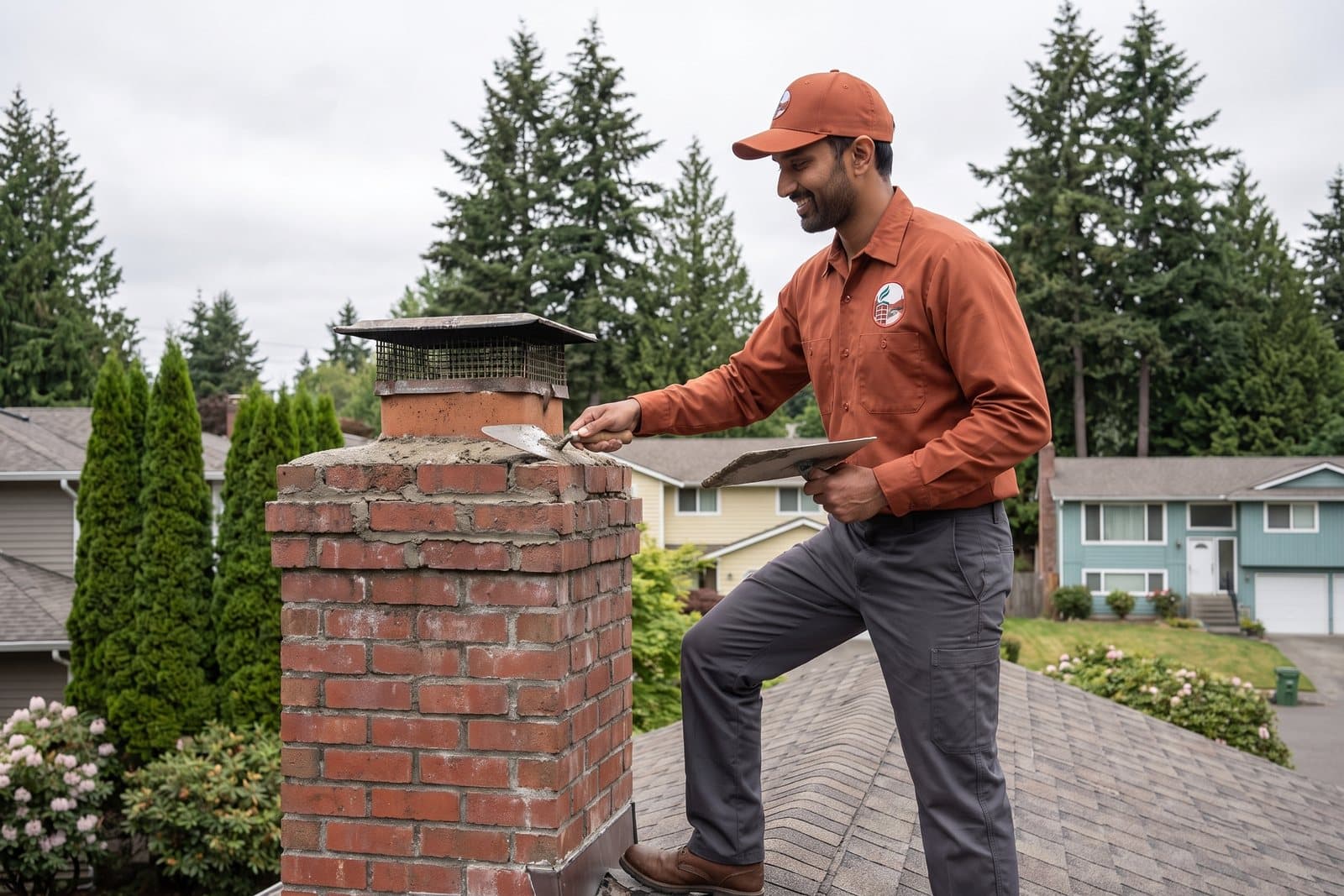
A photographed assessment that separates cosmetic wear from structural damage
Learn more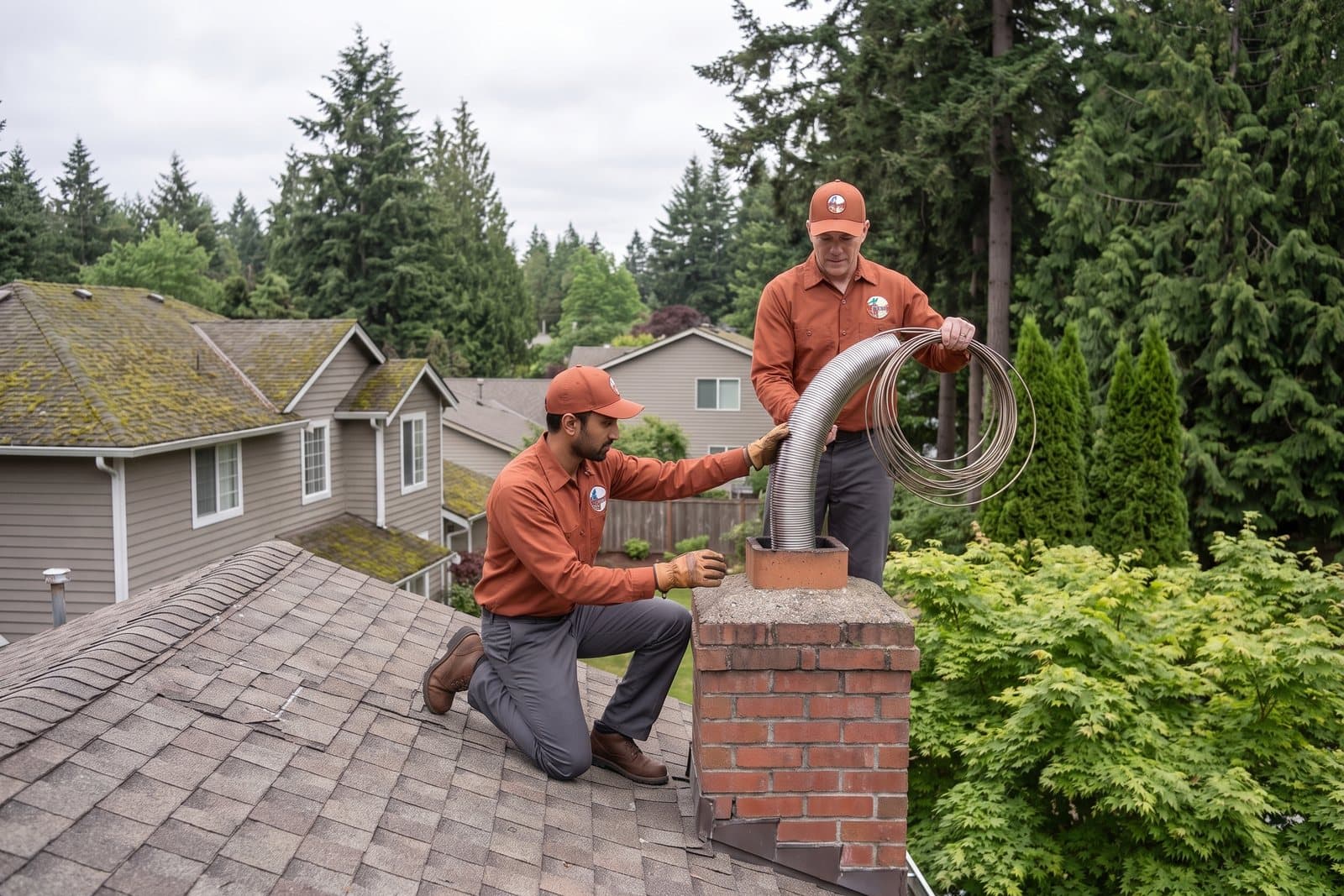
A camera run and full measurements before any liner is ordered
Learn more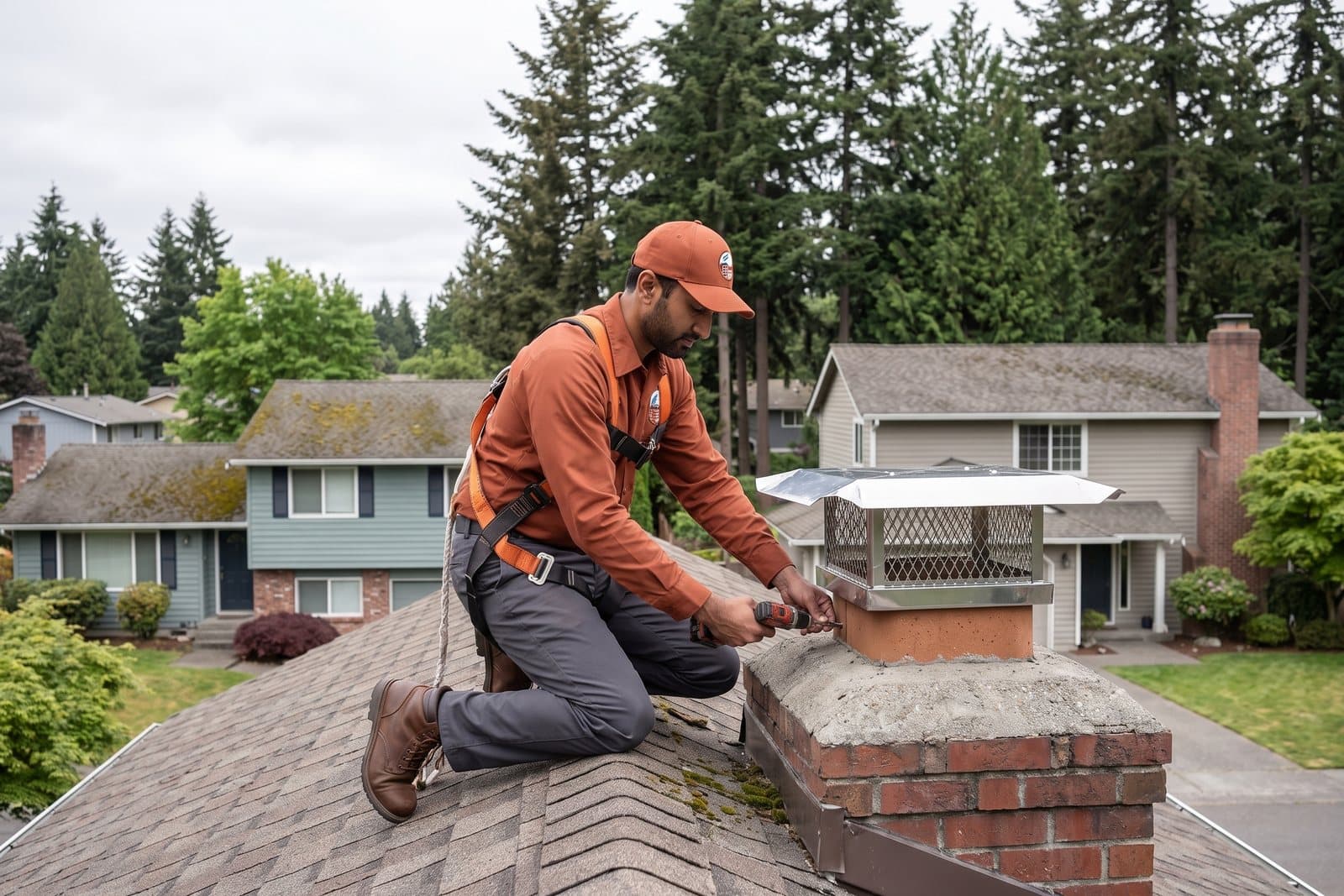
Measurement of each flue, or of the full crown for a multi-flue cap
Learn more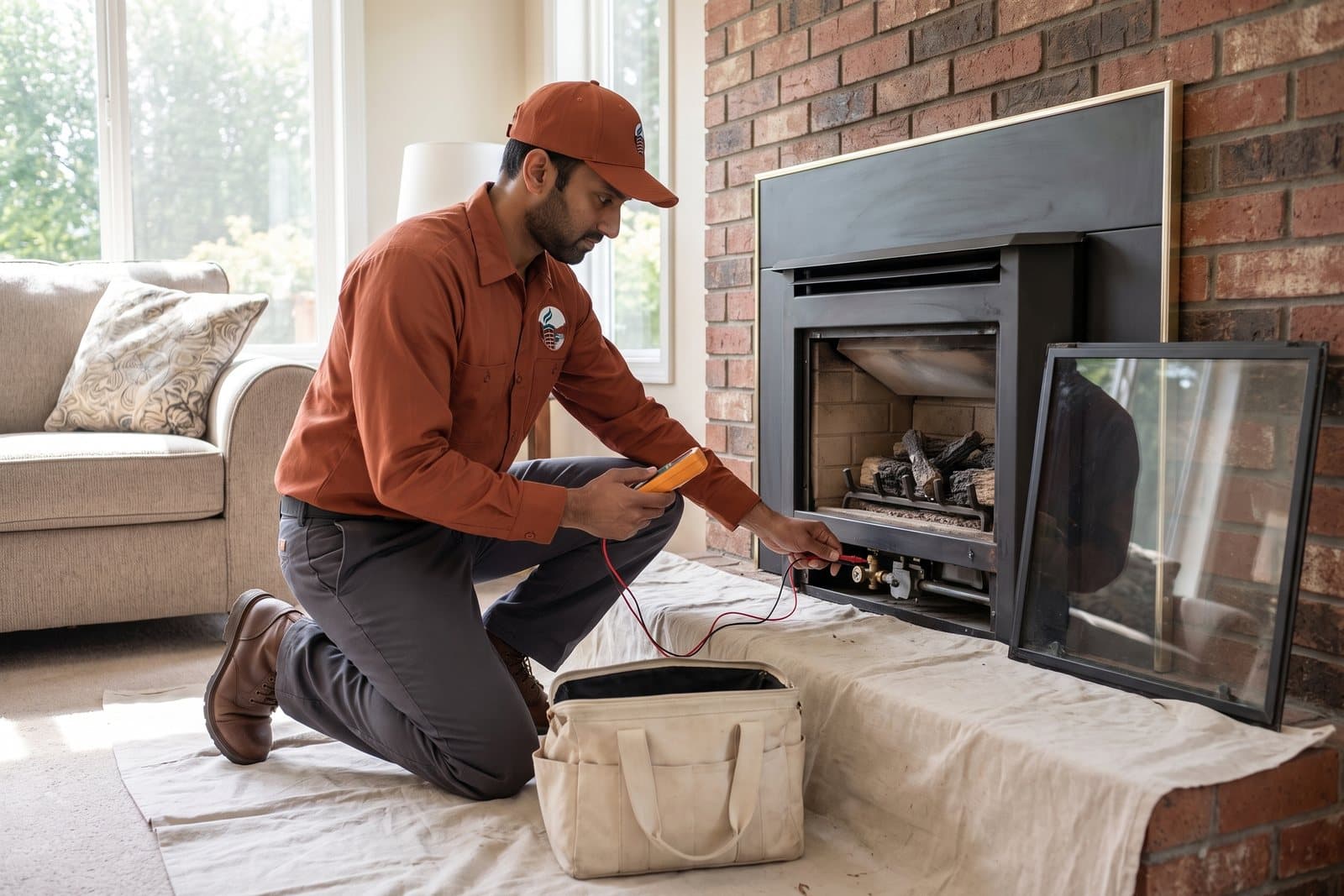
Cleaning and testing of the burner, the pilot assembly and the ignition
Learn moreRanges shown for orientation — the exact figure is written up on-site, after the inspection.
Very few Sammamish households heat with wood: the census counts 49, about 0.2% of occupied homes, though that figure covers primary heating only and says nothing about how many houses have a fireplace or stove for occasional use. Occasional use is the pattern that builds glaze. Short, small fires in a cold chimney never bring the flue up to temperature, so smoke condenses on the liner. A stove damped down low for a long evening does the same. Heavy creosote is not always a sign of heavy burning. Often it is a sign of cool burning.
Anything that slows smoke on its way out gives it time to cool and condense. In Sammamish the common obstruction is at the top: the city's hazard mitigation annex reports canopy or woody shrubs across 48% of its area and a high number of fallen limbs in winter storms. A cap screen matted with needles, or a nest on the smoke shelf, narrows the flue.
Damp plays a part as well. Oregon State University Extension says moss holds moisture and lengthens the time a surface stays wet; a crown and upper flue that never dry keep the top of the chimney cold. We clear the cap and crown during removal, because taking glaze off a flue that still cannot breathe only resets the clock.
Every creosote removal we do in Sammamish includes:
Smoke coming back into the room, or a smell that won't go? Book the inspection first.
Book nowFuel is the other half. Washington's Department of Ecology gives firewood a year: split it, stack it, keep a cover on it, and wait twelve months. On a plateau where WeatherSpark records a better than 35% chance of a wet day from early October to early May, wood left uncovered at the edge of the yard does not season; it soaks. The Puget Sound Clean Air Agency permits two fuels, seasoned dry wood and manufactured logs, and set an opacity ceiling for chimney smoke: 20 percent, sustained six minutes running within an hour. Dense smoke from damp wood is both the violation and the creosote.
The camera shows whether the deposit is soot, flaky creosote or glaze, and where it is thickest.
Flaky deposits get rotary tools. Glaze may need a treatment applied first and a return visit to remove what it has loosened.
Work is done under vacuum with the firebox sealed, so the mess goes into the canister and not the room.
We film the cleaned flue, check the liner that was hidden under the deposit and give you both sets of images.
According to the Washington State Fire Marshal, 77% of the state's residential building heating fires in 2024 were chimney and flue fires. Creosote is the fuel in a chimney fire. When glaze ignites, burning fragments can leave the chimney top.
On the Sammamish plateau those fragments have somewhere to go. The hazard annex counts seven principal and minor arterial roads off the plateau and works out an egress ratio of 3,165 households per evacuation route, a constraint it flags for wildfire. It also dates the Beaver Lake Fire to 1939 and gives its extent as more than 35 square miles. Clearing a glazed flue removes one ignition source from a place that has few ways out.
What this work is quoted at for Sammamish homes — the exact figure comes from the $99 on-site inspection, credited toward the work.
| Service | Price in Sammamish | What that covers |
|---|---|---|
| Creosote Removal | From $215 | Priced by creosote stage — glazed stage 3 is the heavy end |
| Chimney Sweep | $189–$449 | Full flue swept, Level 1 inspection included |
| Chimney Inspection | $99 plus tax | Level 1 visual; Level 2 adds a full camera scan |
| Chimney Relining | From $1,900 | Full-length stainless liner, sized to the appliance |
| Chimney Repair | From $425 | Masonry repair — brick and mortar, scoped after diagnosis |
Ranges are what these jobs are quoted at in Sammamish. The exact figure is set on site after a $99 inspection (credited toward the job if you go ahead), and you approve it before any work starts.
Sammamish is a 24-square-mile plateau city, roughly 500 feet up, on Lake Sammamish, with homes with a median build year of 1994, more than half of them built in the 1980s and 1990s. We work every part of it — Sunny Hills, Sahalee, Klahanie included.
SammamishKing County, WA · 47.616, -122.036
Before and after
Illustrations of what each repair changes on a typical chimney — not photos of a specific job.
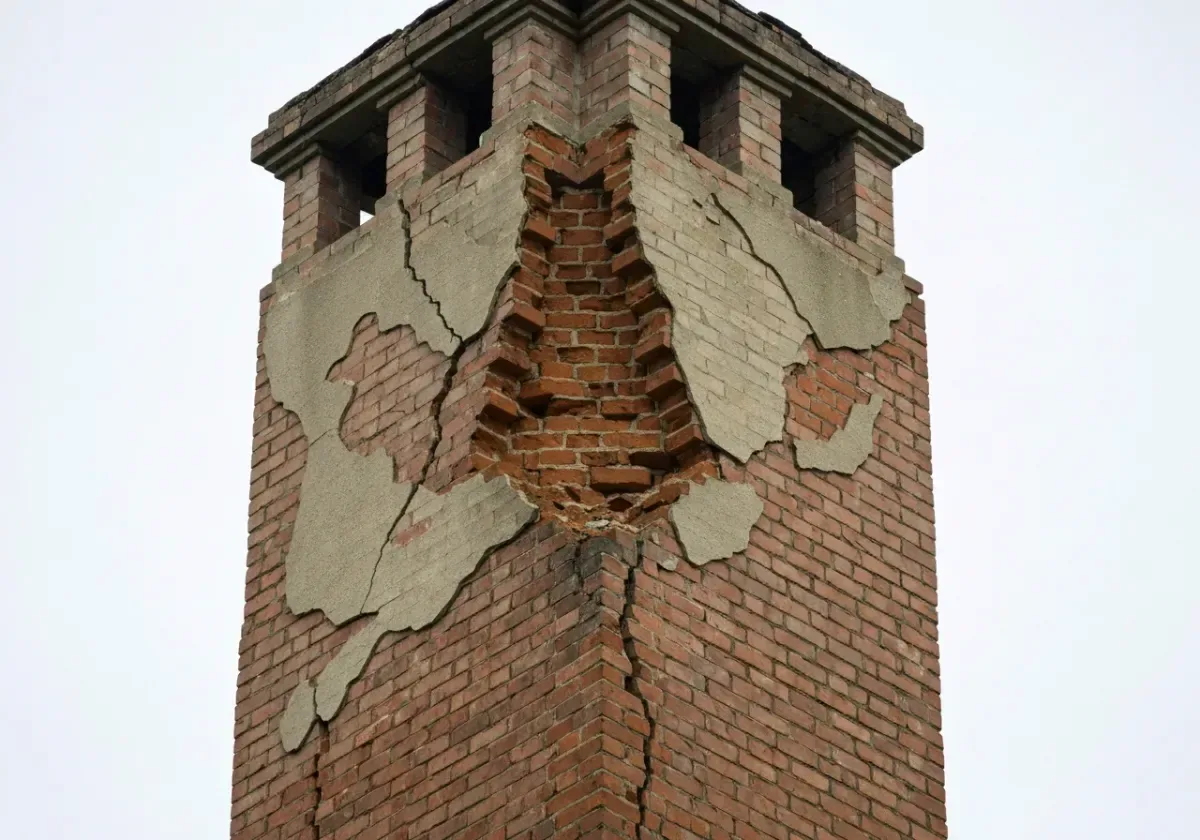 Before
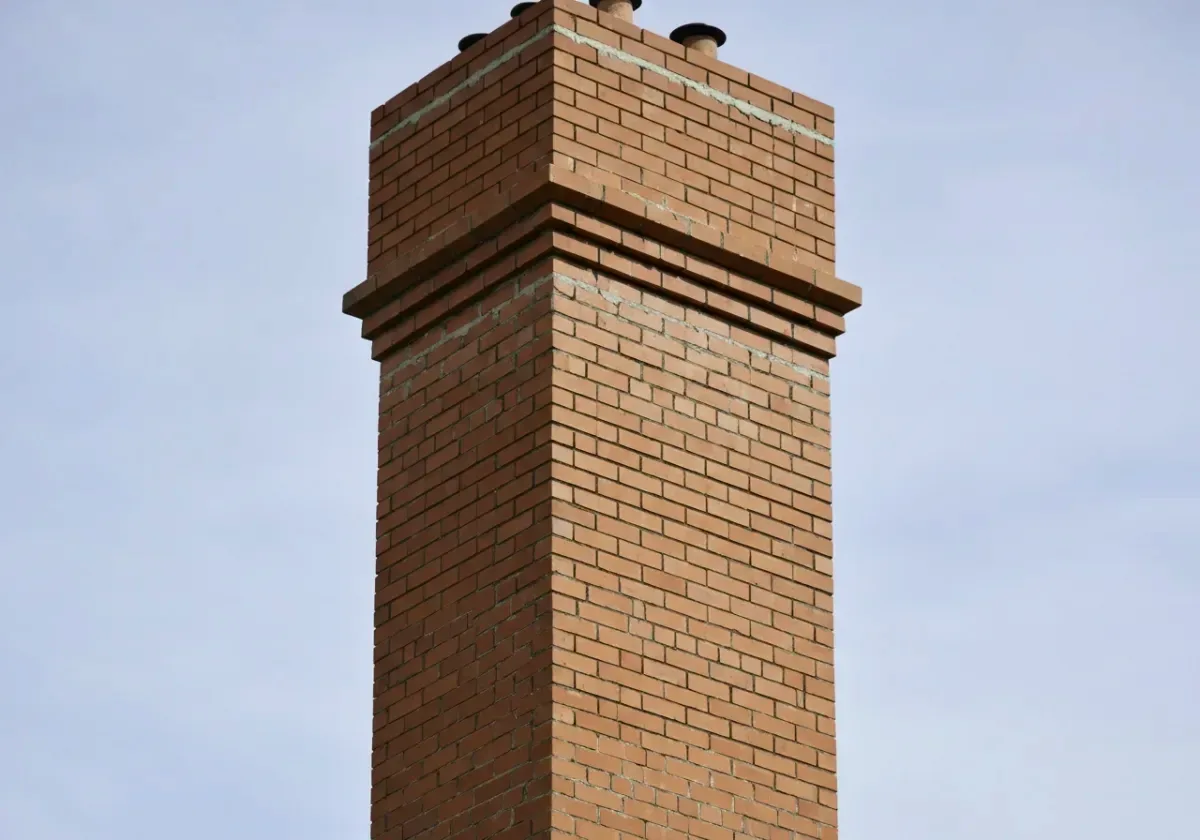 After
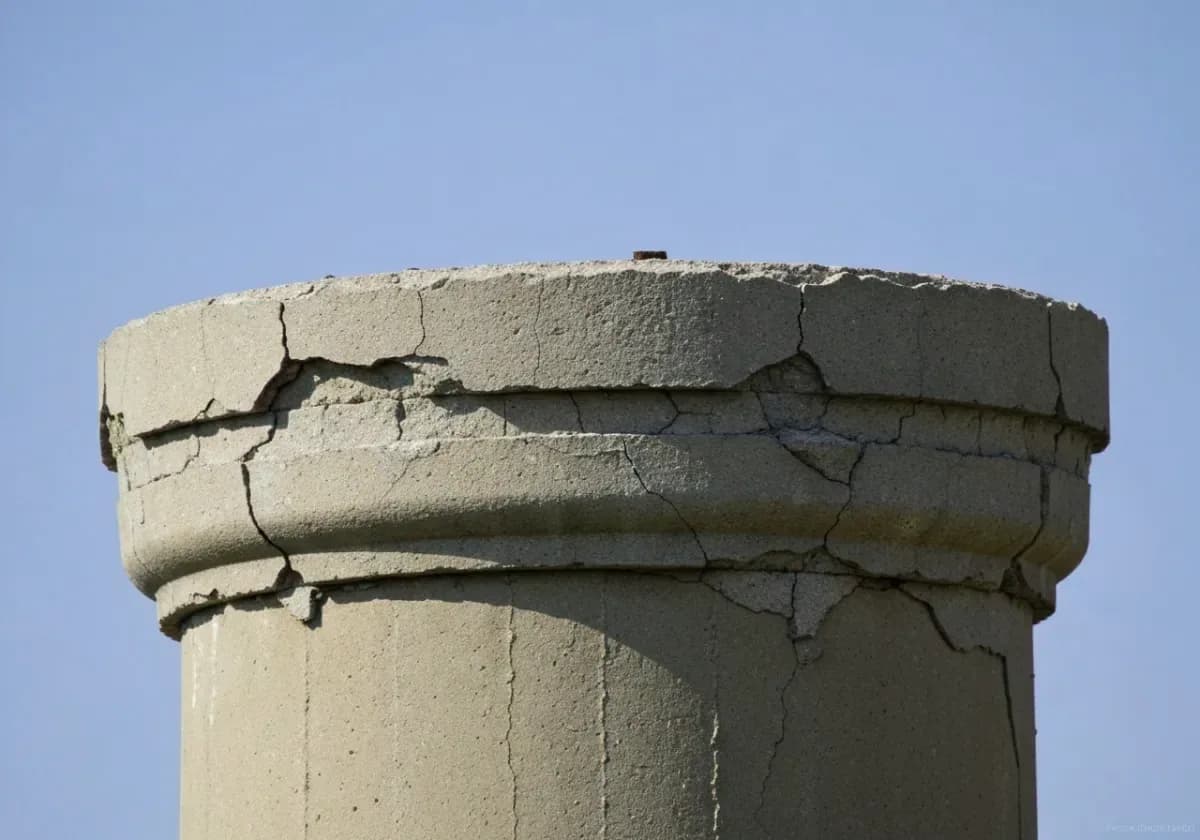 Before
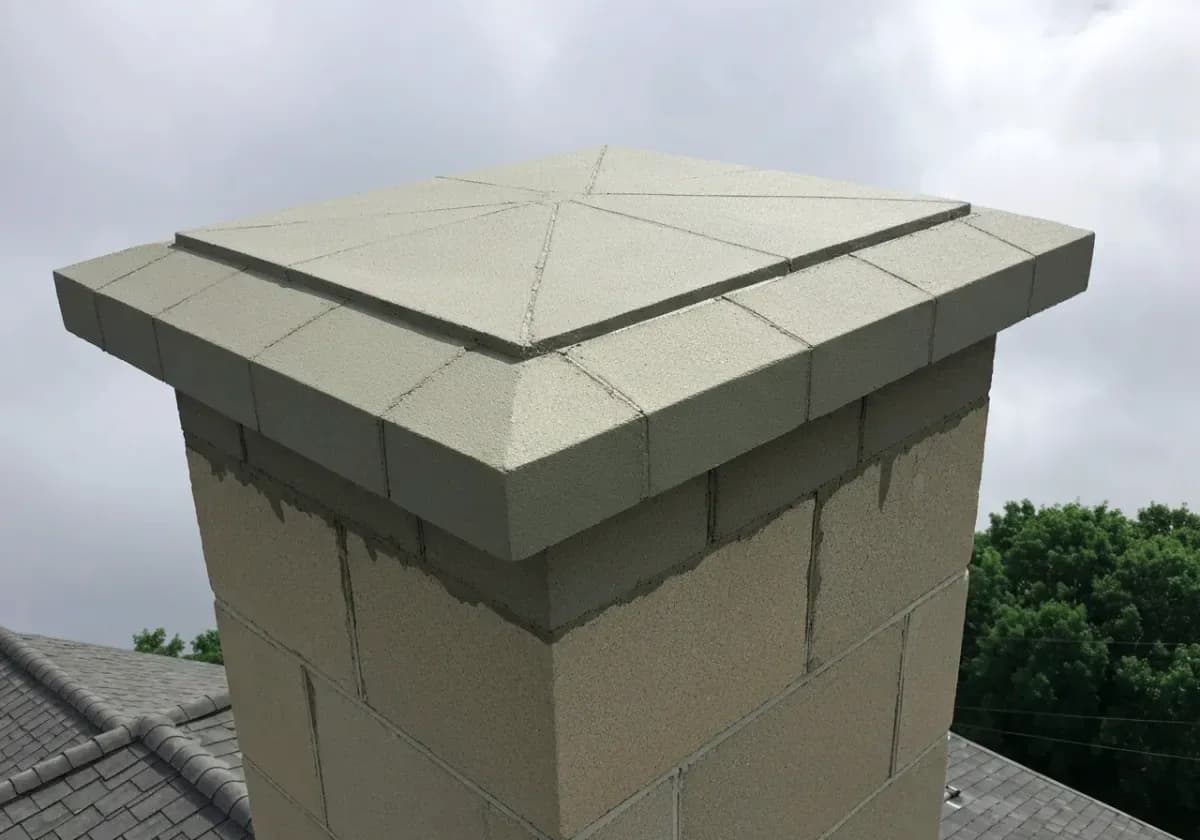 After
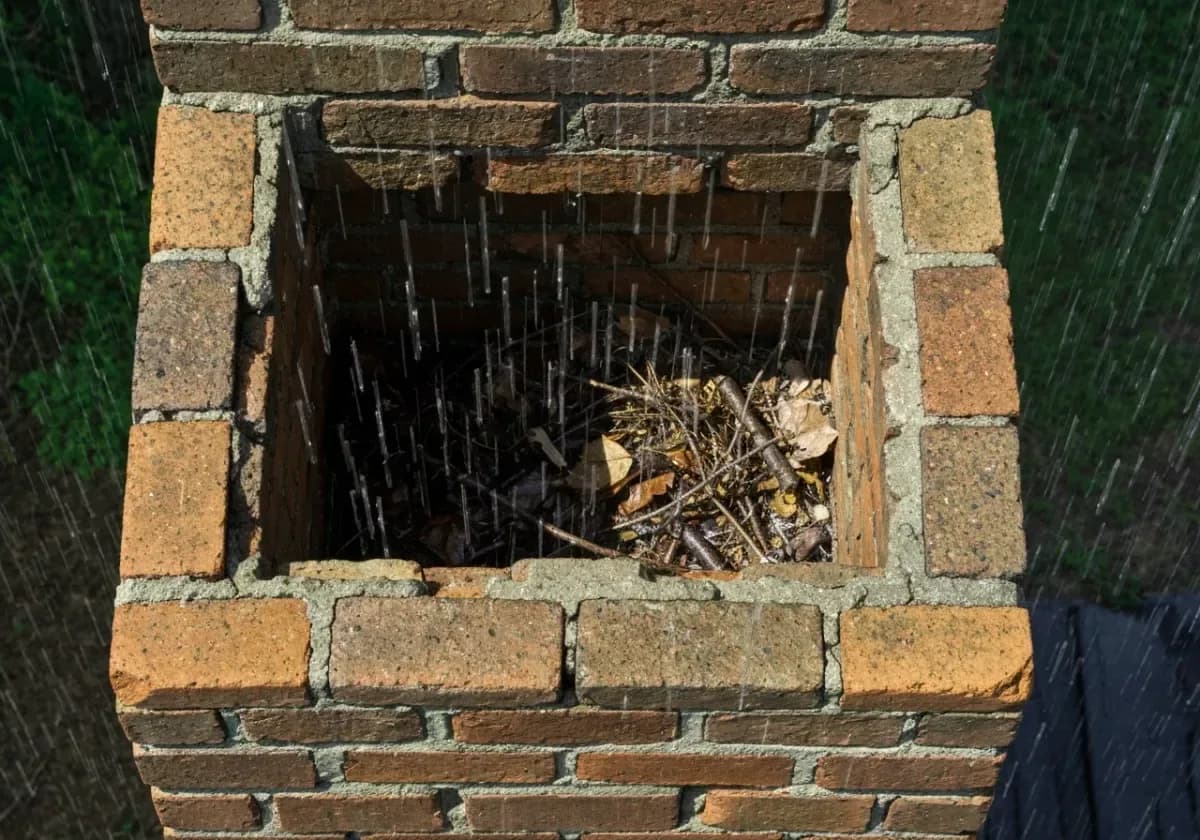 Before
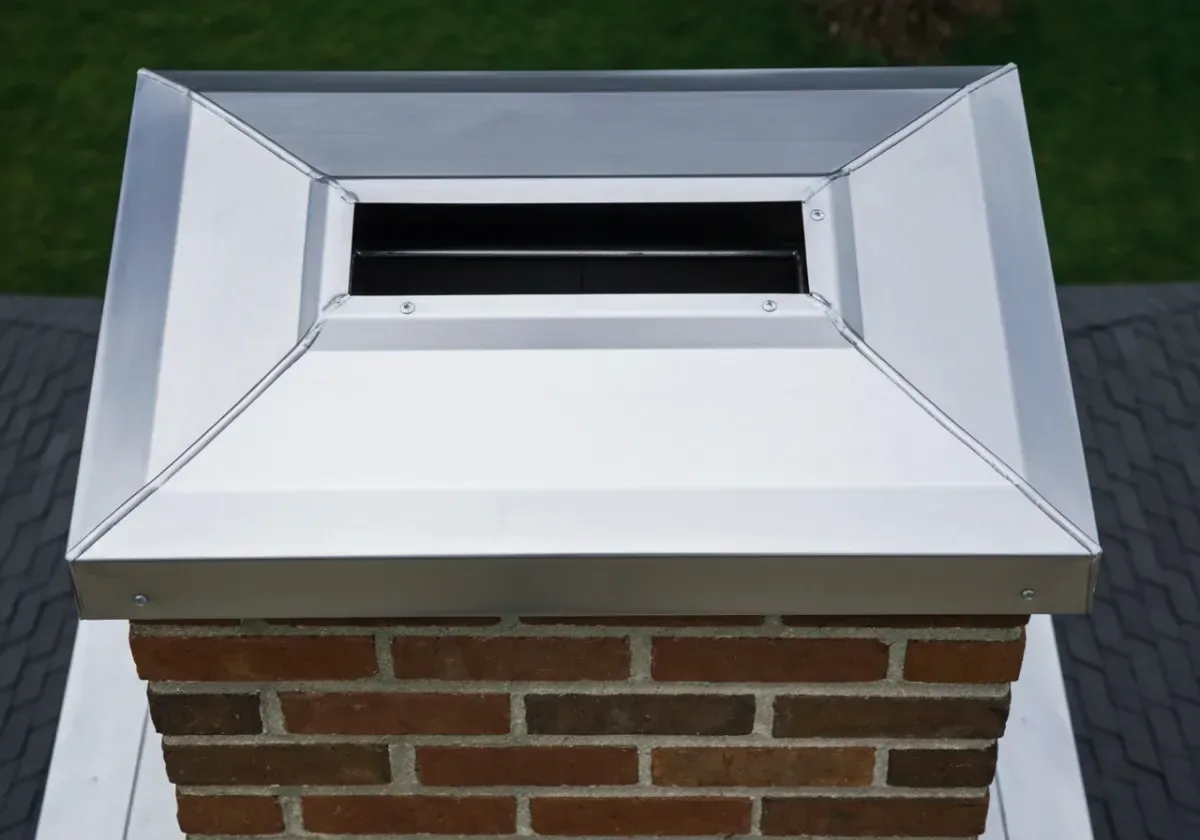 After

Four steps, each one on paper — so you always know what happens next.
Choose a genuine opening on the crew's calendar. Confirmation is immediate.
Liner, crown, cap, flashing and masonry examined in order — each finding photographed.
One document, plain numbers, covering only the work your chimney genuinely needs.
The repair is completed, then handed over with before-and-after photos of every item.
From $215. Flaky second-stage creosote in one section of the flue is near that figure. Glazed creosote over the full height, or a job that needs treatment and a second visit, costs more. The quote follows the camera grading.
The Chimney Safety Institute of America draws the line at 1/8 inch of sooty buildup in a masonry fireplace, and says to act sooner if any glaze is present.
Burn hotter, smaller loads of dry wood, and store the wood under cover for a year before use. Have the flue checked each year; our inspection is $99 plus tax, and if it leads to work you approve, that $99 is credited.
A $99 on-site inspection, a written quote before any work, and photos of every item we touch.