Duvall, King County
Chimney questions in Duvall rarely start with age. This is the youngest housing stock of the four towns we serve, yet it is also the town with the largest share of households naming wood as their main heat. So the conversation here is about use: how many months the stove runs, what the Clean Air Agency allows on a ban day, and what the city wants on paper before a new unit goes in. This page sets out those local facts, each with its source.
Book an inspection
Book your $99 inspection
$99 plus tax, deducted when you approve the repair
Not sure where to start
Pick what you're seeing at your Duvall home — we'll point you to the right fix.
What we do
The same crew, the same written quote — for Duvall homes.
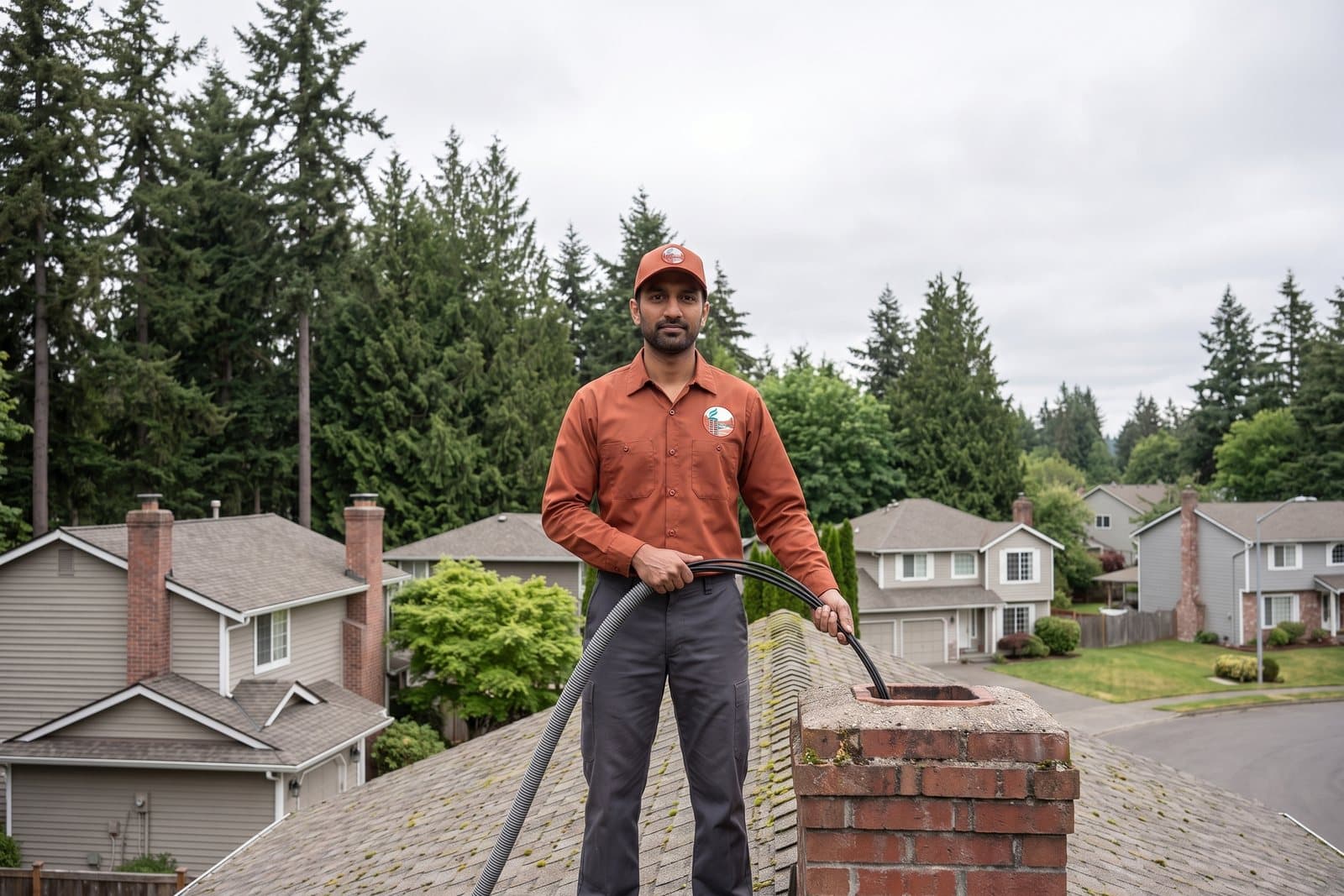
Brushing of the whole flue, top to firebox, with brush heads sized to the liner
Learn more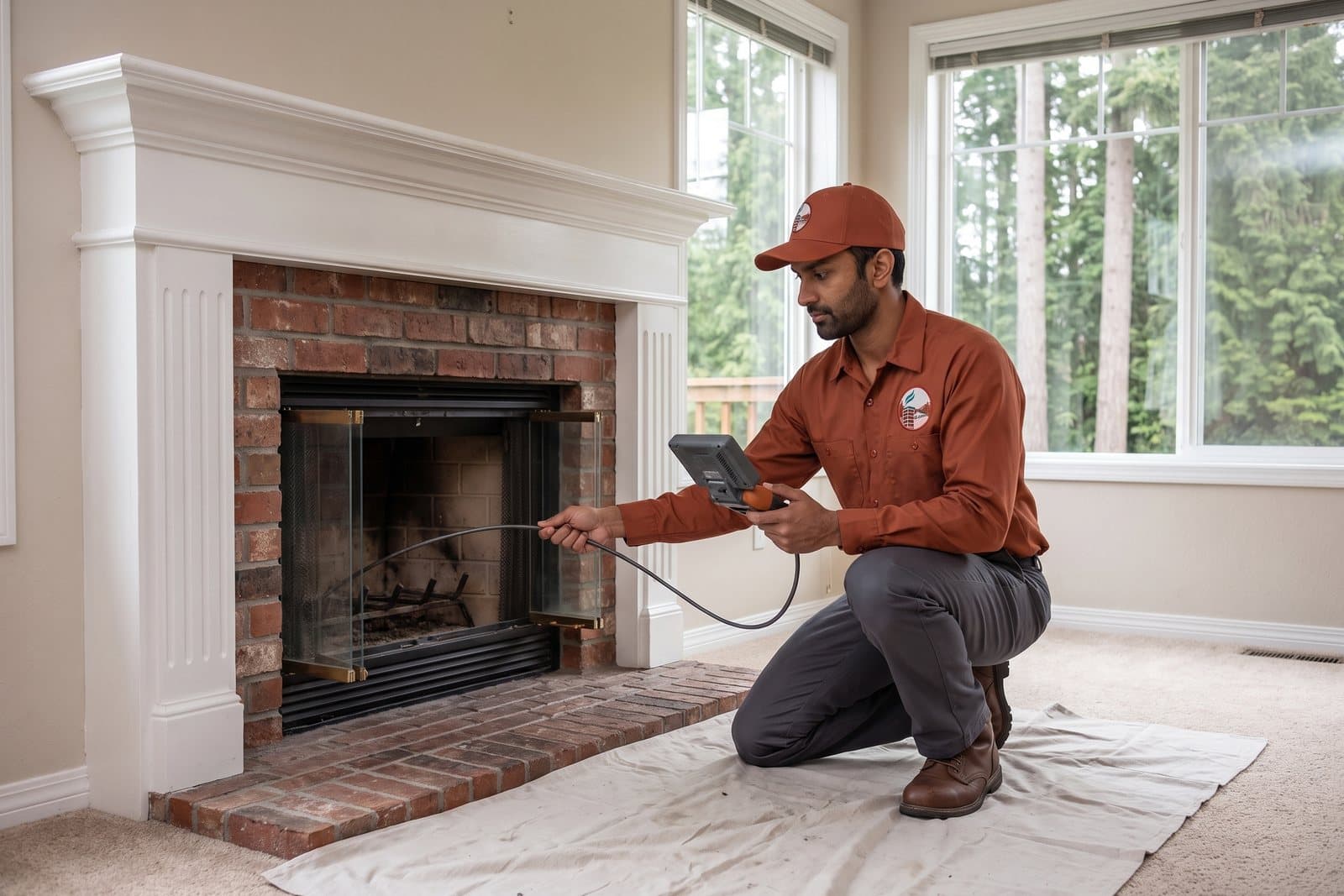
A Level 1 check, or a Level 2 with a camera run through the flue when the visible parts are not enough
Learn more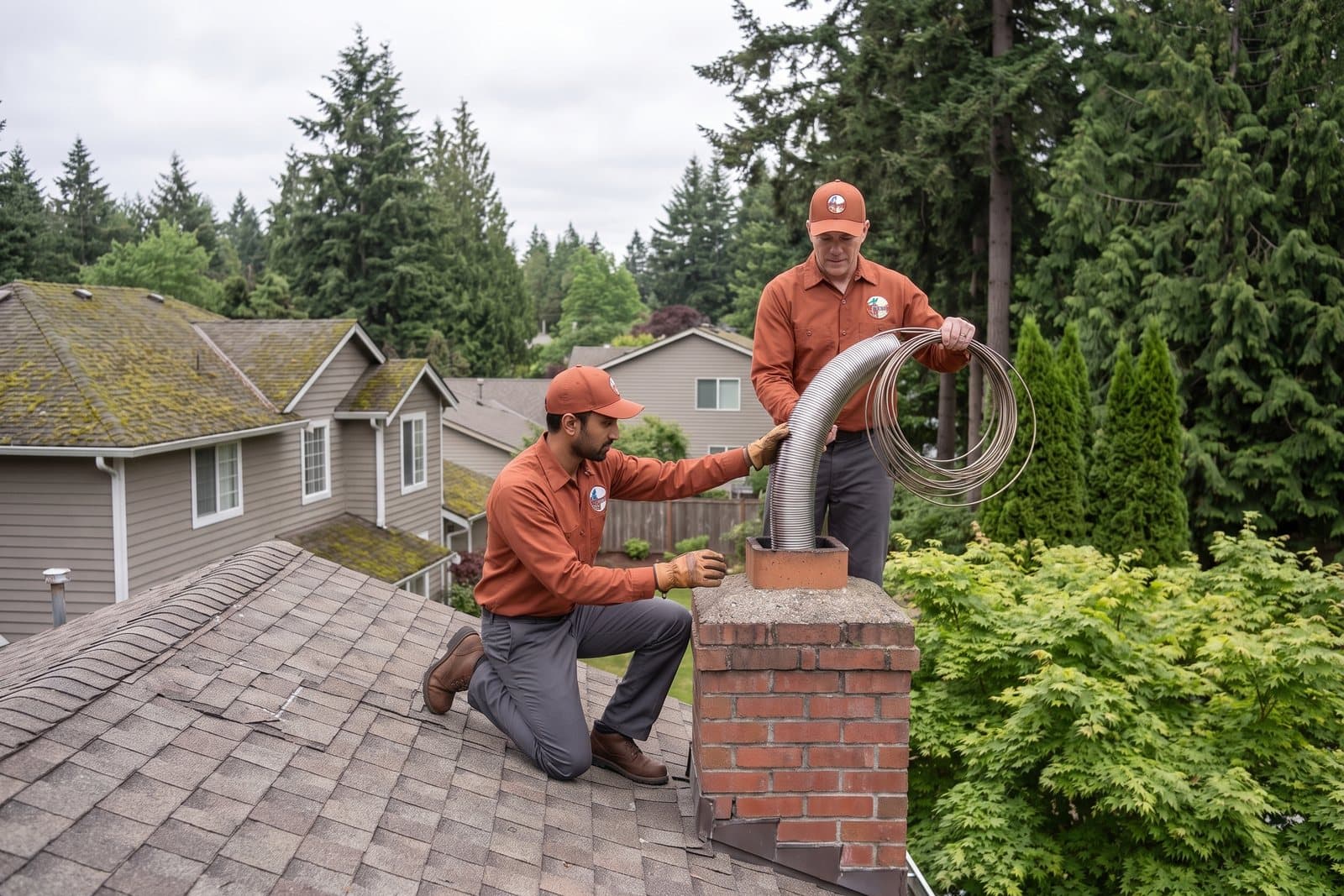
A camera run and full measurements before any liner is ordered
Learn more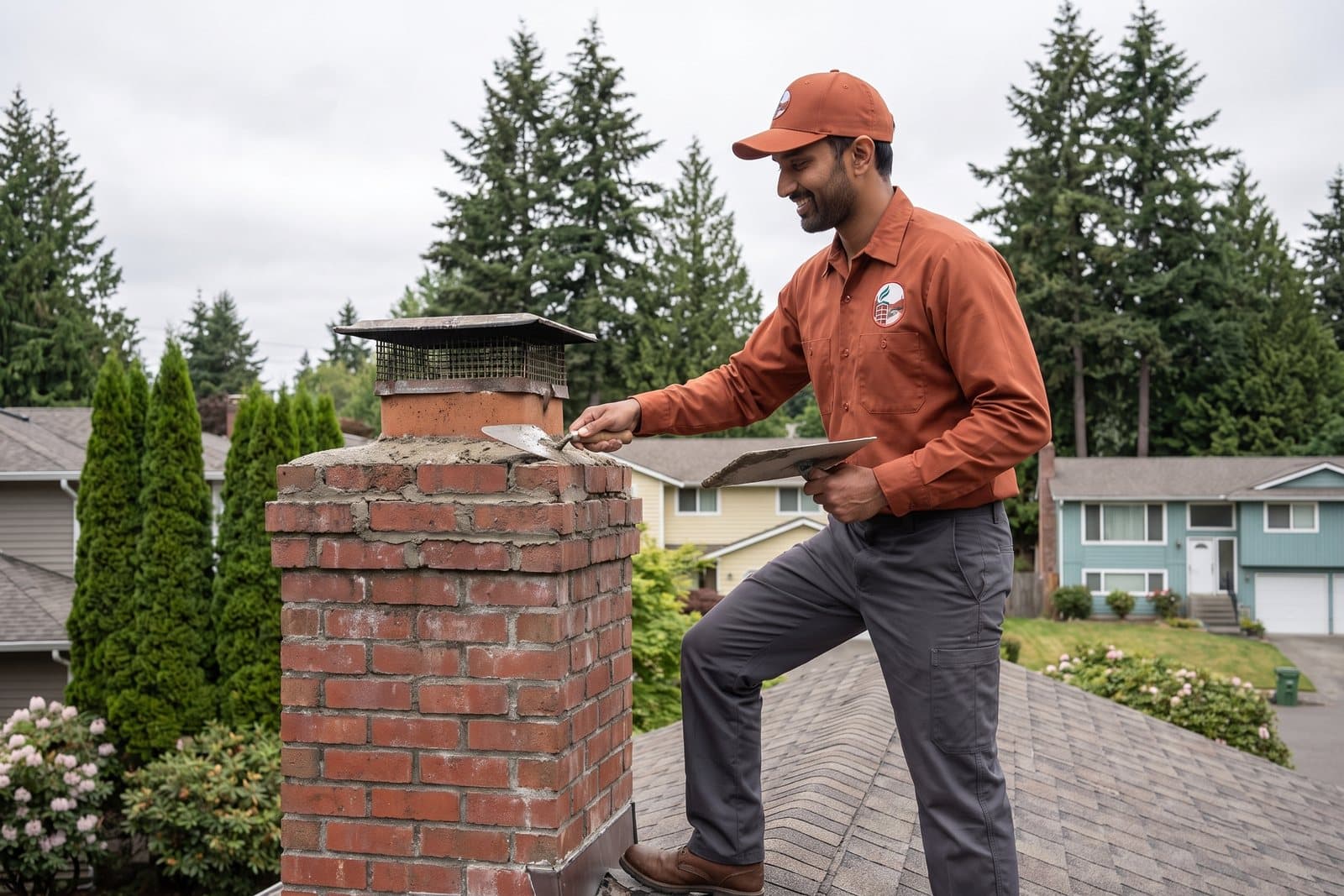
A photographed assessment that separates cosmetic wear from structural damage
Learn more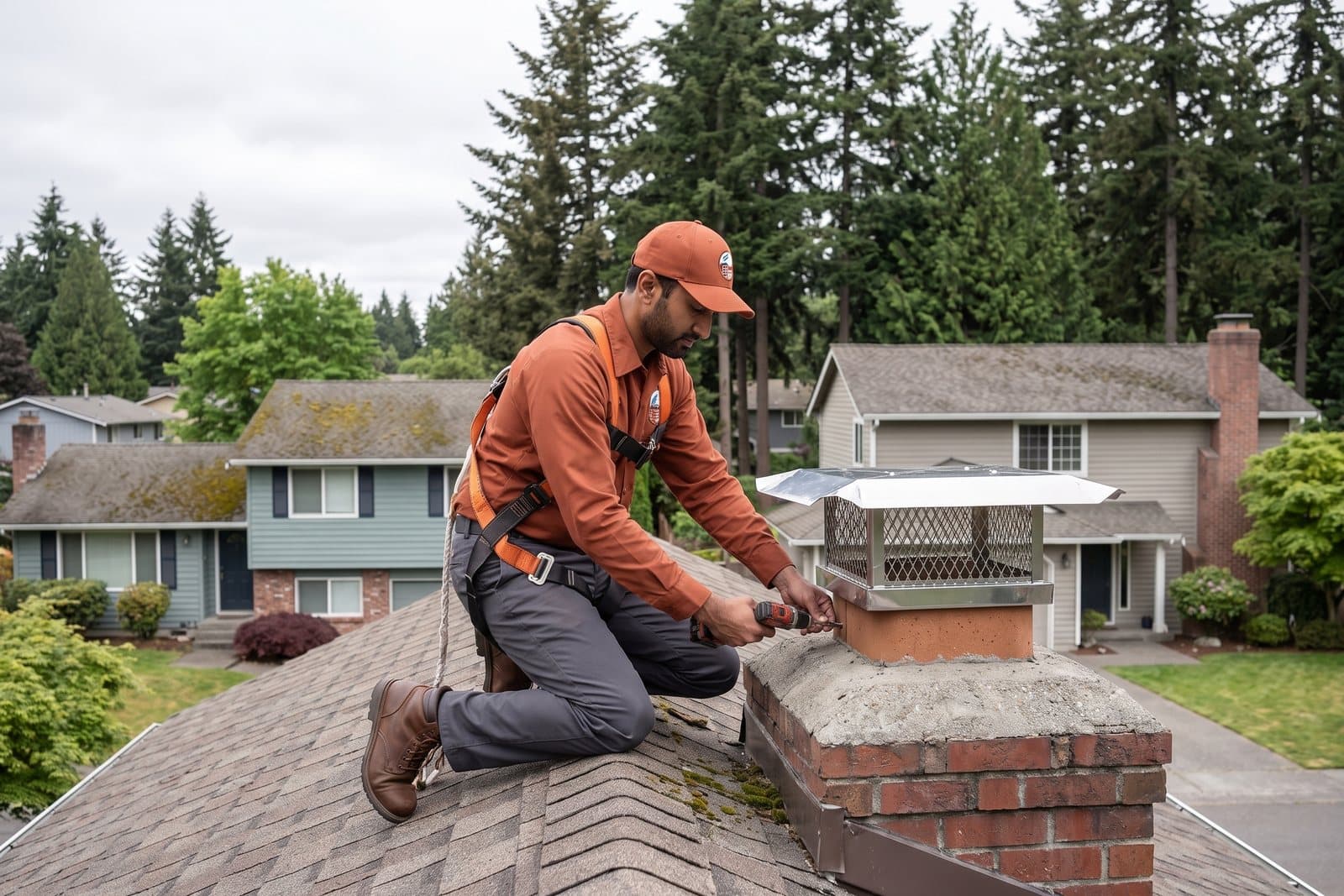
Measurement of each flue, or of the full crown for a multi-flue cap
Learn more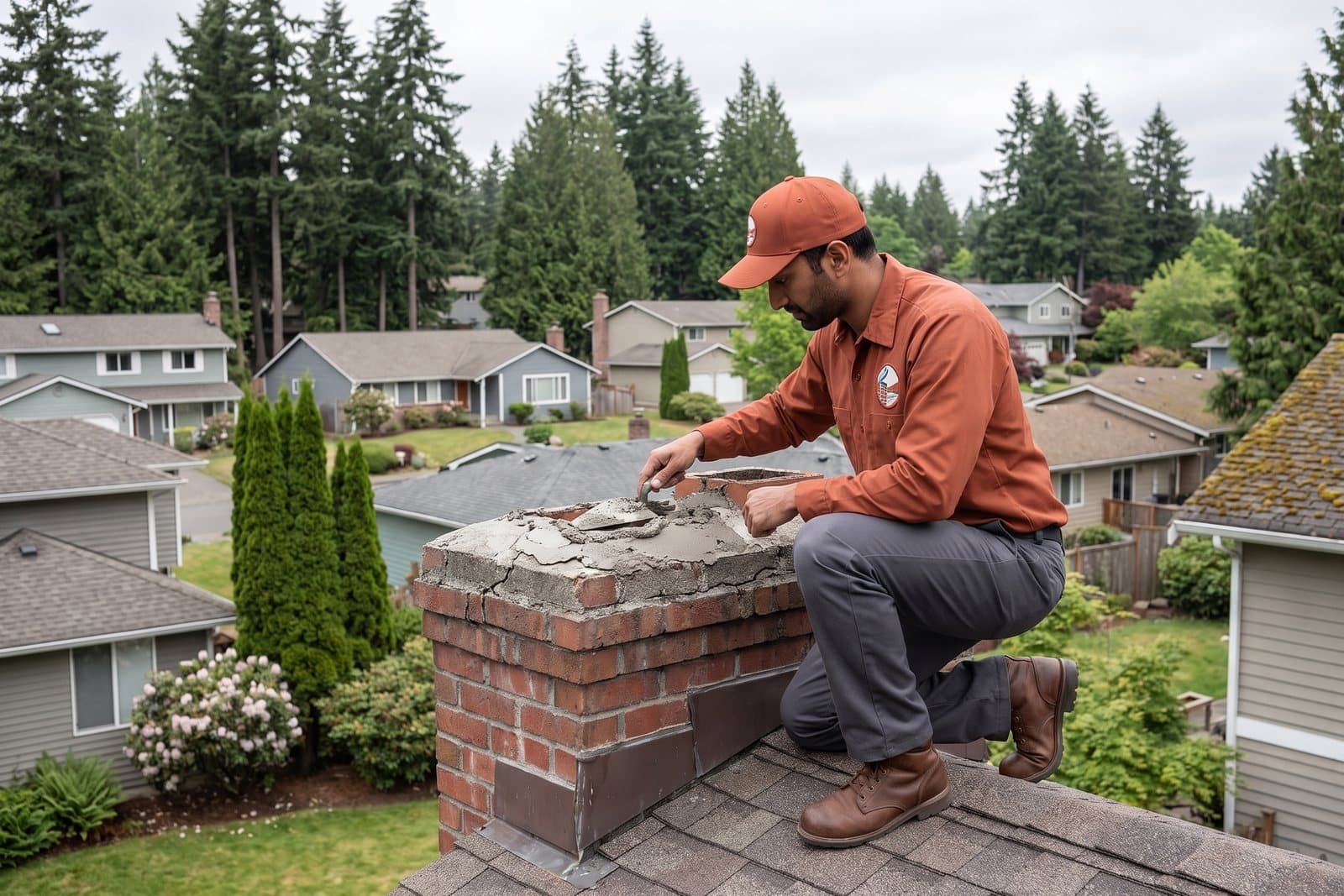
Close-up photos of the crown and of every face of the stack
Learn more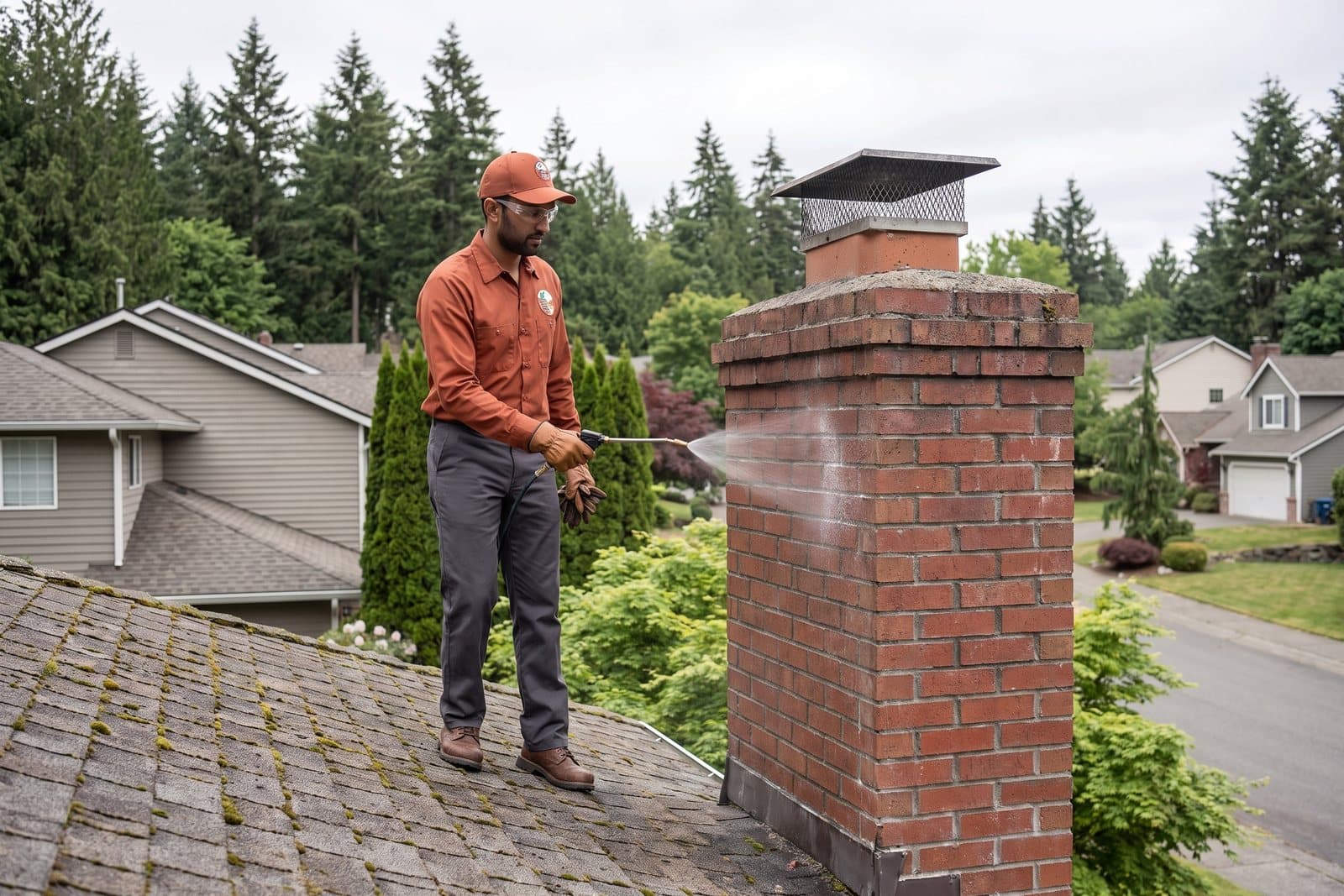
Inspection of brick, joints and crown before anything is applied
Learn more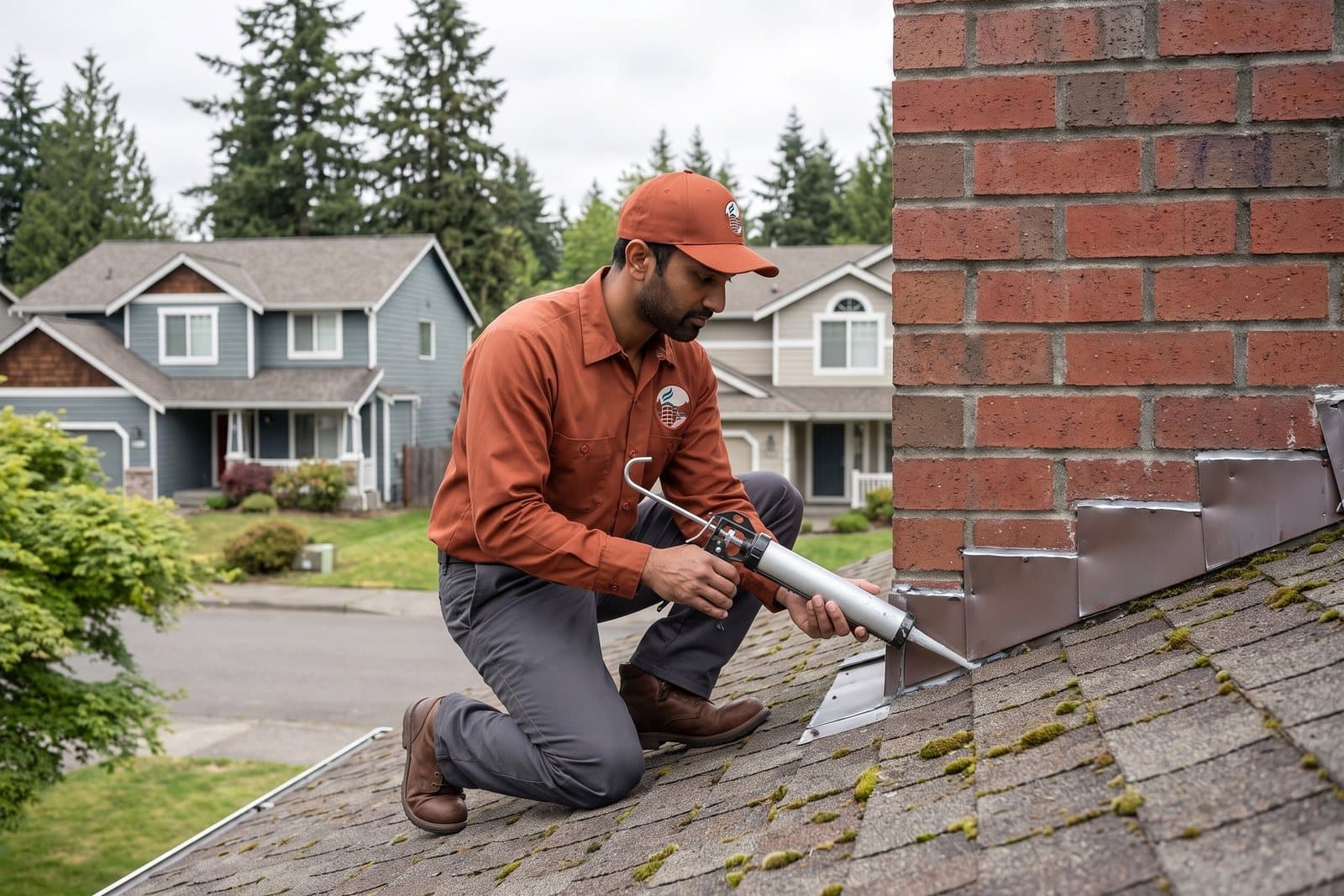
Leak tracing at the roof and, where reachable, in the attic
Learn more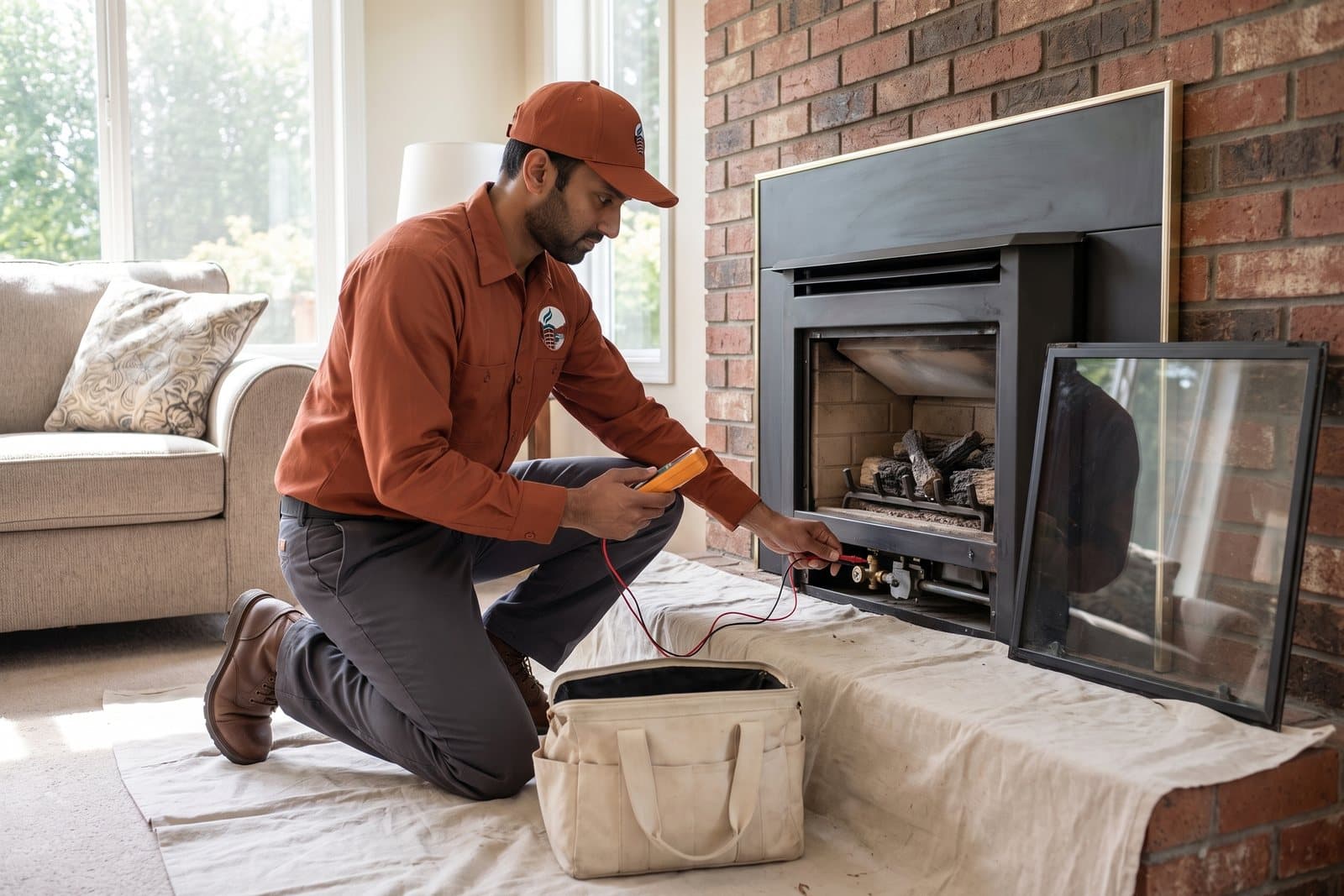
Cleaning and testing of the burner, the pilot assembly and the ignition
Learn more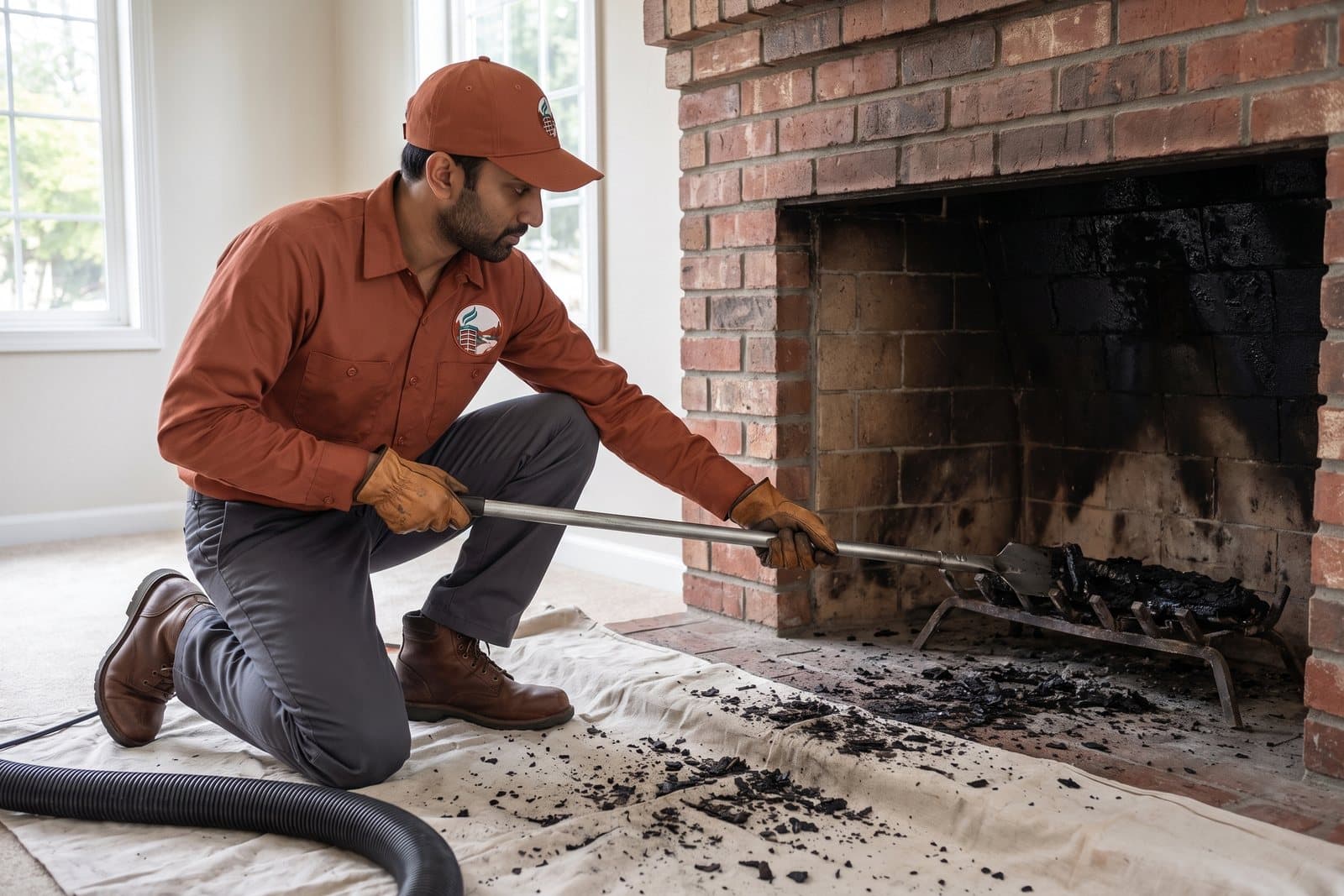
A camera scan to grade the deposits and map where they sit
Learn more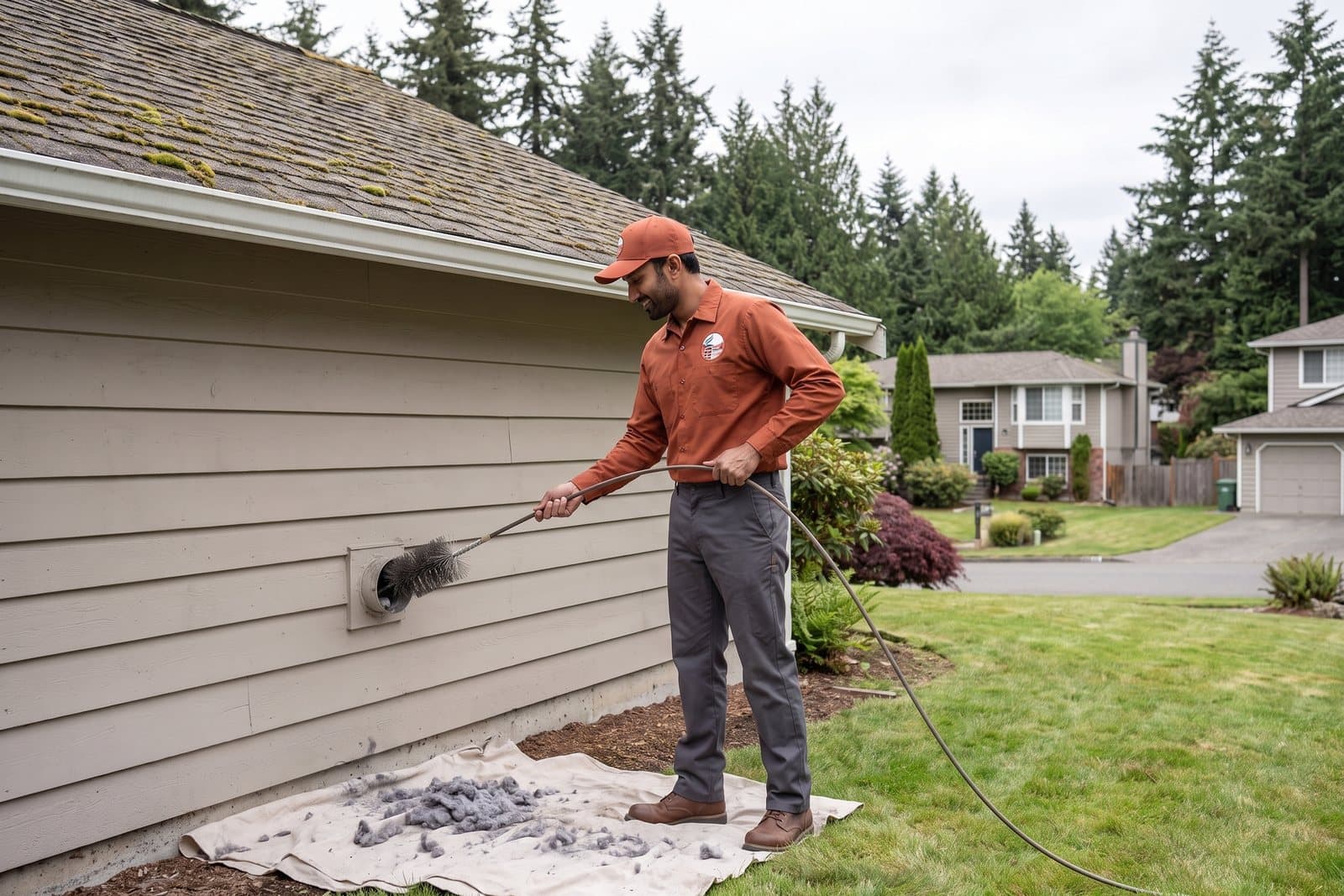
Rotary brushing and air cleaning of the full duct length
Learn more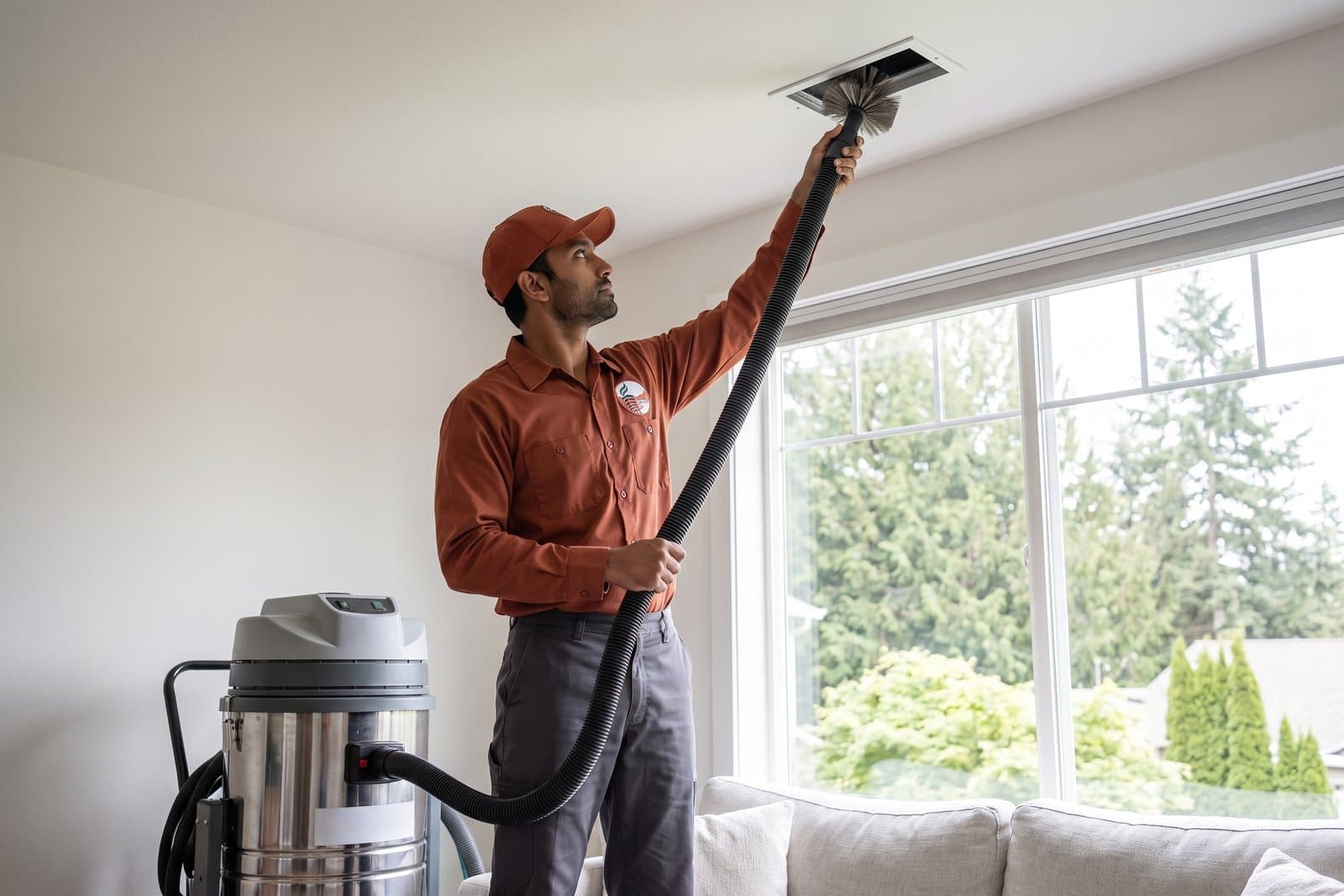
Every supply and return run cleaned with agitation tools under negative pressure
Learn moreRanges shown for orientation — the exact figure is written up on-site, after the inspection.
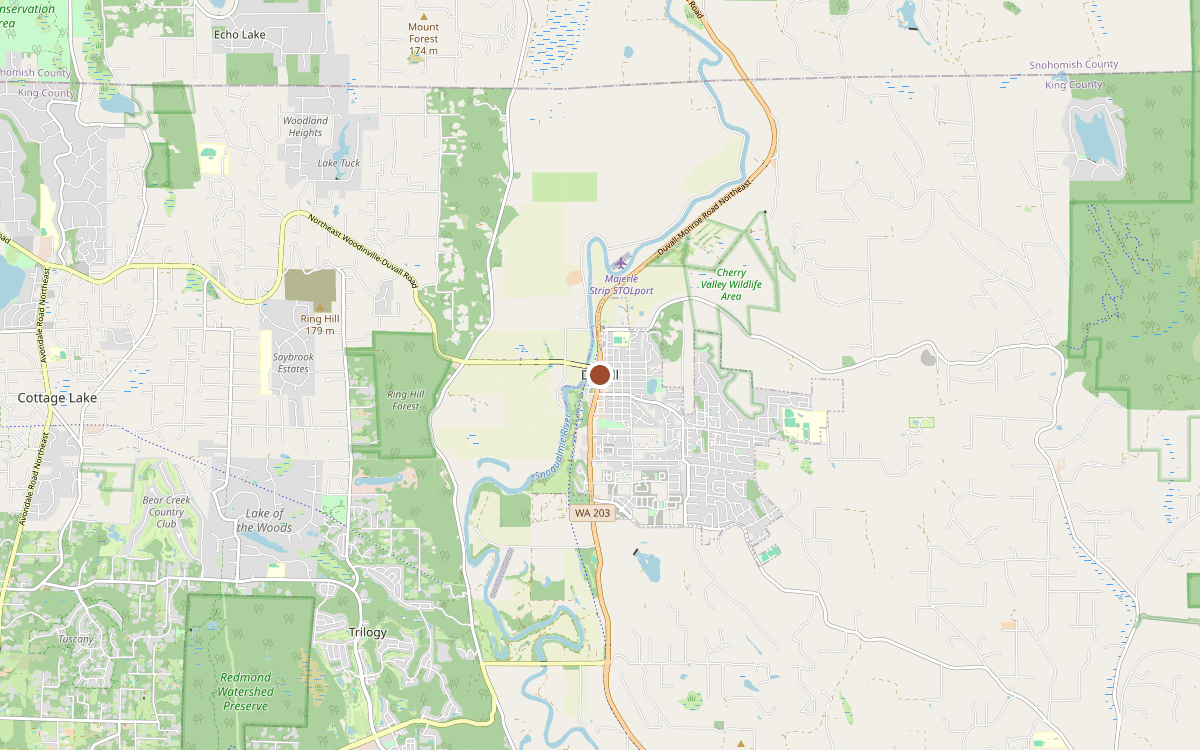
Service-area map — Duvall, WA. Map data © OpenStreetMap contributors.
Duvall had 8,910 residents on April 1, 2026 by the state's Office of Financial Management estimate, up from 8,034 at the 2020 Census. The same office counts 3,198 housing units: 2,598 one-unit structures, 413 units in multi-unit buildings and 187 mobile homes. Census survey data dates the median home to the year 2000 and finds only about 4.2 percent of units built before 1980. Owners live in roughly 86.4 percent of occupied homes. The city's own housing plan draws a line between Old Town, with its older houses on small lots, and the upper plateau to the east, where larger suburban lots dominate and denser pockets follow NE 150th Street and the NE 143rd Place / NE 145th Street corridor.
The first settlement here was Cherry Valley, on the flat beside the Snoqualmie River. In 1909 the Great Northern and the Chicago, Milwaukee and St. Paul railroads began laying track along the river, and the village lay across the route. The railroad agreed to move it. Over the next year houses and businesses were shifted south and up the slope, onto what had been the hillside homestead of Francis and James Duvall.
Incorporation followed on January 6, 1913. The depot closed in 1936, the last train ran in 1973, and the first traffic light did not arrive until 1995. Duvall stayed small for most of the century, which is why so little of its housing is old.
HistoryLink's account of Duvall includes two hard winters back to back. In 1915, three feet of snow collapsed many barns and homes in the area. The next year brought 40 inches of snow, then ice six inches thick on top, with extensive damage. Fire left its mark as well: four downtown buildings burned in 1925, and the Forest Inn was leveled in 1930.
The station record since then is milder. The Monroe cooperative station, which holds the closest long record down the valley, north of Duvall, averaged 8.0 inches of snowfall a year between 1929 and 2016, and its temperature summary shows a yearly average of 58 days on which the minimum touched 32°F or less.
Small lots in Old Town mean tight access: less room to stage a ladder and protect a neighbor's side. The plateau's larger lots give more space to set up. Either way the ground is rarely level, since WeatherSpark's terrain figures put the elevation change within two miles of town at 591 feet.
We do not assume what kind of chimney a given street has. No public source breaks Duvall's fireplaces down by type, so every job starts with a look at the actual flue, whether brick, metal or direct-vent.
Across King County, about 5,800 occupied homes, some 0.6 percent, use wood as their main heating fuel; Washington as a whole is near 2.8 percent. Duvall's estimate is 125 households out of 2,787, or 4.5 percent. The margin of error on that count is ±113, so the honest reading is "noticeably more than the county, exact number unknown."
The table behind those figures records one main fuel per household. It says nothing about how many homes have a fireplace or a stove for occasional use, so the number of Duvall homes with a hearth cannot be read from it. For gas the same table gives 60.0 percent, for electricity 34.6 percent.
For a household that depends on wood, the Department of Ecology's guidance is practical: burn only wood that has dried, split and under cover, for a year at the least. Ecology leaves the installation of stoves to the local building department.
Stage 1 silences wood-burning fireplaces, plus every wood stove and insert lacking certification. Stage 2 goes further: certified units stop, pellet stoves stop. At either stage a home keeps burning only when wood is its one adequate heat source and the Clean Air Agency signed off on an exemption ahead of time, and even then the chimney may show no visible smoke.
If a fire is already lit when the ban is announced, WAC 173-433-150 says to stop feeding it. Outdoor fires are banned for the duration, charcoal and recreational wood fires included.
To find out whether a ban is on, the agency offers a status page with a map, a phone line and alert sign-ups. A summer fire-safety ban is something else: it comes from the county fire marshal.
The City of Duvall publishes a list titled Permit Required. Against "Fireplaces, wood-burning stoves, and inserts" the answer is Yes. Gas piping gets a Yes, as do furnaces, air conditioners and heat pumps, and so does re-roofing.
Applications go through the city's online portal, where a Mechanical Permit - Residential Express is one of the listed types. The fee schedule and the code edition Duvall has adopted were not among the pages we could read, so we do not quote them here; the permitting center can confirm both.
At state level, the 2021 Washington building codes have been in force since March 15, 2024. Their residential chapter on chimneys sets, among other things, the height rule: a chimney clears its roof penetration by three feet, and must top by two feet whatever part of the house lies within a ten-foot radius.
The grid we quote from for Duvall homes — the $99 inspection comes first, the written quote before any work.
| Service | Price in Duvall | What that covers |
|---|---|---|
| Chimney Sweep | $189–$449 | Full flue swept, Level 1 inspection included |
| Chimney Inspection | $99 plus tax | Level 1 visual; Level 2 adds a full camera scan |
| Chimney Relining | From $1,900 | Full-length stainless liner, sized to the appliance |
| Chimney Repair | From $425 | Masonry repair — brick and mortar, scoped after diagnosis |
| Chimney Cap Installation | $235–$850 | Stainless cap fitted; multi-flue and custom at the top |
| Masonry Repair (Crown / Repointing) | From $475 | Crown work, repointing and tuckpointing by surface area |
| Chimney Waterproofing | $285–$790 | Breathable sealer — reapplied every 3–5 years in this climate |
| Chimney Flashing Repair | $330–$1,500 | Reseal at the low end, full flashing replacement at the high |
| Gas Fireplace Service | $189–$425 | Annual service and tune-up; repairs quoted after diagnosis |
| Creosote Removal | From $215 | Priced by creosote stage — glazed stage 3 is the heavy end |
| Dryer Vent Cleaning | $105–$265 | Full run cleaned; roof or upper-floor terminations at the top |
| Air Duct Cleaning | From $525 | Whole HVAC system — trunks, branches and every register |
Ranges are what these jobs are quoted at in Duvall. The exact figure is set on site after a $99 inspection (credited toward the job if you go ahead), and you approve it before any work starts.
Before and after
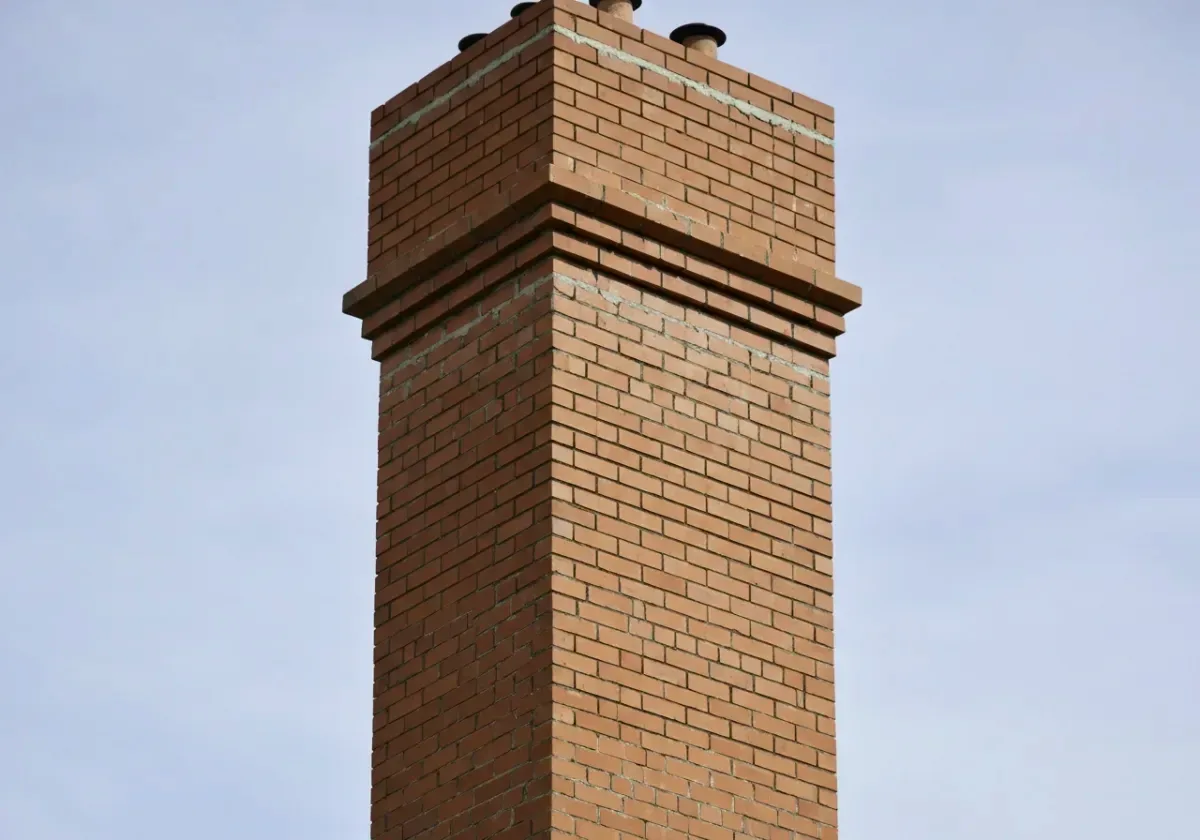
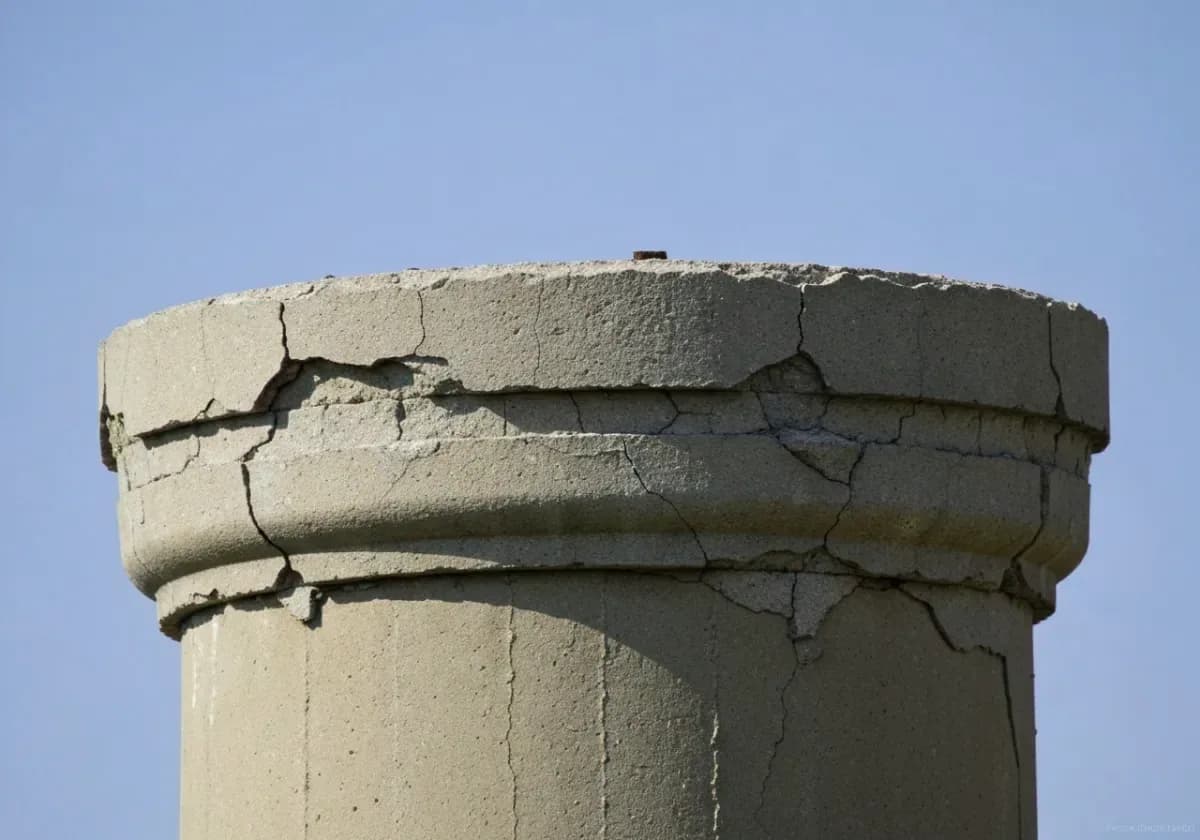
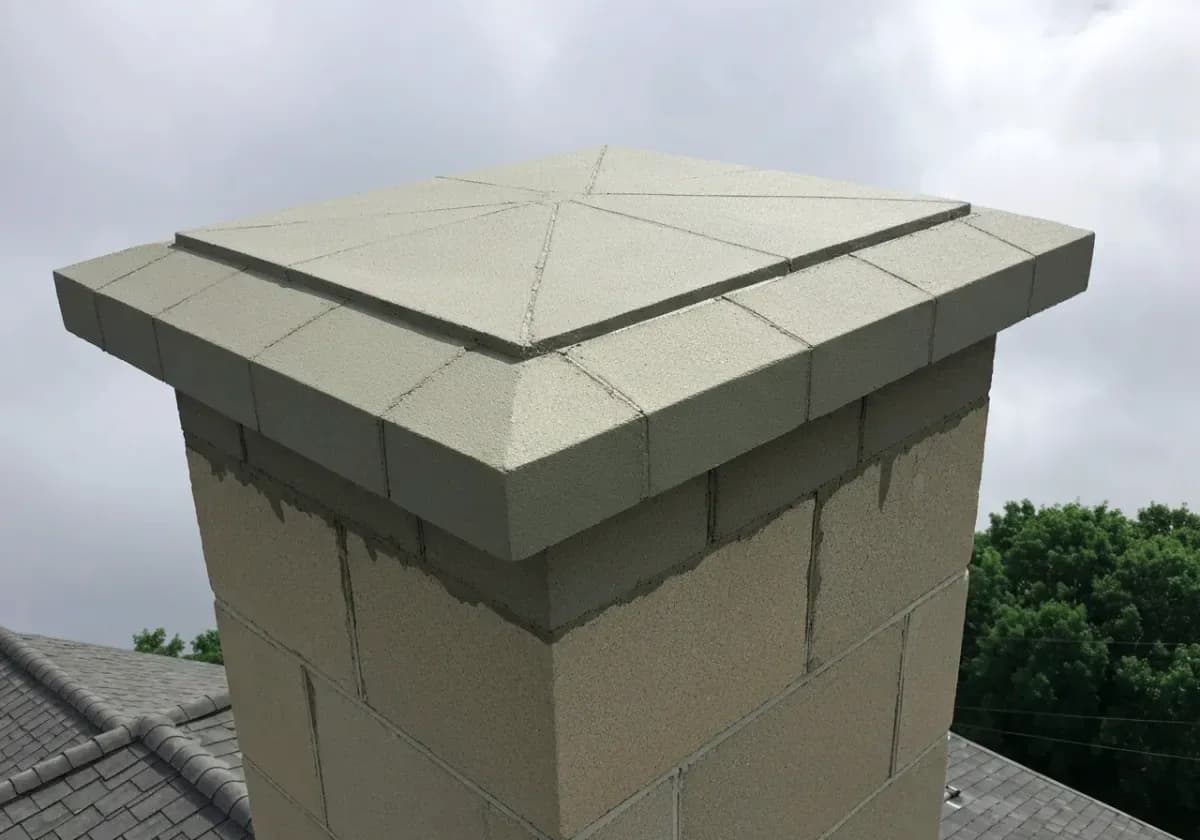
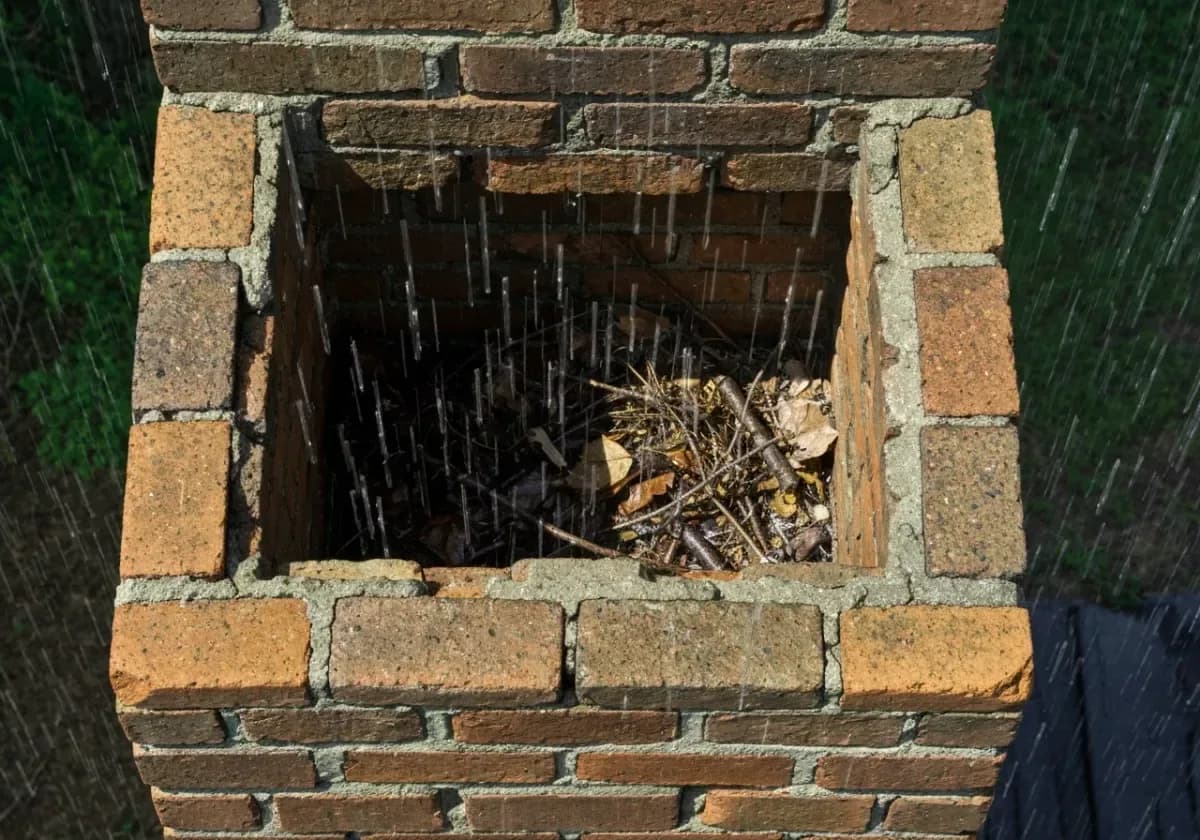
Illustrations of what each repair changes on a typical chimney — not photos of a specific job.
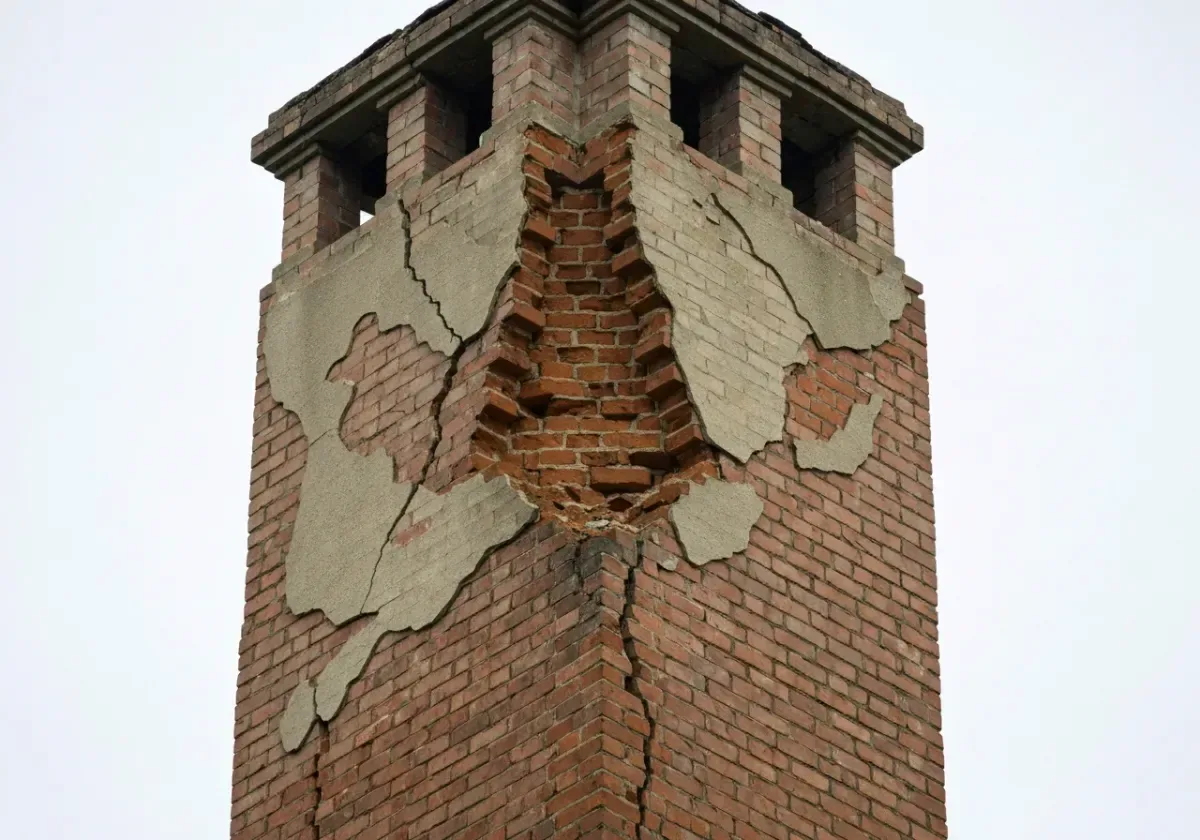 Before
 After
 Before
 After
 Before
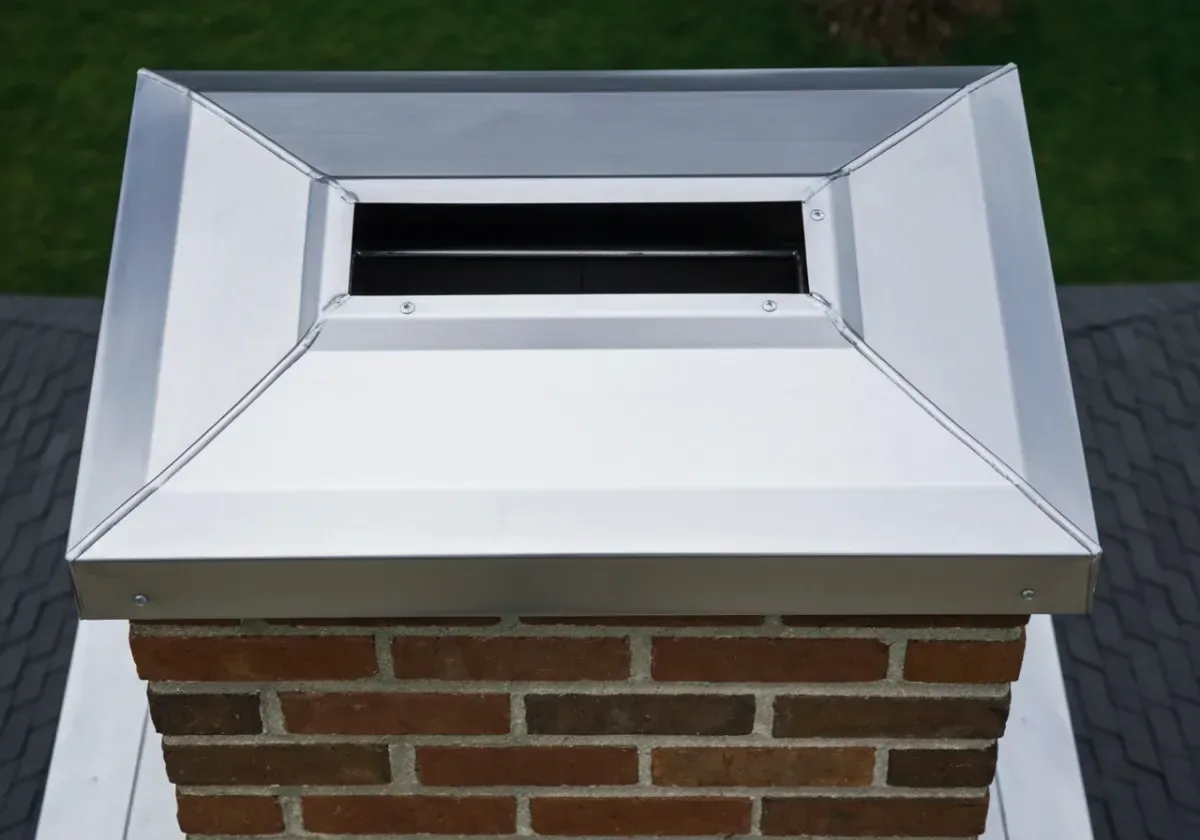 After

Four steps, each one on paper — so you always know what happens next.
Choose a genuine opening on the crew's calendar. Confirmation is immediate.
Liner, crown, cap, flashing and masonry examined in order — each finding photographed.
One document, plain numbers, covering only the work your chimney genuinely needs.
The repair is completed, then handed over with before-and-after photos of every item.
Yes. Puget Sound Clean Air Agency has jurisdiction over King County, so its air quality bans apply in Duvall and on the unincorporated land around it.
King County's. For unincorporated addresses installing, replacing or moving a wood stove or fireplace takes a county residential mechanical permit; gas log inserts are exempt, though gas piping may still need its own permit.
WeatherSpark gives December an average low of 37°F and high of 45°F, and says temperatures rarely fall below 26°F. The cool season lasts from about November 13 to March 2.
$99 plus tax, charged per chimney, covers the inspection. Should you accept our quote afterward, the fee is deducted from that bill; on a declined quote it stays as charged.
Choose a genuine opening on the crew's calendar. We inspect, quote in writing, and hand over a photo record of every repair.