Sammamish, King County
Sammamish runs on gas more than any other city we work in. Census estimates put 72.1% of its occupied homes on utility gas for primary heat, compared with 39.9% across King County, and another 316 households on bottled or tank gas. A gas fireplace in that setting is used often and thought about rarely. Our service visit costs $189 to $425 and covers cleaning, testing and a look at the vent from both ends.
Typical investment
$189–$425
Book an inspection
Book your $99 inspection
$99 plus tax, deducted when you approve the repair
Not sure where to start
Pick what you're seeing at your Sammamish home — we'll point you to the right fix.
What we do
The same crew, the same written quote — for Sammamish homes.
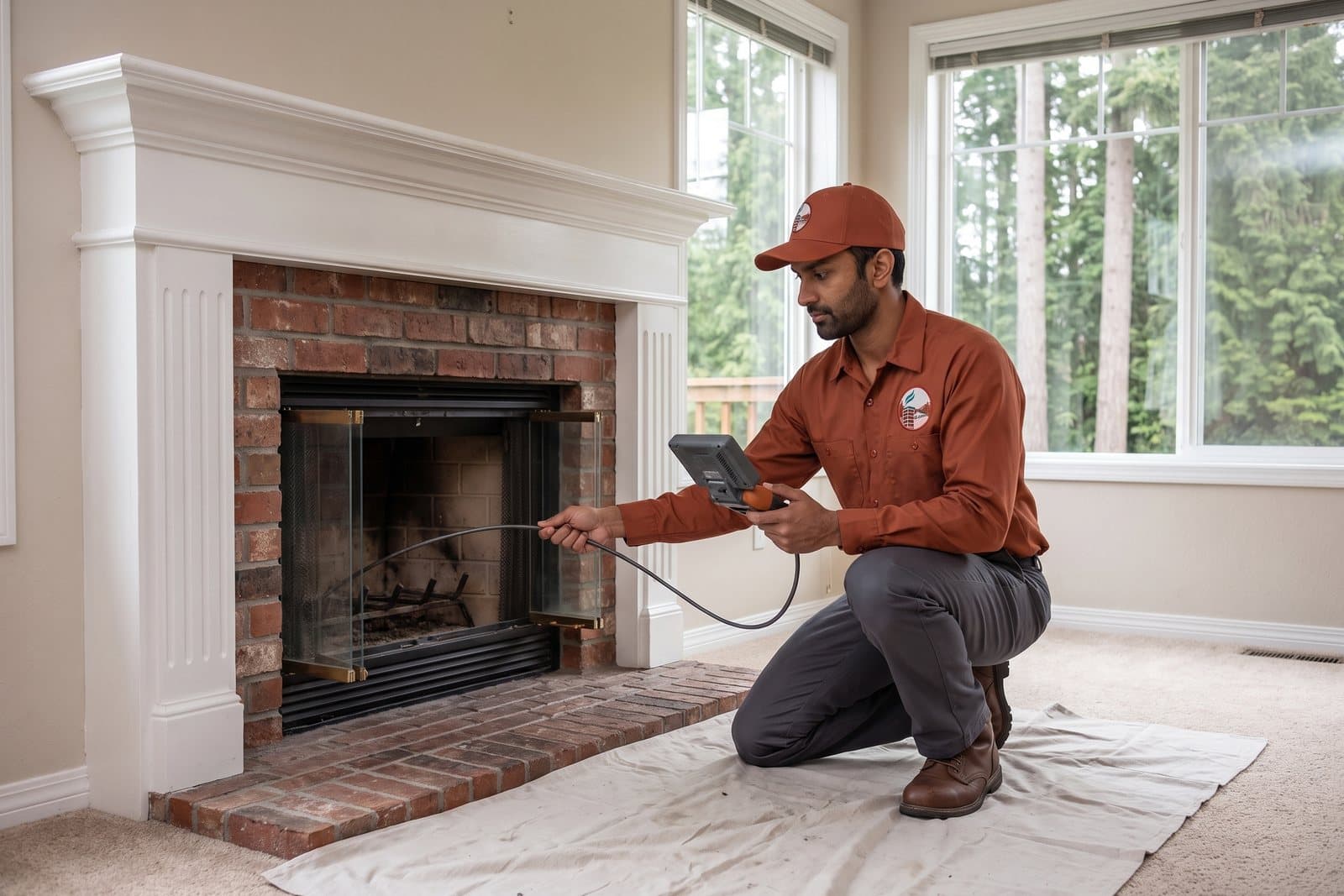
A Level 1 check, or a Level 2 with a camera run through the flue when the visible parts are not enough
Learn more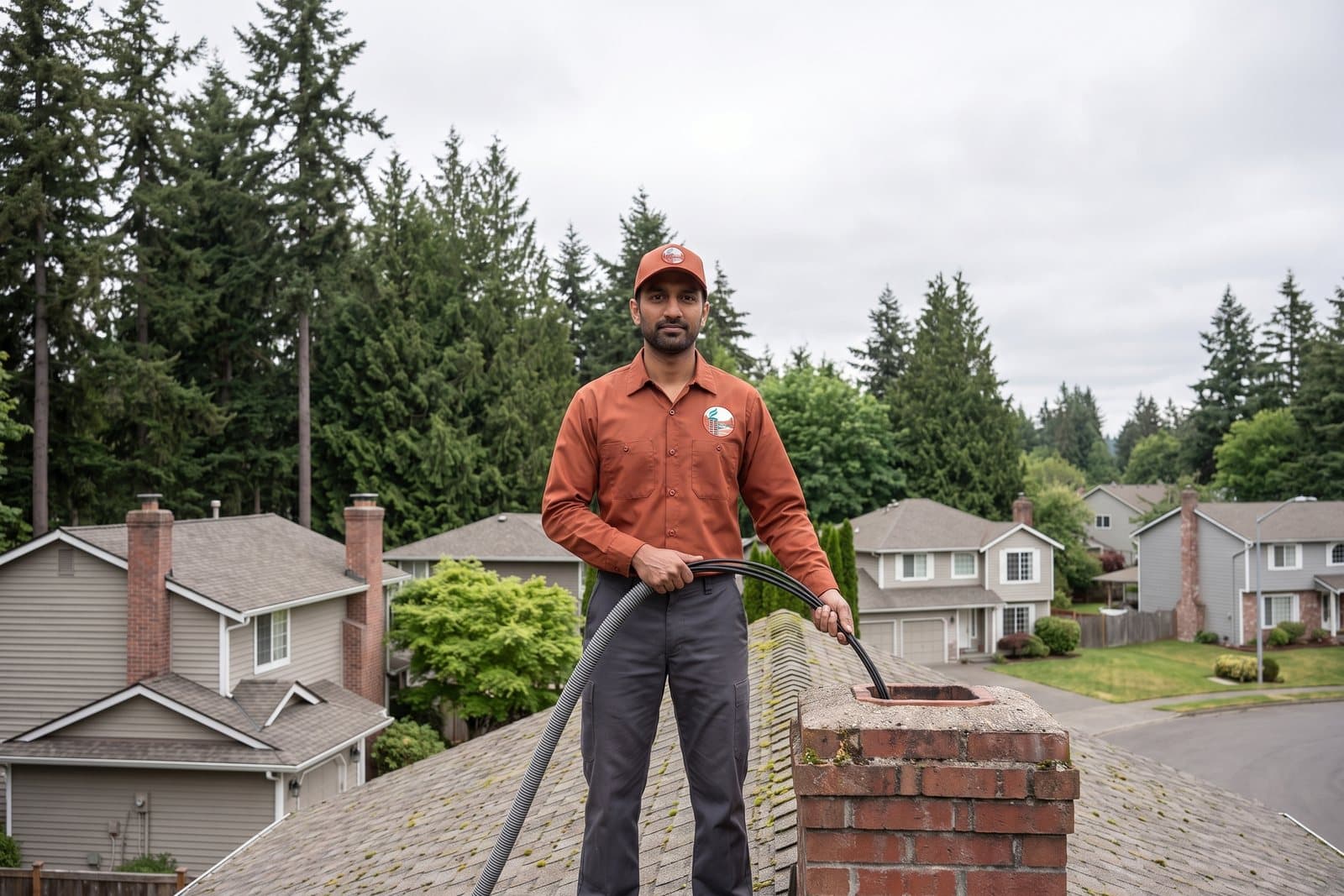
Brushing of the whole flue, top to firebox, with brush heads sized to the liner
Learn more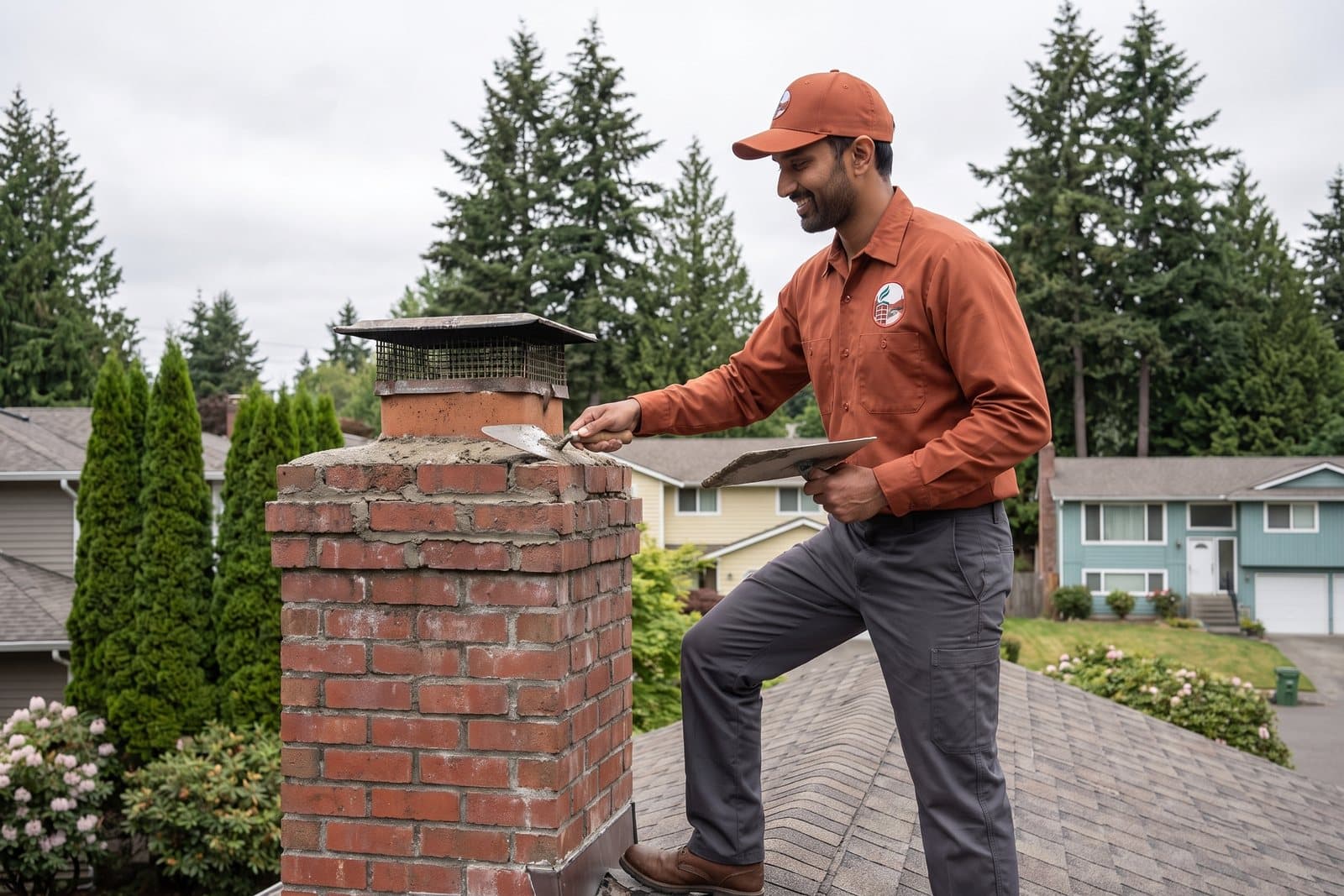
A photographed assessment that separates cosmetic wear from structural damage
Learn more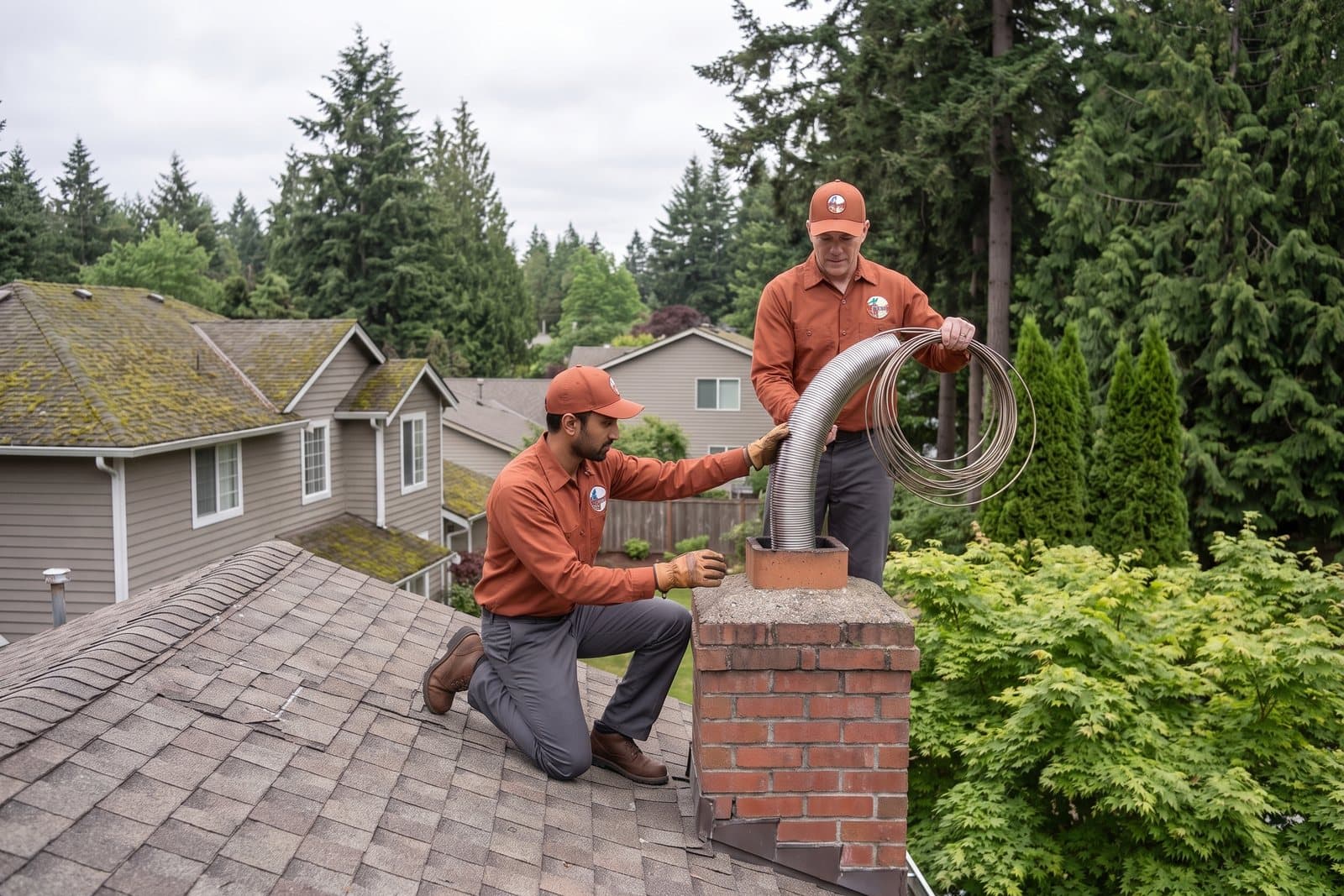
A camera run and full measurements before any liner is ordered
Learn more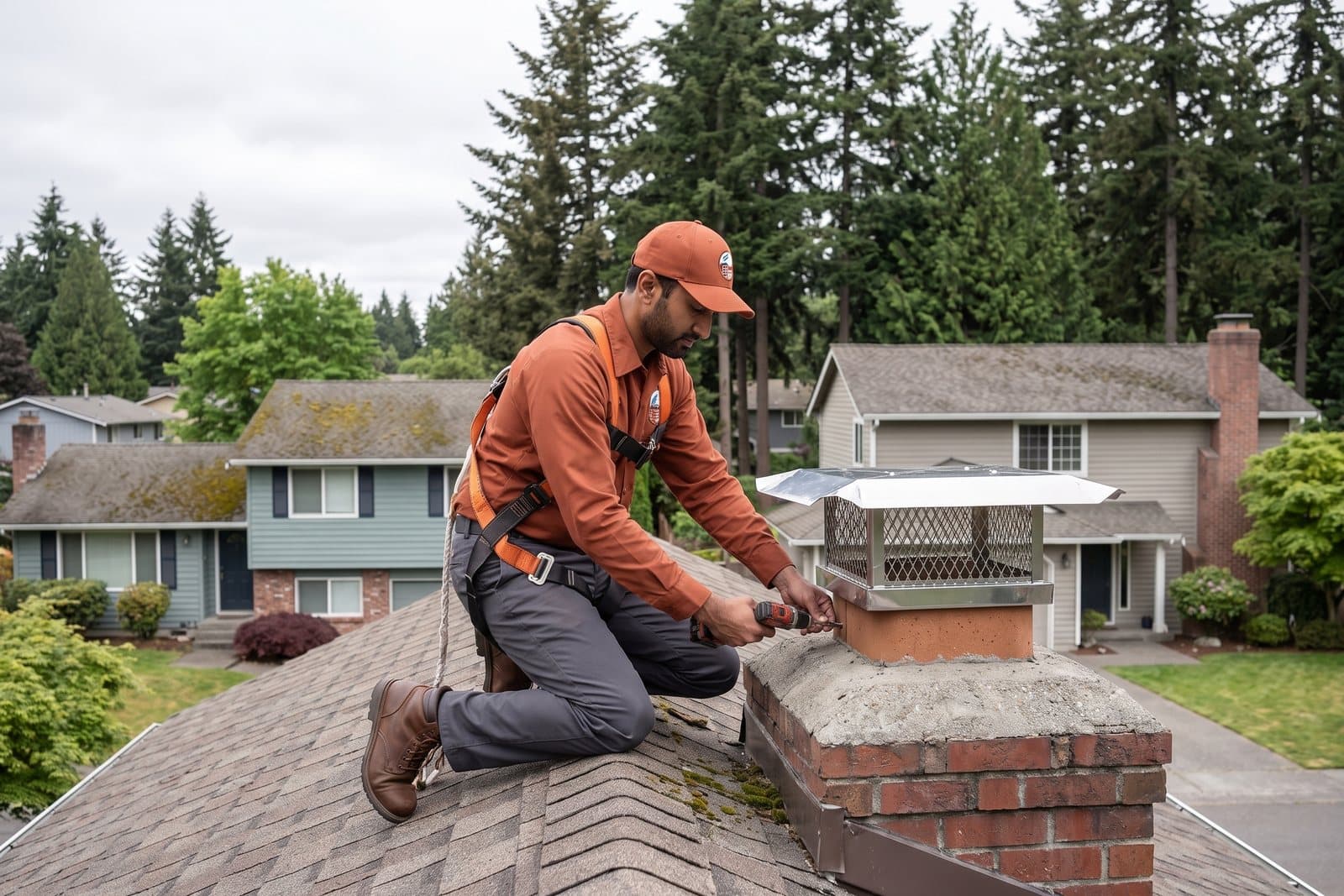
Measurement of each flue, or of the full crown for a multi-flue cap
Learn more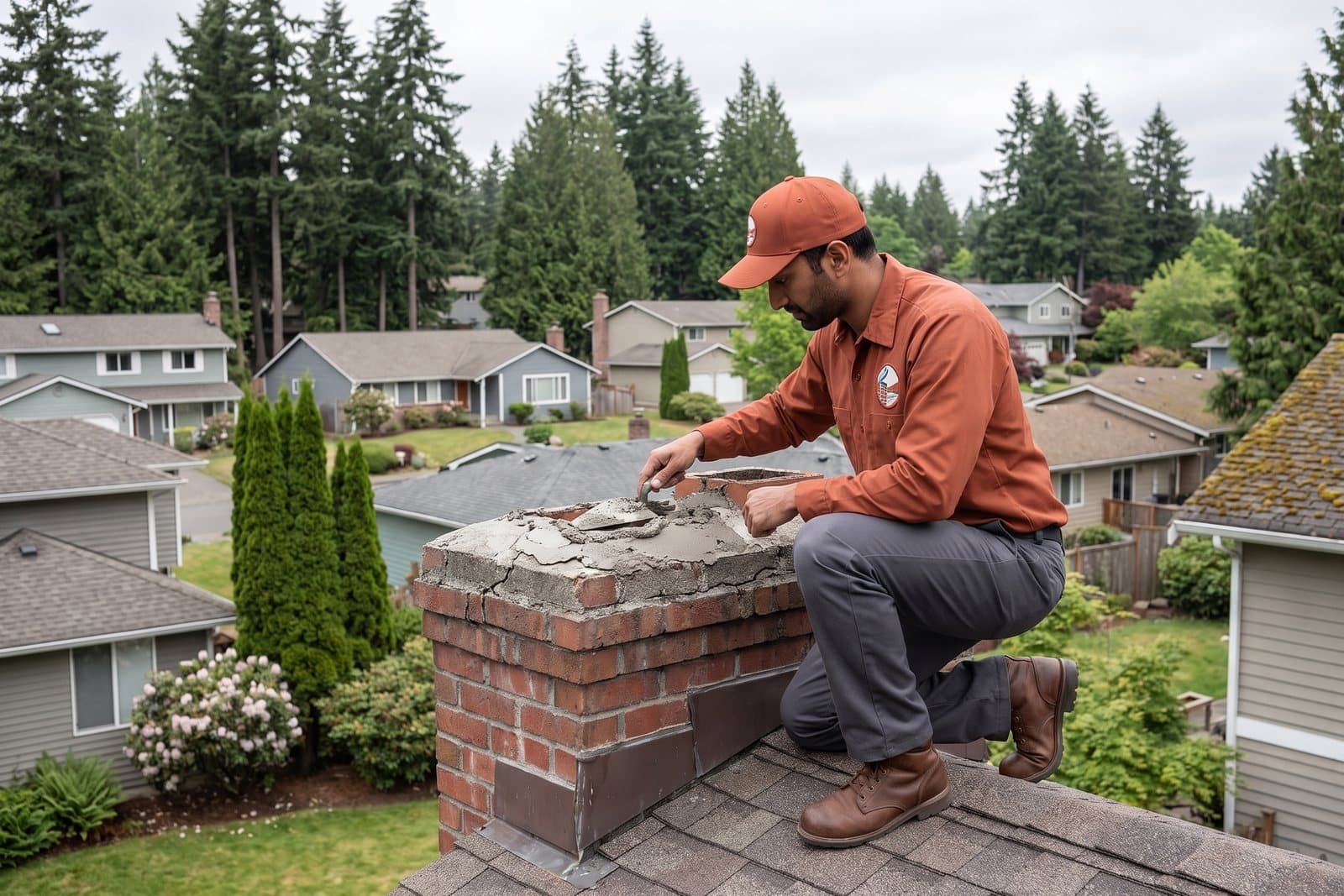
Close-up photos of the crown and of every face of the stack
Learn moreRanges shown for orientation — the exact figure is written up on-site, after the inspection.
The fireplace earns its place on the plateau during outages. The city's hazard annex says winter storms regularly bring trees and limbs down on power lines here. Some gas fireplaces light and run without household electricity and some do not; it depends on the ignition system. We tell you which kind you have and, if it can run on its own, we make sure the standing pilot or battery backup actually works before the storm season starts in late autumn.
A direct-vent gas fireplace breathes through a termination on an outside wall or the roof, and that fitting has to stay open. The city's hazard mitigation annex puts 48% of Sammamish under tree canopy or woody shrubs and reports frequent fallen limbs in winter storms. Needles, leaves and the occasional nest collect in vent terminations just as they do in chimney caps.
Roof-mounted terminations add moss to the list: WSU Extension finds moss wherever a surface stays wet long enough, and the flashing around a vent pipe on a shaded roof qualifies. We clear the termination, check its screen and seal, and replace a damaged one only with the part the appliance is listed for.
Every gas fireplace service we do in Sammamish includes:
Smoke coming back into the room, or a smell that won't go? Book the inspection first.
Book nowWhat goes wrong is mostly dirt and time. Pilot assemblies collect dust and spider webs over the summer. Thermocouples and thermopiles weaken until the flame drops out. Glass hazes white from combustion by-products. Gaskets flatten and logs get moved out of position, which changes how the flame burns. None of this announces itself until the first cold evening, when the fireplace clicks and will not light.
We read the rating plate for model, fuel and vent type, since parts and procedures follow the manufacturer's listing.
Glass off, burner and pilot cleaned, firebox vacuumed, logs set back where the manual puts them.
Ignition, flame sensing, valve and wall switch or remote are tested, along with the leak check.
We look at the termination outside, then leave a written note of readings and anything due for replacement.
A sealed gas fireplace produces no embers, which is a real advantage in a city whose hazard annex recalls the 1939 Beaver Lake Fire and warns that wildfire risk is climbing with drought. Nothing leaves the vent but exhaust.
Smoke season still touches it. The Puget Sound Clean Air Agency places wildfire season in the warm, dry part of summer; its advice for smoke episodes is HEPA filtration plus a single room closed up tight to serve as the clean room. A direct-vent unit with a sound glass gasket does not draw room air, so it does not work against that. We check the gasket at every service for exactly this reason.
What this work is quoted at for Sammamish homes — the exact figure comes from the $99 on-site inspection, credited toward the work.
| Service | Price in Sammamish | What that covers |
|---|---|---|
| Gas Fireplace Service | $189–$425 | Annual service and tune-up; repairs quoted after diagnosis |
| Chimney Sweep | $189–$449 | Full flue swept, Level 1 inspection included |
| Chimney Inspection | $99 plus tax | Level 1 visual; Level 2 adds a full camera scan |
| Chimney Relining | From $1,900 | Full-length stainless liner, sized to the appliance |
| Chimney Repair | From $425 | Masonry repair — brick and mortar, scoped after diagnosis |
Ranges are what these jobs are quoted at in Sammamish. The exact figure is set on site after a $99 inspection (credited toward the job if you go ahead), and you approve it before any work starts.
Sammamish is a 24-square-mile plateau city, roughly 500 feet up, on Lake Sammamish, with homes with a median build year of 1994, more than half of them built in the 1980s and 1990s. We work every part of it — Sunny Hills, Sahalee, Klahanie included.
SammamishKing County, WA · 47.616, -122.036
Before and after
Illustrations of what each repair changes on a typical chimney — not photos of a specific job.
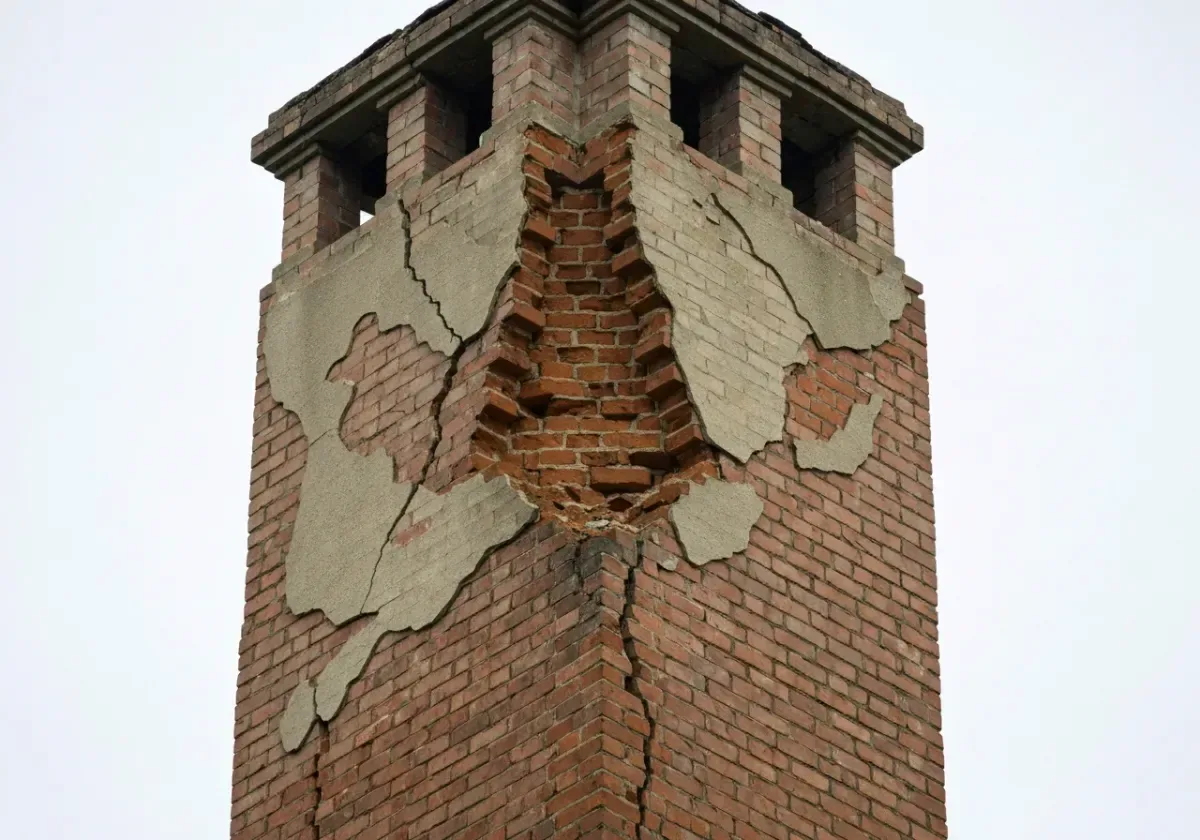 Before
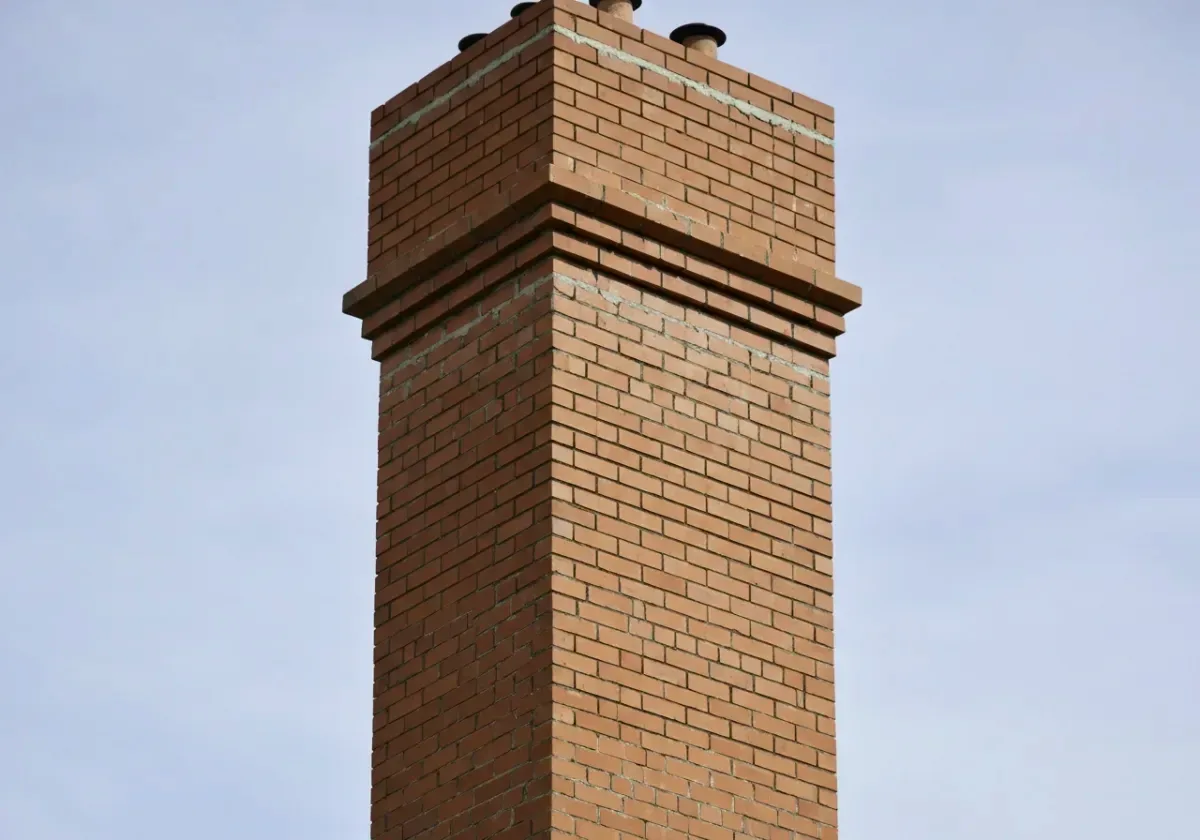 After
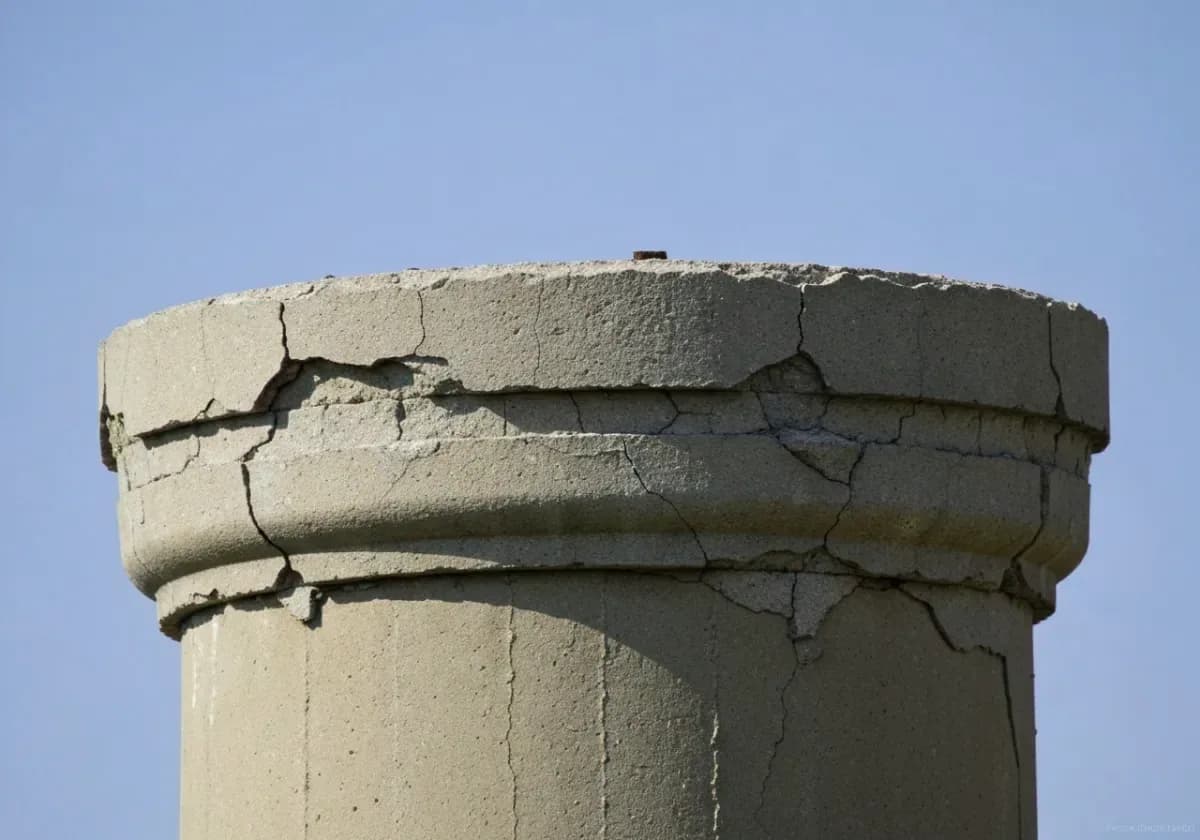 Before
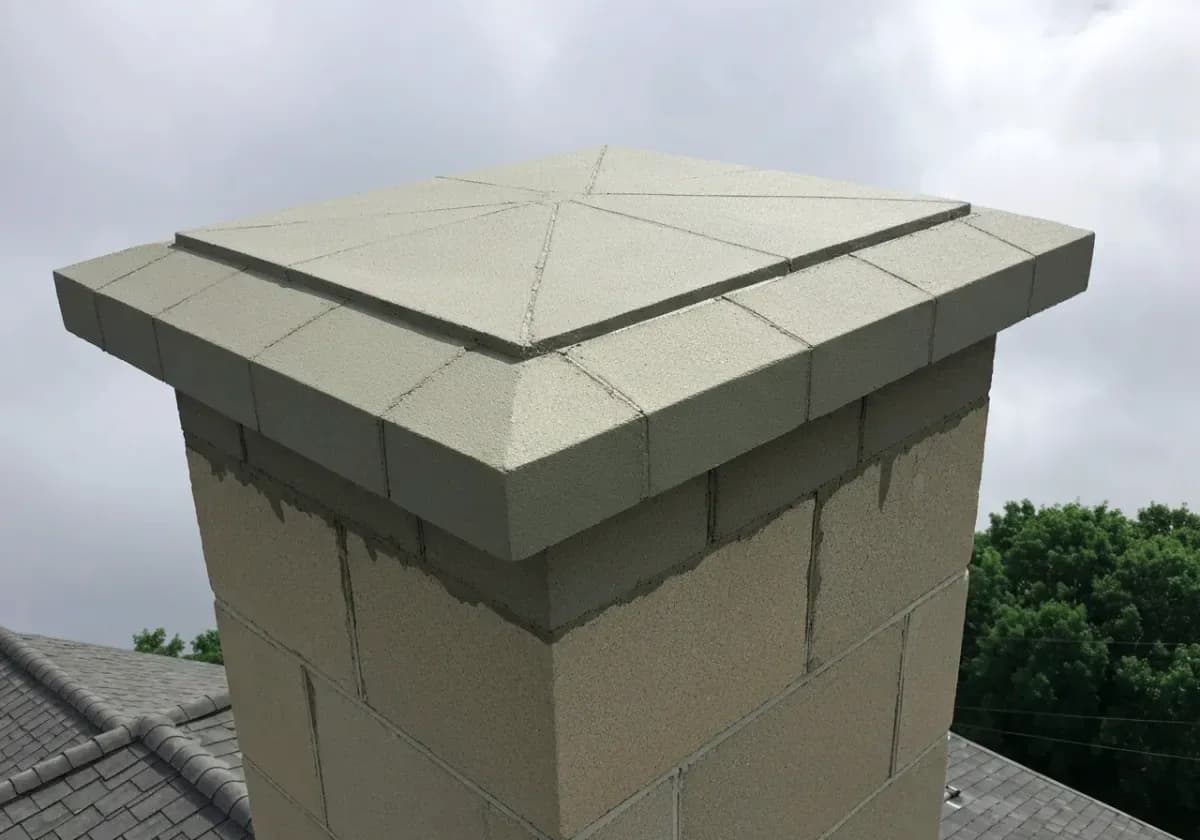 After
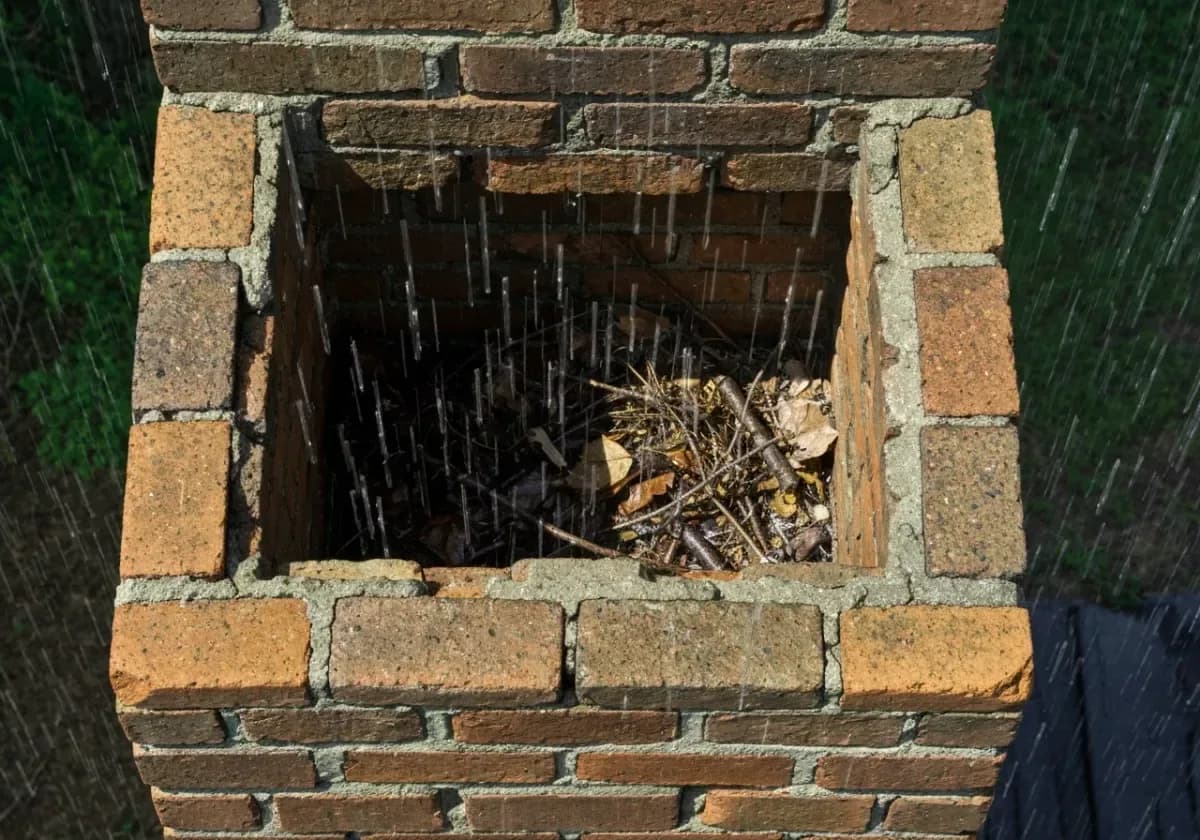 Before
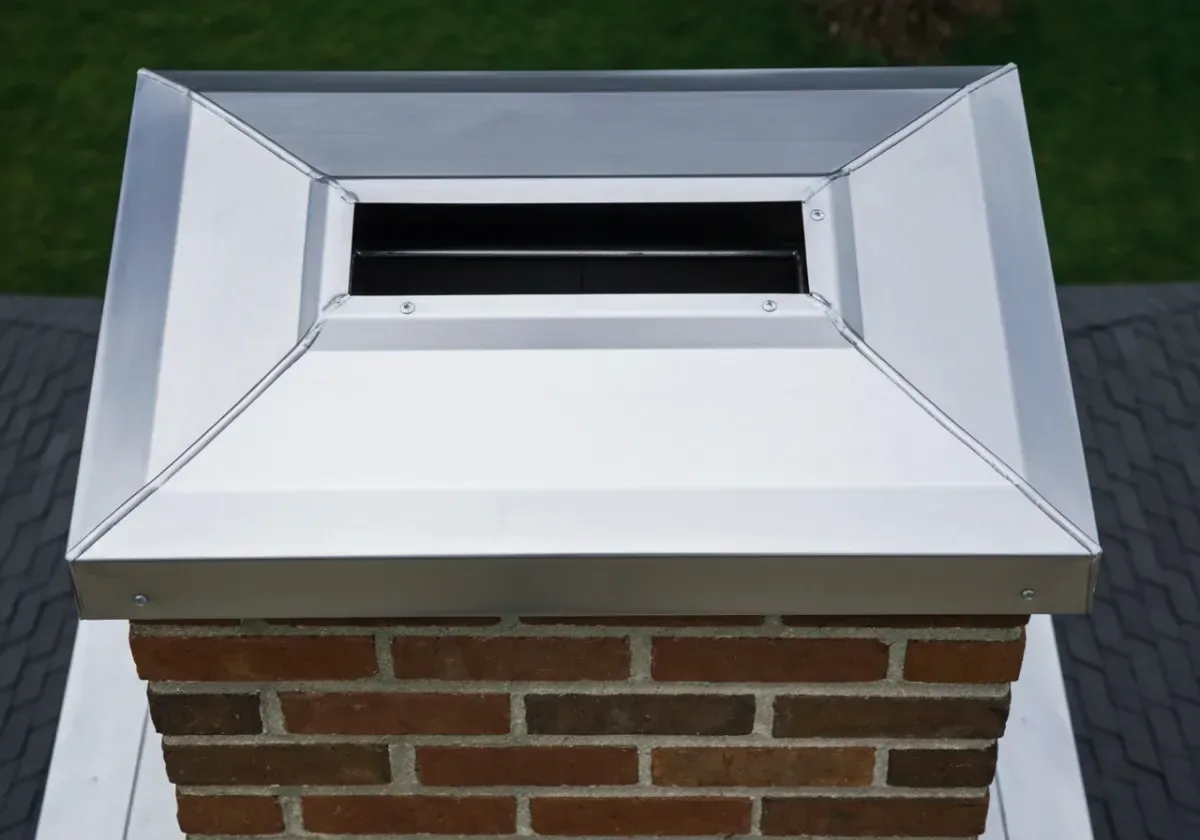 After

Four steps, each one on paper — so you always know what happens next.
Choose a genuine opening on the crew's calendar. Confirmation is immediate.
Liner, crown, cap, flashing and masonry examined in order — each finding photographed.
One document, plain numbers, covering only the work your chimney genuinely needs.
The repair is completed, then handed over with before-and-after photos of every item.
$189 to $425 for the service visit. A routine clean and test is near $189; a unit that needs extended diagnosis or a difficult vent check is higher. Replacement parts, if required, are quoted before they are fitted.
The Puget Sound Clean Air Agency's air quality burn bans are written for devices that burn wood or pellets: fireplaces, stoves and inserts. Gas appliances are not on that list.
Yes. Two of the codes the city lists as in effect apply, the International Fuel Gas Code and the Washington State Mechanical Code, both in their 2021 editions, and takes permit applications through MyBuildingPermit.com. Its fee schedule has separate mechanical lines for gas logs and gas piping, so for that kind of work we check requirements with the Building Division first.
A $99 on-site inspection, a written quote before any work, and photos of every item we touch.