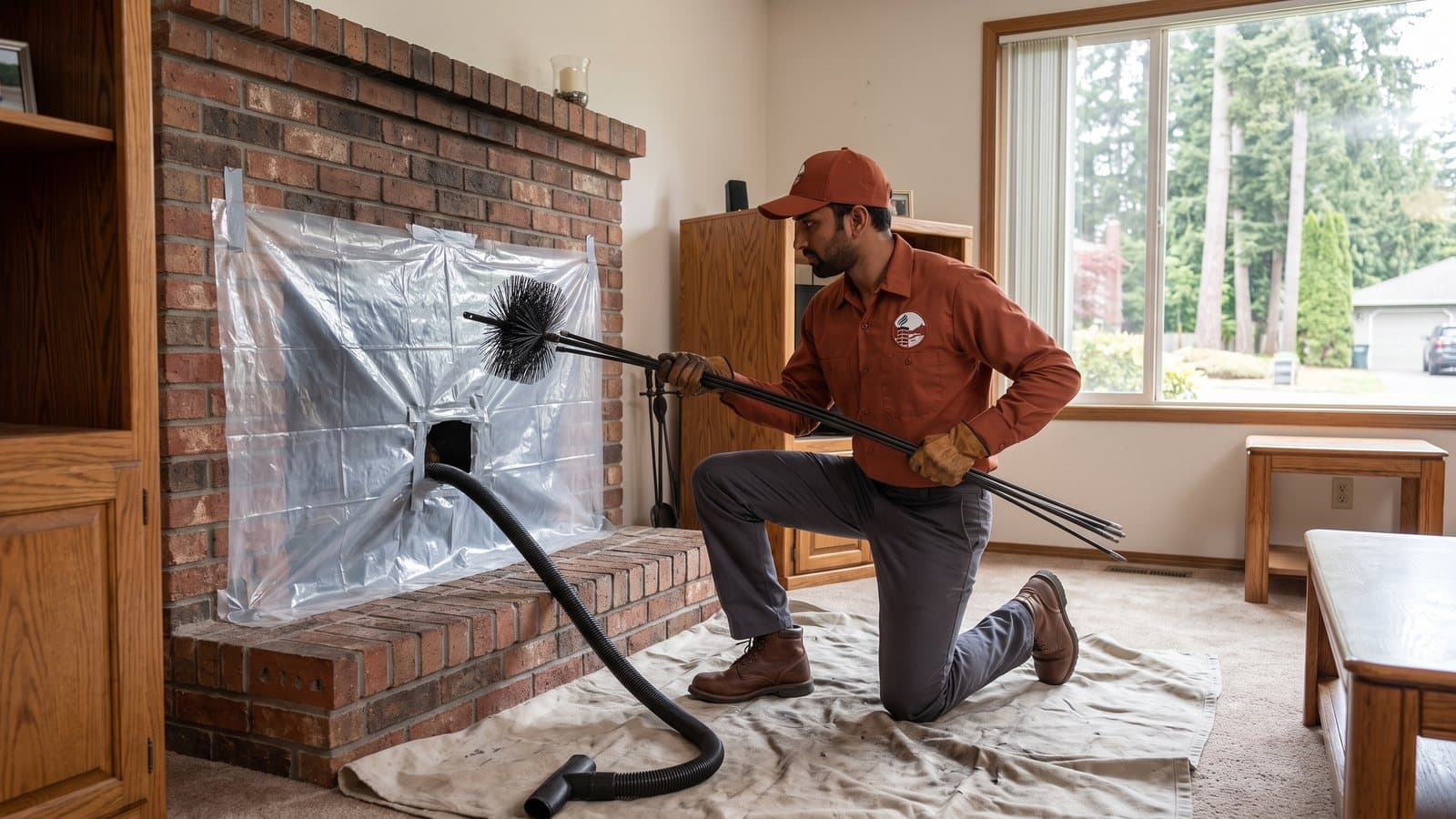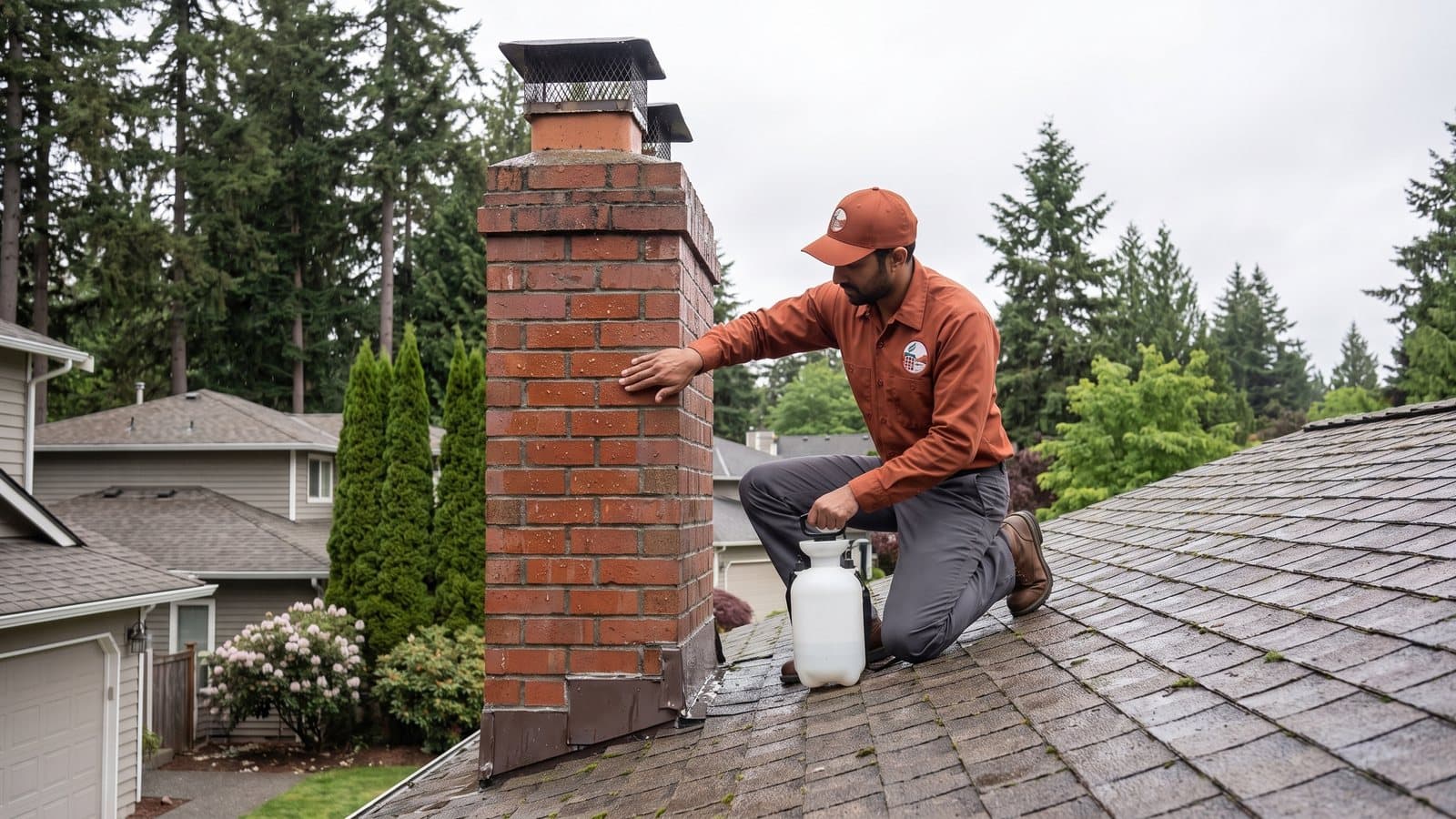
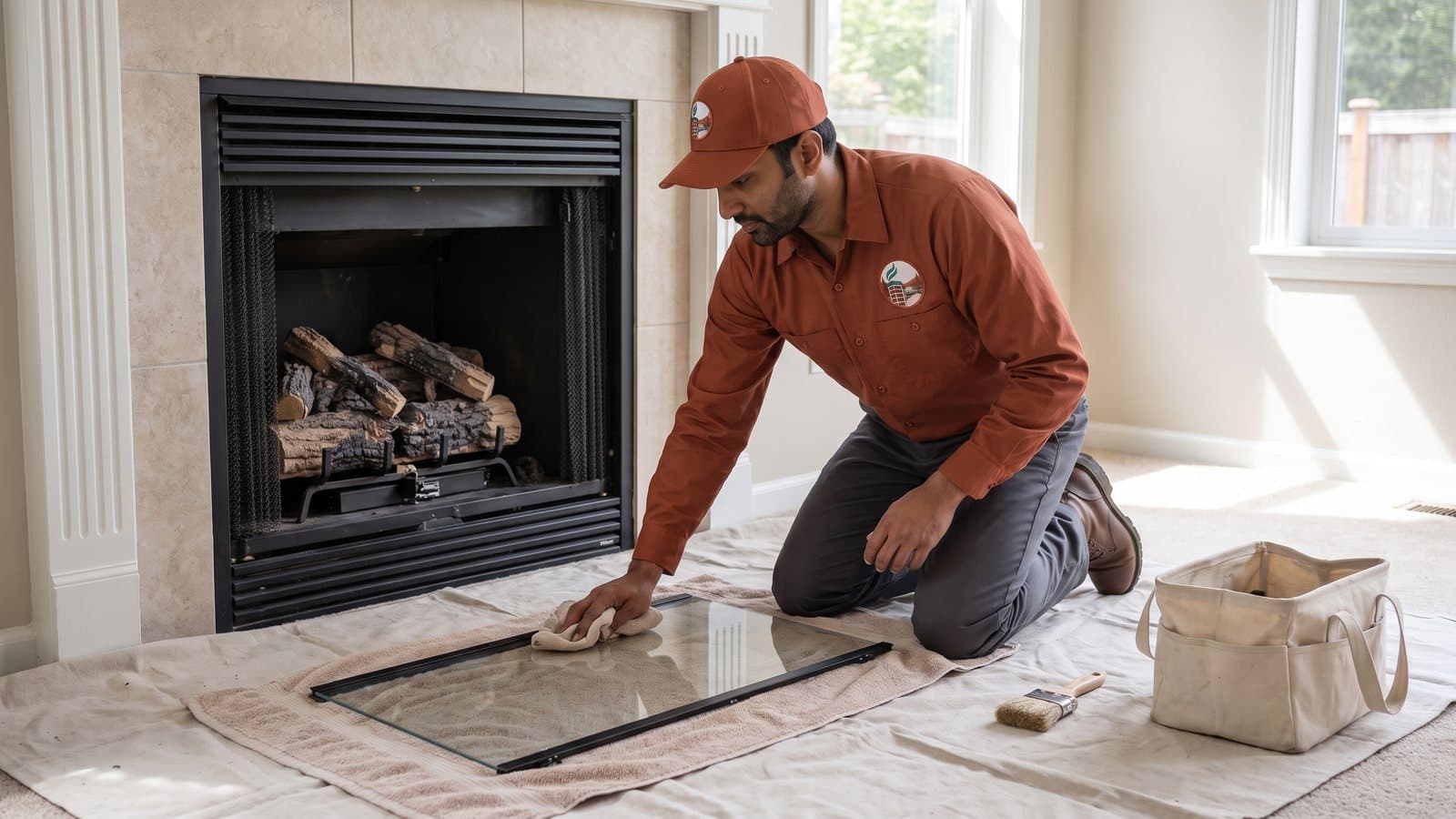
Gas is the main heating fuel in a large share of east King County homes, and a gas fireplace or insert often comes with the house. Because there is no ash to shovel and no creosote to scrape, these units get no attention until the first cold evening, when the pilot refuses to hold. This checklist splits the work into what a homeowner can safely do, what belongs to a trained technician, and what touches the gas line or the venting and may therefore involve the city permit desk. It applies to direct-vent fireplaces, gas inserts in a masonry fireplace and gas log sets.
How common gas heat is, town by town
The Census does not count fireplaces. Its ACS table on house heating fuel records only what each occupied home uses as its primary heat. Even so, it gives a fair picture of where gas service is part of everyday life. In the 2020 to 2024 estimates, about 72 percent of Sammamish homes name utility gas as their main heat, against 60 percent in Duvall, about 44.5 percent in Carnation and about 38 percent in Redmond. King County as a whole stands near 40 percent.
A few hundred households in Redmond and in Sammamish report bottled or tank gas as their main fuel. For a fireplace, that distinction matters: an appliance is built or converted for natural gas or for propane, never both, and the service checks are slightly different.
The checklist
Always turn the unit off and let it cool completely before touching the glass or anything behind it. If you ever smell gas, leave the house and call the gas utility from outside; that is not a maintenance item.
| Task | Who does it | When |
|---|---|---|
| Test the carbon monoxide alarm near the fireplace and on each sleeping level | Homeowner | Monthly |
| Look at the flame: steady, mostly blue at the base, not lifting off the burner or sooting | Homeowner | Each use |
| Clean the glass with fireplace-glass cleaner, unit cold | Homeowner, if the manual allows glass removal | Start of season and as needed |
| Vacuum dust and pet hair from the lower control compartment and louvers | Homeowner | Start of season |
| Replace batteries in the remote, the receiver and any battery ignition backup | Homeowner | Start of season |
| Check that the outside vent cap is not blocked by leaves, nests or shrubs | Homeowner, from the ground | Fall and after storms |
| Clean burner ports and pilot assembly; check thermocouple or thermopile output | Technician | Yearly |
| Inspect the glass gasket and the firebox seal on direct-vent units | Technician | Yearly |
| Verify log placement against the manufacturer's diagram; refresh ember material | Technician | Yearly |
| Check gas connections for leaks and confirm gas pressure | Technician | Yearly |
| Inspect the vent or liner and its termination, including inside the chimney for inserts | Technician | Yearly |
| Test safety shutoffs and, where fitted, the blower | Technician | Yearly |
Why the vent deserves the most attention
A gas flame makes little soot, but it makes a great deal of water vapor, along with carbon dioxide and, if anything is wrong, carbon monoxide. All of it has to leave through the vent. A sealed direct-vent unit draws its air from outside and exhausts outside through the same wall or roof termination; if that termination is blocked, the flame starves, turns yellow and soots the glass. An insert in an older masonry fireplace exhausts through a liner run up the chimney, and a liner that has come loose at the top or corroded lets moist exhaust into the old flue, where it condenses on cold brick.
This is the reason the annual inspection called for by NFPA 211 names vents alongside chimneys and fireplaces. On an insert, we look at the chimney top and the liner connection, not only at the parts behind the glass. In a climate where the outside of the chimney is wet for seven months, moisture arriving from the inside as well is something to catch early.
Three warning signs between services
The pilot drops out repeatedly. A weak thermocouple or thermopile, a dirty pilot hood or a draft problem can each cause it. Relighting again and again is not a fix.
The flame changes character. Tall yellow flames that touch the glass, flames that lift and flutter, or a burner that lights with a delayed whoomp all point to an air or gas adjustment that needs a technician.
Moisture or odor. Persistent fog on the inside of the glass, a damp smell from the fireplace on rainy days or a rotten-egg odor at any time means stop, shut the gas valve to the unit if you can reach it safely, and call.
Permits: when maintenance becomes installation
Cleaning and adjusting an existing appliance is service work. Replacing the unit, adding a log set where there was none, or altering the gas line is installation, and each jurisdiction handles that differently.
The City of Redmond's mechanical permit application lists Fireplace, Gas Logs Insert, Gas Piping and Gas Appliance among the fixtures an applicant declares. According to the form, work in a single-family house or a duplex skips plan review, and that a contractor must hold a Redmond business license before starting. Trade permits go through the city's Development Services Center or its online ePermitting service. Redmond has enforced the 2021 International Fuel Gas Code and the 2021 National Fuel Gas Code since March 15, 2024. The form does not itself say which repairs are exempt, so the safe step is to ask.
Sammamish takes applications through MyBuildingPermit.com, and its fee schedule carries separate mechanical line items for gas logs and for gas piping. Duvall's published list answers yes to a permit for fireplaces and inserts and for gas piping, with applications filed online. In Carnation, applications are filed only via the city's online permit center; a mechanical permit form is among the documents it posts, though the pages we read do not spell out which fireplace work needs one. For addresses in unincorporated King County, the county requires a mechanical permit to install or replace a fireplace but exempts gas log inserts, while noting that a gas piping permit may still apply.
When to book, and what we charge
Early fall is the practical time. WeatherSpark dates the start of the cool season in Redmond to about November 13, and a unit that has sat unused since March is best started, cleaned and checked a few weeks ahead of that date instead of on it.
We charge $189 to $425 for a gas fireplace service. If the unit has a fault that needs tracing before anyone can say what the repair is, the visit starts as an inspection, $99 plus tax, and those $99 are taken off the repair quote when you approve it.
Frequently asked questions
Does a gas fireplace need servicing if it lights every time?
Lighting reliably tells you the pilot and the valve work. It does not tell you whether the vent is clear, whether the glass gasket still seals, whether the burner ports are partly blocked or whether the logs have shifted into the flame. Those are the things a yearly service looks at, and NFPA 211 calls for vents to be inspected annually along with chimneys.
Why does the glass turn white or cloudy?
Burning gas produces water vapor and trace minerals that condense on the cold glass at each start and bake on as a white film. Cleaned regularly with a cleaner made for fireplace glass, it wipes off. Left for several seasons, it can etch the surface permanently. Never use an ammonia window cleaner or anything abrasive, and never clean hot glass.
Is black soot on the logs normal?
A light dusting in one spot can be normal on some log sets. Heavy soot on the logs, the glass or the firebox walls is not. It usually means a log is out of position, the burner ports are dirty or the air mix is off. Stop using the unit and have it looked at, because soot from a gas flame signals incomplete combustion.
Do I need a permit to replace my gas logs or insert?
It depends on where the house is. On Redmond's mechanical permit form, the fixtures to declare include a gas logs insert, gas piping and any gas appliance. Duvall lists fireplaces, inserts and gas piping as permit work. Unincorporated King County exempts gas log inserts but may still require a gas piping permit. Ask the permit office for your address before work starts; a cleaning and tune-up changes nothing in the installation.
What does a gas fireplace service cost with you?
Our gas fireplace service is $189 to $425, depending on the type of unit and how much cleaning it needs. Replacement parts, if any, are quoted separately. When a problem needs diagnosing first, we bill $99 plus tax for the inspection visit and deduct it from the quote you approve.
Sources
- Census Reporter — ACS table B25040, 2020–2024 — accessed October 4, 2026
- CSIA — homeowner resources (NFPA 211 wording) — accessed October 4, 2026
- City of Redmond — mechanical permit form (2025) — accessed October 4, 2026
- City of Redmond — construction and permits page — accessed October 4, 2026
- City of Redmond — 2024 code adoption flyer — accessed October 4, 2026
- City of Sammamish — Building Division — accessed October 4, 2026
- City of Sammamish — 2025 development fee schedule — accessed October 4, 2026
- City of Duvall — Permit Required list — accessed October 4, 2026
- City of Duvall — Permits — accessed October 4, 2026
- City of Carnation — permit application forms — accessed October 4, 2026
- King County — residential mechanical permits (2025) — accessed October 4, 2026
- WeatherSpark — Redmond, WA year-round averages — accessed October 4, 2026
Related services